When Votes Don't Matter
An Icelandic economist ties the stalled rollout of a constitution backed by two-thirds of voters fourteen years ago to the resource curse playing out inside a wealthy democracy.

THORVALDUR Gylfason is an Icelandic professor of economics at the University of Iceland, trained in the UK and US, and a former IMF economist who has worked in around 100 countries. His research in recent years has focused on natural resources, how they are managed and distributed, and constitutions. In 2011 he was elected to Iceland’s Constitutional Assembly to help draft a new constitution.
The Confluence: What first drew you to studying the resource curse, and how did that lead you into constitutional work?
Dr. Gylfason: After moving back to Iceland in the early 1980s, I noticed something wrong in how the fishing industry was talked about and run, there was a sense that dead fish in the sea mattered more than living people. That’s when I started distinguishing in my mind between natural capital, meaning natural resources, and human capital.
A few years later it became clear that some of the world’s most oil-rich countries, Nigeria, Mexico, and many others in Africa, were in deep trouble, and I saw that the mismanagement of natural resources was a serious global problem with a lot in common with what was happening to Iceland’s fish. Poorly managed natural resources don’t just breed corruption, think Russia, they tend to undermine democracy too. It’s not a coincidence that not a single oil-rich country around the Persian Gulf is a democracy.
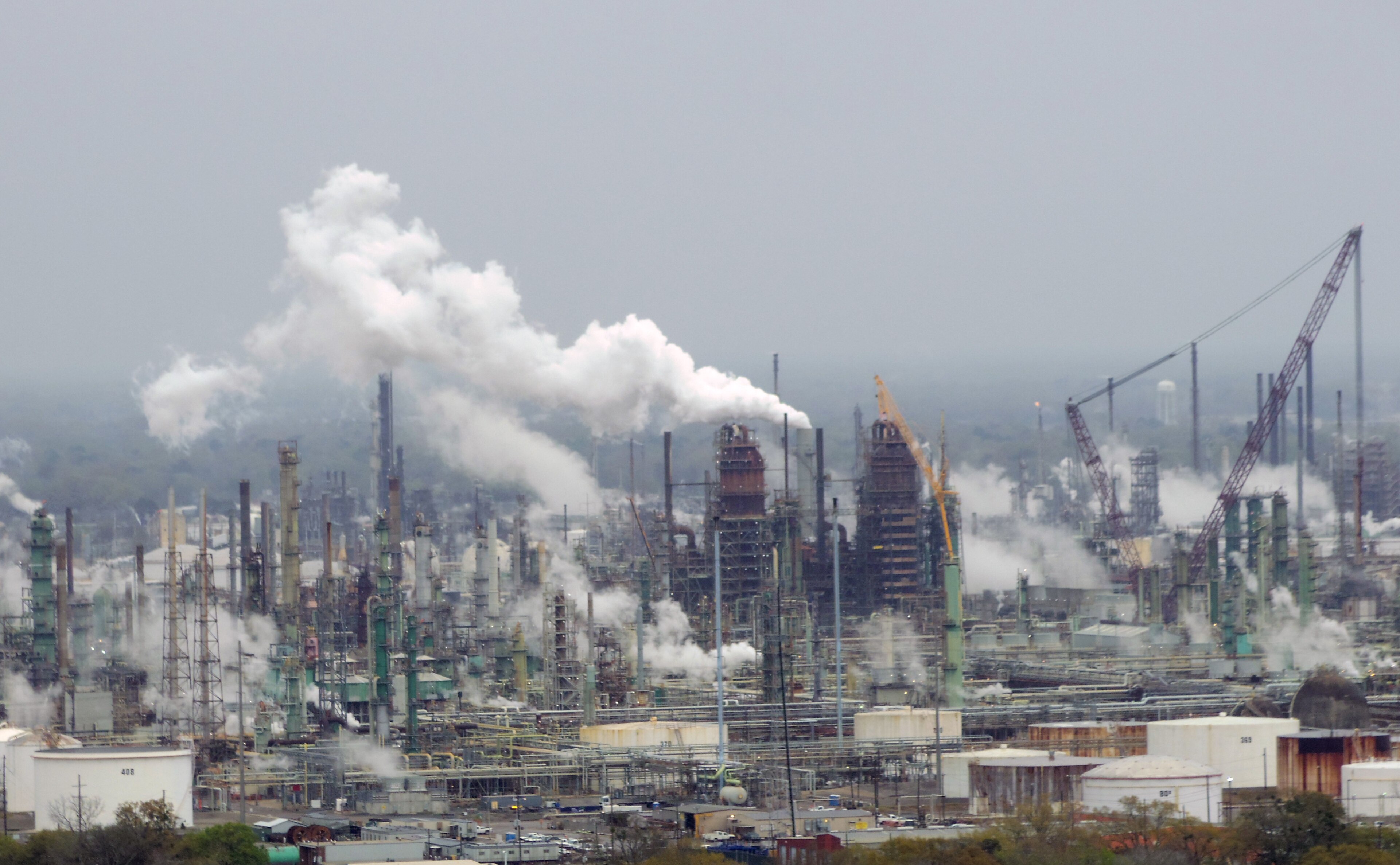
Meanwhile Hong Kong and Singapore, which I’ve long admired, have no natural resources at all and are extremely successful societies. So the old belief that having natural resources means you have nothing to worry about doesn’t hold up. Even within the US, Louisiana is a striking example: people there live about seven years shorter lives than in Massachusetts, and the state is near the bottom on education and income, largely because its oil has been mismanaged, with tax exemptions for oil field owners and worse.
The Confluence: You’ve also connected this to what’s been called “superpower suicide.” What’s the idea there?
Dr. Gylfason: An American historian who recently left the US for Canada coined that term, I’d put it a bit more modestly as superpower self-harm. The question is whether Russia would have invaded Ukraine if it didn’t have all that oil wealth, and I think probably not, Russia is harming itself, not only Ukraine, in a way that traces back indirectly to its oil wealth.
The same logic applies to the United States: would it have gone to war in the Middle East without the confidence that oil wealth gave it? So it isn’t just poor oil states like Nigeria or poor US states like Louisiana that fall victim to the resource curse, even the old superpowers have, in their own way.
The Confluence: You’ve argued this connects to global inequality as well. How so?
Dr. Gylfason: Natural resources that aren’t well managed are tempting to corrupt and greedy people, who try to expropriate that wealth and keep others away from it, which is part of why the oil-rich Gulf states won’t tolerate democracy, and part of why Russia has slid back toward dictatorship.
That worsens inequality in income and wealth, which, alongside climate change, is one of the most serious problems facing the world, especially for young people who have decades ahead of them. I think there are two challenges the world needs to tackle together, through the UN or some similar body: mitigating climate change, and reversing the deterioration in how income and wealth are distributed, including by opening up tax havens and confiscating the wealth hidden there.
The World Bank and IMF regularly cite estimates, based on academic research in the US and France, that wealth hidden from tax authorities in havens equals roughly 10 percent of the world’s total annual output.
The Confluence: You mentioned playing a role in drafting a new Icelandic constitution. How did that come about?
Dr. Gylfason: I’m an academic, I never intended to go into politics. But after Iceland’s 2008 financial crash, the biggest on record relative to the size of an economy, people took to the streets for basically the first time in modern Icelandic history and demanded reform, including a new constitution, because a collapse like that points to weaknesses in a society’s constitutional basis.
I was elected by the public as one of the representatives to the Constitutional Assembly, and we drafted the new document in just four months, about the same time it took the founders of the US constitution in Philadelphia. The single most important provision declared Iceland’s natural resources the joint and perpetual property of the nation. That mattered because the right to fish in Icelandic waters had been allocated almost free of charge to a small group of vessel owners, and parliament, through legislation, had effectively created a small eliteh of extremely wealthy people, Icelandic oligarchs, with a deliberate echo of the Russian term.
The Confluence: The constitution was put to a referendum. What happened?
Dr. Gylfason: In October 2012, 67 percent of voters said yes to the constitution as a whole, while the natural resources provision specifically won 83 percent support, the clearest mandate any constitutional proposal has received anywhere I know of. And yet, fourteen years later, parliament still has not ratified it. It sits there, endorsed overwhelmingly by the public, ignored by the politicians whose own privileges it would have curtailed. That is, to me, one of the clearest illustrations you could ask for of the difference between what a democracy’s people want and what a democracy’s institutions actually deliver.
The Confluence: What do you think other countries confronting their own resource wealth should take from Iceland’s experience?
Dr. Gylfason: That one person, one vote is not a slogan, it is a basic human rights principle, and any system, whether it is fishing quotas or a constitution, that quietly lets a small group capture what belongs collectively to a nation will eventually produce the kind of inequality and institutional decay we have been discussing.
Iceland’s constitutional process showed that ordinary citizens, given the chance, can draft something better and more just than what a captured political class will ever produce on its own. The tragedy is that drafting it and enacting it turned out to be two entirely different battles.