No Magic at Eighteen
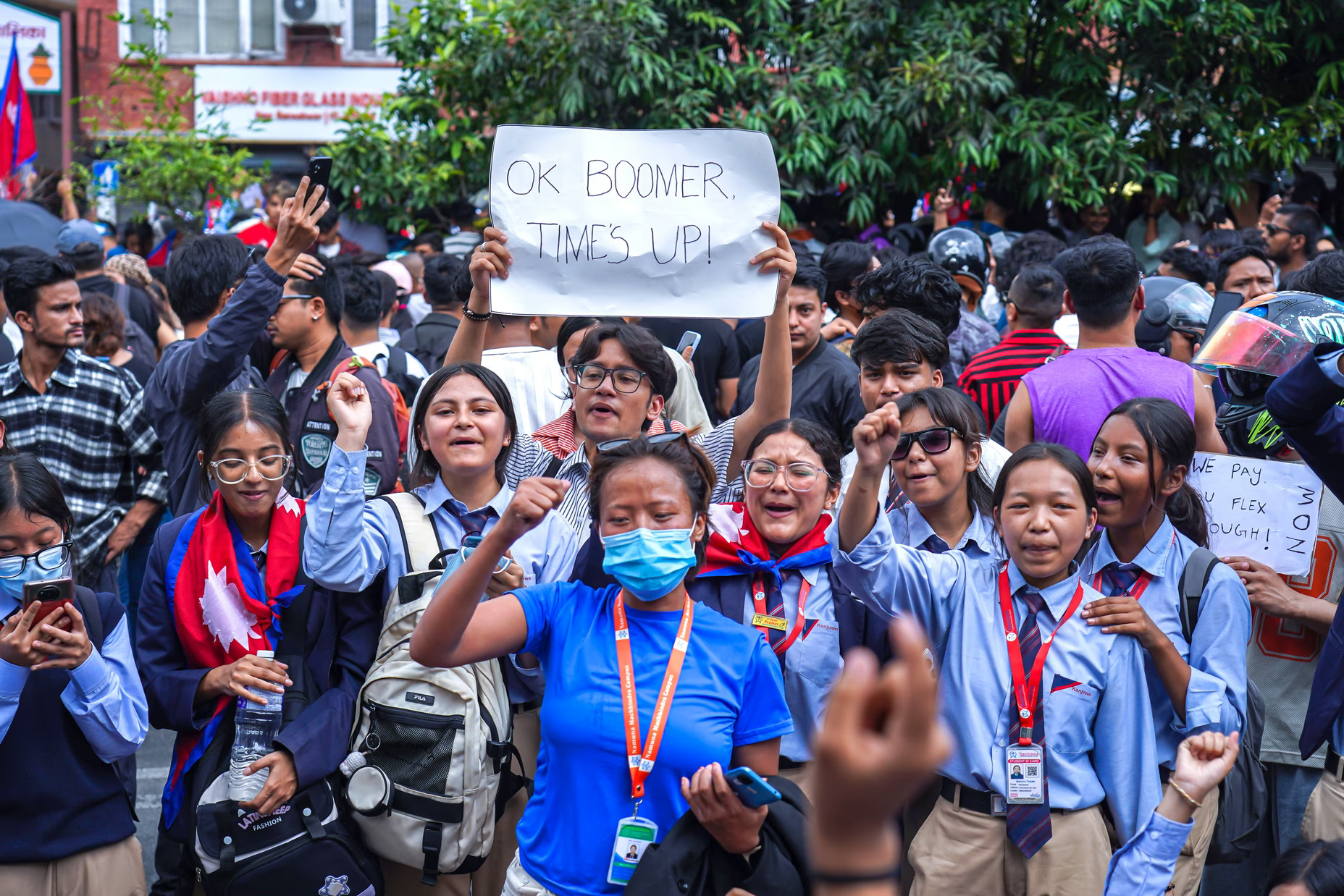
Anyone old enough to be governed is old enough to have a say, and with the bill on votes at 16 now in the House of Lords, the author sets out why.

AS a teenager, it might seem obvious for me to argue that young people should be allowed to vote. After all, expanding voting rights would directly benefit teenagers. However, the question is more complicated than whether teenagers want a vote. The real issue is whether 18 is actually the right point at which democratic rights should begin.
In modern society, 16-year-olds are given increasing responsibilities and are expected to make important decisions about their own futures. At the same time, they are denied a say in political decisions that will mainly affect them for decades to come. While concerns about maturity and political knowledge are understandable, I believe that 16-year-olds should be able to vote because they have a large stake in society, can form political opinions, and would strengthen, not weaken, democratic participation.
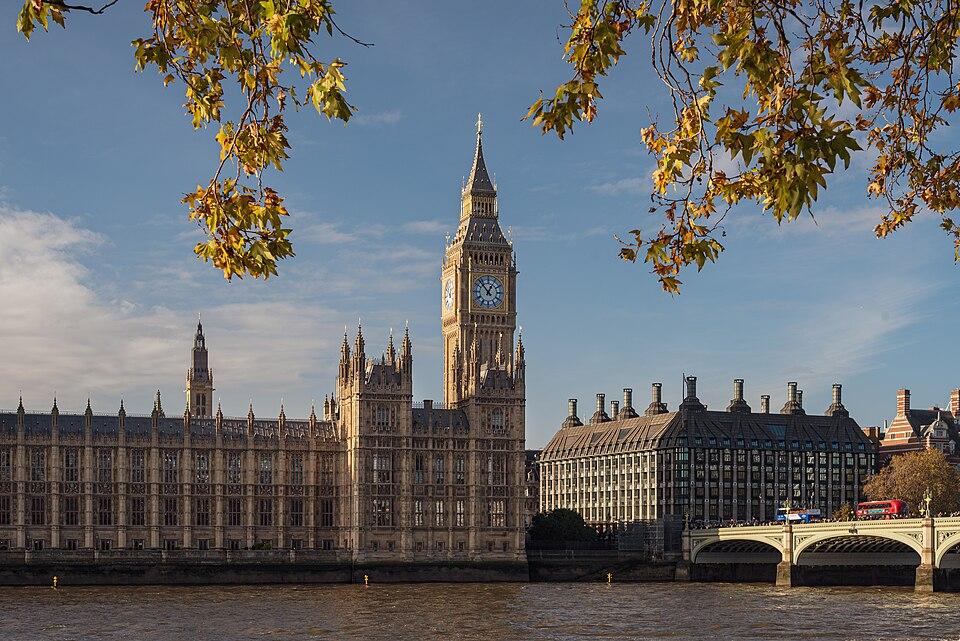
This is no longer a hypothetical question for a debating society. The government's Representation of the People Bill, introduced in February 2026, would lower the voting age to 16 for all UK elections, including general elections, and let young people register to vote from the age of 14. It completed its passage through the House of Commons in September 2026 and is now before the House of Lords, with ministers committed to having the change in place well before the next general election, which must be held by August 2029.
If it becomes law, many people who are 14 or 15 today could be handed a real ballot paper rather than a hypothetical one. That makes the argument that follows rather less abstract than it once was.
A Generation Governed Without a Vote
One of the strongest arguments for lowering the voting age is that political decisions have a major impact on young people. Governments make choices about education, university funding, housing, taxation and healthcare. These decisions shape the future of today's teenagers, sometimes more than they affect older generations.
Climate change is the strongest example: the policies made over the next ten or twenty years will have serious consequences for the current generation, yet many of the people deciding them will not live with the long-term effects to the same extent. It seems unfair that those with the greatest stake in the future are excluded from influencing it.
The principle behind democracy is that people should have a voice in decisions that affect their lives. If a free and liberal society takes that principle seriously, it is very hard to justify excluding 16-year-olds. Young people spend years hearing politicians discuss the future of education, exams, tuition fees and jobs. These are not distant political issues for us; they have immediate effects. The argument that young people should simply wait until they are older ignores the fact that many important political decisions cannot be postponed until we turn 18.
Trusted With Everything But a Ballot
Another reason to support votes at 16 is that society already trusts young people with many responsibilities. In the UK, 16-year-olds can work, pay income tax and National Insurance, leave full-time school for an apprenticeship or training, and make important choices about their lives and careers. Many teenagers have part-time jobs and contribute economically to society. If a person is considered responsible enough to earn money and pay tax, it is hard to argue that they are not responsible enough to vote on how that tax money is spent.
The case is clearer still because voting is one of the least risky responsibilities a democracy can grant. Casting a ballot once every few years endangers nobody, and it gives every citizen a voice. A society that trusts young people to make decisions that shape their careers and futures, yet denies them any role in choosing the government that influences those futures, is being inconsistent about its own values.
The Weakest Case Against 16-Year-Olds
Critics of lowering the voting age often argue that teenagers lack the maturity to form political opinions and act on them. There is some evidence behind this concern: psychologists have found that aspects of decision-making continue to develop beyond childhood. Some people therefore argue that voting should remain restricted to adults.
However, this argument has weaknesses. First, democracy has never required voters to pass a test of maturity, intelligence or political knowledge. Many adults have limited understanding of economics, foreign policy or law. Some vote out of personal attachment, party loyalty or concern about a single issue; others choose not to follow politics at all. Yet nobody suggests removing their voting rights. The right to vote rests on democracy and equality, not on passing a test nobody else has to sit.
Second, maturity varies enormously between individuals. Some 16-year-olds take a keen interest in current affairs and are better informed about politics than some adults. If maturity is the key concern, then age is a poor measure of it. There is no transformation on a person's eighteenth birthday, and it is hard to explain why someone considered too immature to vote at 17 years and 364 days becomes eligible the next day. That underlines how arbitrary it is to exclude 16-year-olds on the basis of age alone.
What the Evidence Actually Shows
There are, in fact, reasons to think that 16-year-olds may be better prepared to engage with politics than older first-time voters. Most are still in education, where they are encouraged to discuss and debate current events, history, economics and social issues, with teachers on hand to explain political systems and help them weigh up different viewpoints. Many people, by contrast, first become eligible to vote after leaving school, when they have fewer opportunities for this kind of structured discussion.
Voting behaviour can also be shaped by the mood of a single moment rather than by settled judgement. Many voters backed Margaret Thatcher in the 1983 general election partly because of her leadership during the 1982 Falklands War, taking military success as evidence of strong government, although pollsters and political scientists now think this “Falklands factor” was somewhat overstated compared with the economic recovery under way at the same time. Either way, voters of any age can be swayed by whichever issue dominates the moment, a tendency that has little to do with being a teenager.
Evidence from places that have already lowered the voting age supports this. Austria became the first European Union member state to lower its national voting age to 16, in 2007, and studies of Austrian elections have generally found that young voters turn out and choose parties in ways that closely resemble older voters, rather than voting erratically.
Scotland allowed 16- and 17-year-olds to vote in the 2014 independence referendum and then lowered the voting age permanently for Scottish Parliament and local elections under the Scottish Elections (Reduction of Voting Age) Act 2015. Wales followed for elections to the Senedd, the Welsh Parliament, under the Senedd and Elections (Wales) Act 2020, and for council elections in 2021. In none of these places has the disorder or disengagement that critics predicted materialised. Westminster is now the outlier rather than Edinburgh or Cardiff, which makes these examples difficult for opponents of votes at 16 to explain away.
A Problem for All Ages
Opponents raise another important concern: that younger voters may be more vulnerable to influence from parents, teachers, friends or social media. This is a legitimate worry, particularly in an era when misinformation can spread rapidly online. But it is difficult to accept that the problem applies only to teenagers. Adults are also influenced by family members, newspapers, television, social media and political campaigns, and the spread of misinformation affects every age group.
Rather than excluding 16-year-olds from democracy, a better response would be to strengthen political education. Schools could teach students how to evaluate evidence, identify misinformation and understand political institutions. If society is worried about informed voting, then education is a far better remedy than exclusion. Keeping 16-year-olds from voting does not make democracy stronger; it weakens it, and weakens the country's claim to stand for freedom and liberty.
Whose Future Is It?
Ultimately, the debate comes down to what democracy is meant to achieve. If democracy exists to ensure that those affected by political decisions have a voice in making them, then excluding 16-year-olds is difficult to justify. Young people will live longest with the consequences of government policy, and they can engage thoughtfully with political issues. Concerns about maturity and influence should not be dismissed, but they are not specific to teenagers and do not justify denying an entire age group a vote.
For these reasons, I believe that 16-year-olds should be able to vote. Lowering the voting age would recognise the responsibilities that young people already carry and give them a real stake in the democratic process. More importantly, it would acknowledge a simple principle: if young people are old enough to be affected by political decisions, they are old enough to have a say in them. Democracy is strongest when it includes those whose futures are at stake, and few groups have a greater stake in the future than today's 16-year-olds, who may soon be casting their first votes.