#SocialChange
Phones have changed centuries-old student activism, speeding its reach from campus petitions to protests that can topple governments in weeks.
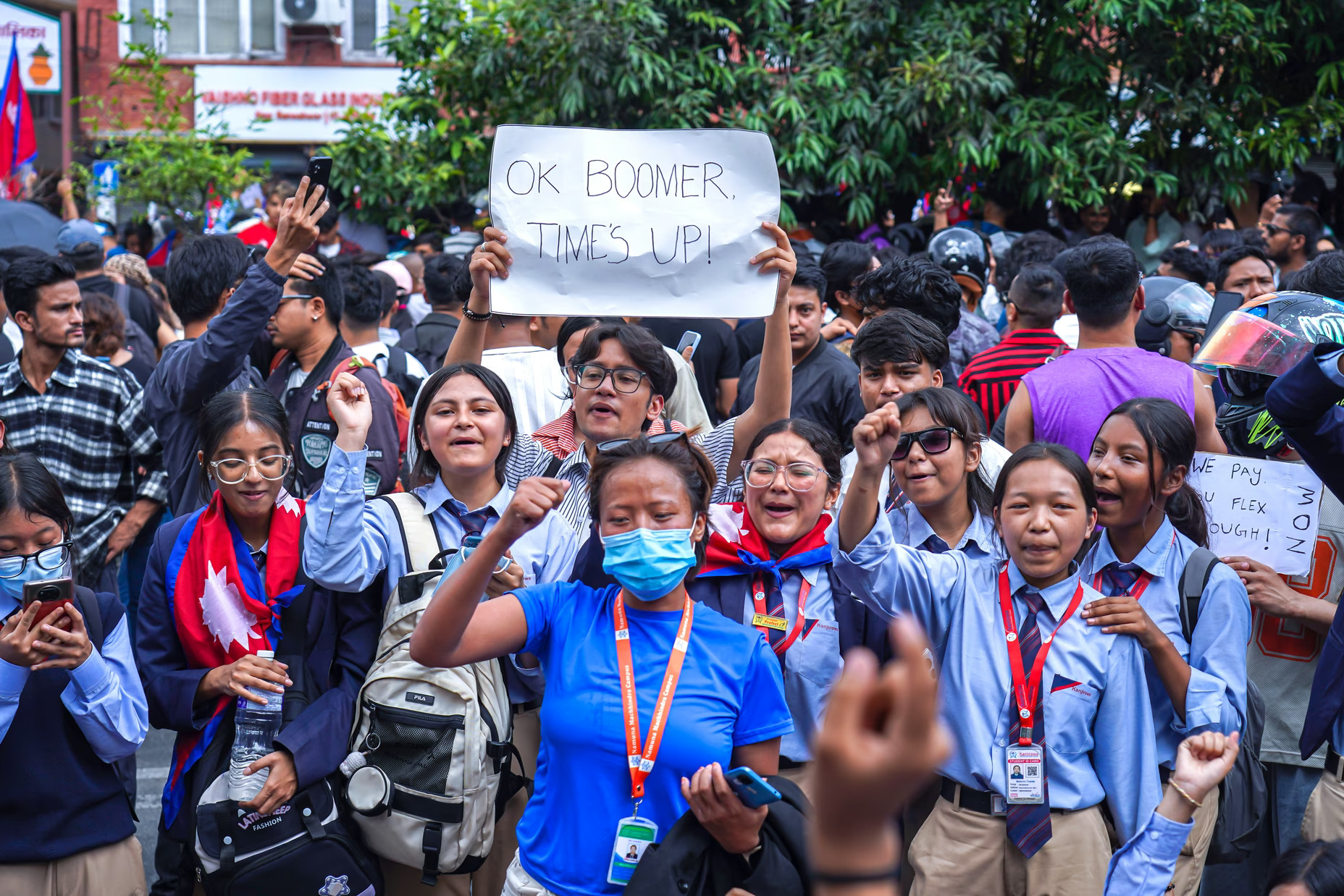

YOUNG people have long influenced political outcomes – youth activism is almost as old as universities themselves. The first documented student activism occurred in the 13th century, when students in Paris and Bologna organised around local issues, uniting to enact change; likewise, in the 16th century, student activism in Korea was quite present, trying to enact change in their towns.
The difference today from the pre-digital era is the velocity and reach. Political participation no longer follows the established steps that previous generations had to go through – channels such as reading the newspaper, attending a town hall, participating in local initiatives, and voting. This structure has been greatly changed by technological advances.
Student led activism now operates on a very different scale, shaped by the connectivity and speed offered by the device held in our hands, the phone. Technology has eliminated many barriers, crossing borders and spreading in places far beyond their places of origin, connecting people far and wide. The expectation of permission or institutional approval has largely disappeared, replaced by direct action, often online, which allows people to share their thoughts while remaining anonymous.
At its core, activism created by technology allows students to form alliances to address political or environmental issues, often building solidarity around causes, further adding to the youth’s political identity as they emerge into active voters. But social media does not affect all young people in the same way. The effects depend a lot on where you live, how stable your country’s democracy is, and the attitudes that shape your political culture. If anything, social media acts like a mirror, sometimes reflecting people’s hopes and sometimes amplifying their frustrations.
To better understand this shift, researchers created the Sociopolitical Action Scale for Social Media (SASSM), as noted in the National Library of Medicine. SASSM is designed to measure how digital spaces such as TikTok, Instagram, and X serve as engines of collective action at both national and global levels.
An illustrative example of how technology has affected activism in students is in Canada in 2012, which showcases student-led mobilisation escalating quickly, driven by access to phones. Political science once prioritised formal, party-based involvement, but the scope of participation has widened.
Digital activism is especially salient for groups historically marginalised within traditional systems. Social media offers space for identity formation and direct advocacy, especially for those excluded from established hierarchies. Movements such as March for Our Lives, Black Lives Matter, and global climate strikes demonstrate how local concerns can transition into transnational campaigns, often in a matter of hours.
Yet this expanded terrain comes with costs. The intensity of digital engagement, as seen in research on movements like Black Lives Matter, can heighten anxiety, stress, and trauma – pressures most acute among marginalised youth. Accessibility does not translate to ease. The expectations placed on young activists have increased, and participation is now shaped by the demands and volatility of digital platforms. Youth activism today exists at the intersection of immediacy and uncertainty, requiring navigation of a space that is as challenging as it is open.
In developing democracies, where young people often up a large share of the population, the stakes in online activism are incredibly high. In West Africa, studies have found that when young voters see political messages on social media, they’re more likely to feel confident about their political knowledge and actually show up to vote. For West Africa, social media isn’t just a distraction – it’s a lifeline for youth who might not have access to formal civic education, as West Africa is known to have only 39% of people having secondary education.
Technology in West Africa has ultimately helped many find their voice and get involved in shaping their country’s future. Likewise, researcher Akeusola reports on Nigeria’s student-led movements, showing that technology has significantly aided student activism, noting that with 40% of the population under 25 on social media platforms, these spaces have become essential for youth-led movements.
In Nepal, youth-led social movements captured notable traction through online hashtags like #NepalMatters, sparking a national conversation and urging a more inclusive society.
However, social media’s influence on youth is not without its downsides. In Southeast Asia, digital media sometimes has the opposite effect. In Malaysia, research shows that first time voters who rely mostly on social media for political updates are less likely to register to vote or turn out at the polls. Their platforms are overwhelmed by negative news, online arguments, and a sense of cynicism that makes voting feel pointless. Instead of inspiring action, too much negativity online can have the opposite effect, making some youth decide it’s better to stay home on election day. Behind every data point or study, real young citizens are trying to navigate a world where politics is just a swipe or a click away.
The landscape of political participation has shifted irreversibly. Where civic engagement once depended on physical presence and printed words, it now unfolds across platforms defined by immediacy and volatility. Timelines and trending topics dictate the rhythm of public life, and political identities are constructed, tested, and sometimes undone in spaces where attention is fleeting.
The effects of social media are not uniform or easily categorised. In some contexts, the rapid diffusion of ideas mobilises large groups and accelerates change. In others, the same channels can foster fatigue, cynicism, or polarisation, diminishing the likelihood that online energy results in sustained engagement. While digital activism can amplify voices and connect like-minded individuals, it does not guarantee that momentum online will translate to institutional change or stable civic action.
Both traditional and digital forms of activism continue to coexist, each with distinct limitations and strengths. The most significant shifts occur when these approaches intersect: when digital networks reinforce efforts that persist beyond the screen, or when online debate leads to concrete steps within communities.
The direction of democracy’s evolution depends not on technology alone, but on whether the connections made online are recognised as legitimate and consequential by existing institutions. The future is uncertain, shaped by competing interests and the unpredictable logic of rapidly shifting platforms. What is clear is that youth activism, in its digital forms, is a present reality – not a passing trend. The essential question is whether this technological presence can be harnessed to reinforce the foundations of a democratic society, rather than erode them.