The Roaming Chair
A Kathmandu political sociologist looks at why Nepal's Gen Z protesters turned on all three main parties at once, and why life abroad often falls short of the dream.
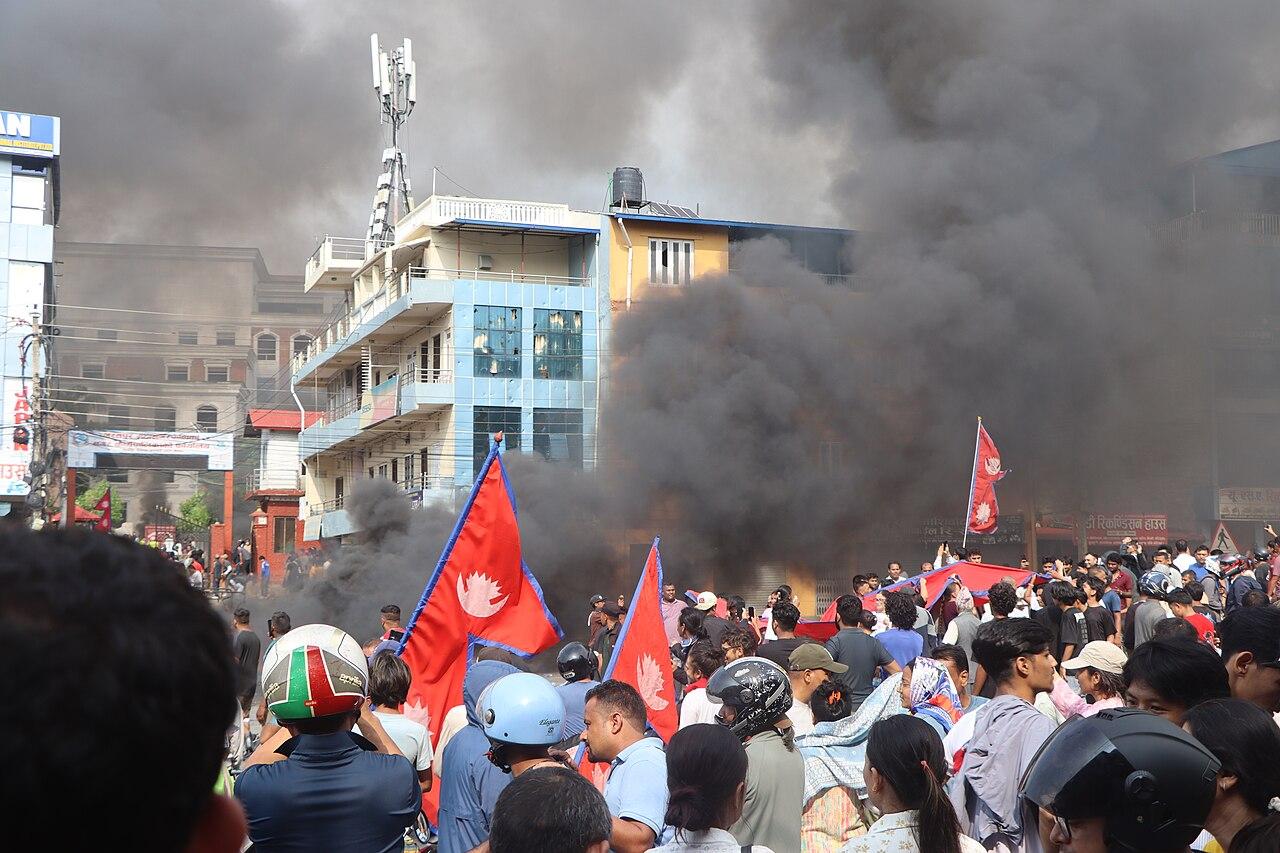

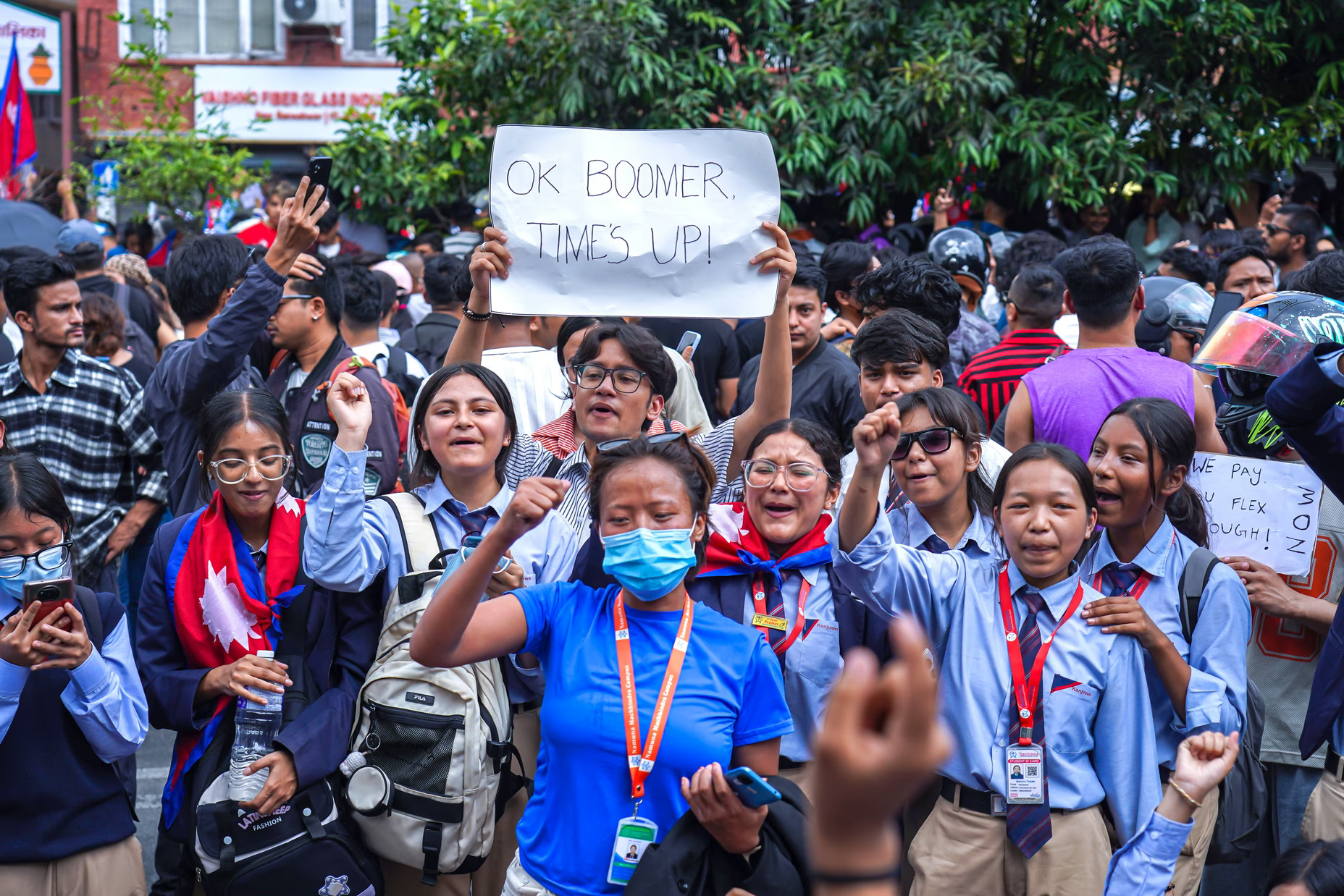
IN September 2025, young Nepalis took to the streets after the government banned 26 social media platforms. Within days the protests had spread across the country; parliament and Singha Durbar, the seat of government in Kathmandu, were set on fire; at least 76 people died; and Prime Minister K. P. Sharma Oli resigned. A former chief justice, Sushila Karki, led an interim government until fresh elections in March 2026, which the Rastriya Swatantra Party won outright with 182 of 275 seats.
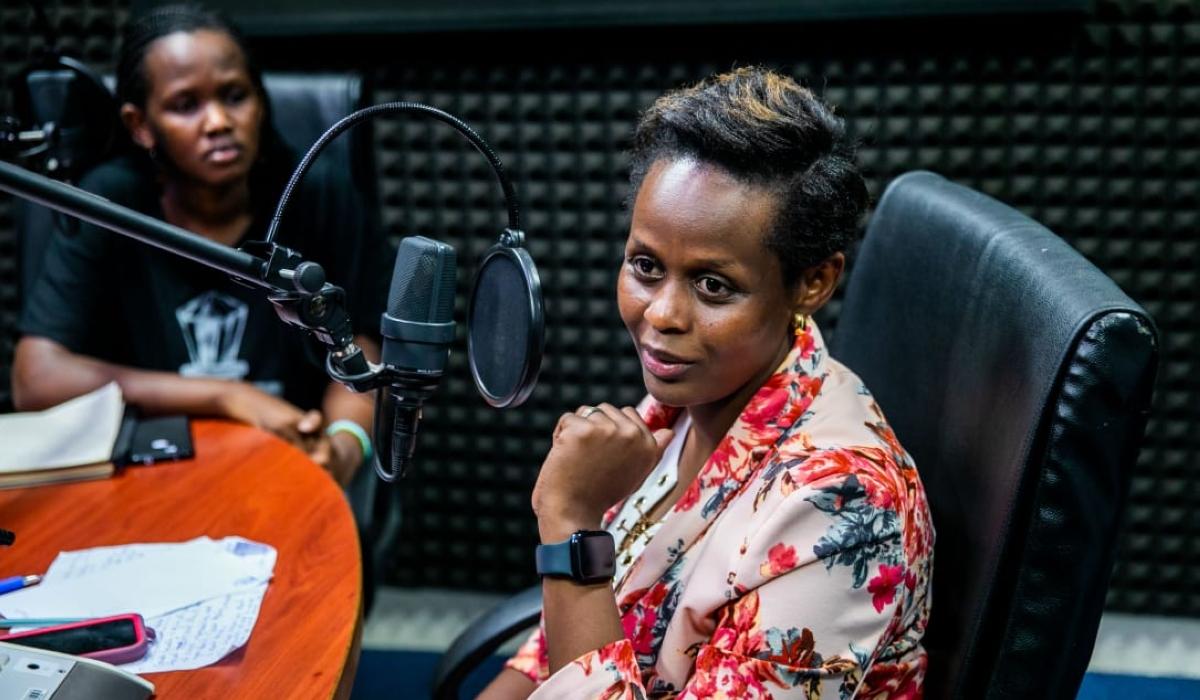
Dr. Uddhab Pyakurel, a political sociologist at Kathmandu University who trained in Nepal and at Delhi University and Jawaharlal Nehru University in India, studies caste, social movements, migration and party politics. We asked him what made Nepal's Gen Z uprising different, why caste still shapes the lives of educated Nepalis, and what happens when a country restricts only women from working abroad.
The Confluence: Could you introduce yourself to our readers, and tell us what drew you to the field you work in?
Dr. Pyakurel: I am from the north-western part of Nepal, and I am a student of political science and sociology. I try to establish my identity as a political sociology scholar. Born into a rural farming family, I was lucky to have a number of opportunities not only to attend conferences elsewhere but also to understand very different social realities, from the deeply rural to the semi-urban to the highly cosmopolitan; during my PhD I visited dozens of universities in at least 10 or 12 countries around the world. That is how I developed the perspective I now use when I communicate with a global audience.
The Confluence: How does Nepal's Gen Z movement compare with the country's earlier social movements?
Dr. Pyakurel: Every social movement has a context, and that context is what helps you tell them apart. Nepal is, for many of us, a very happening place. Every ten years or so you might see a social or political movement, and quite often it will change the constitution, bringing very revolutionary changes. That is a regular phenomenon in Nepal.
If you compare the movements of the 1950s, the 1960s and the 1990s with the latest Gen Z movement, the context has changed. Earlier, organisers had not only a different but a difficult way of communicating with people; the physical presence of a mobiliser was almost compulsory, even just to tell the people that a movement was being launched, and that was time-consuming and sometimes resource-consuming.
Earlier, too, at least some people could believe in political ideologies: Marxism, socialism, neoliberalism [faith in free markets], whatever you say. Lately, people still refer to those theories and claim to be associated with them, but largely, because of the new global economic order popularised by neoliberals and capitalists, people have to struggle for their bread and butter today.
In the new context, it is a very individualistic way of looking at society. If a person has to survive, then he or she has to deal with society with only his or her individual interests in view. That is the political economy today, and it compels a person to talk not about collectiveness but about individualism. One finds a link between that and the system of production and consumption globally today.
And then, all of a sudden, there is the media revolution. Most people have a smartphone and use the internet, meaning that in a second, whatever I am reading as a source of information, you can also read. Whoever has a smartphone and the internet has the same access to information as everyone else: the prime minister, the communications minister, people in Washington DC, or the poorest Nepali citizen.
So the media revolution has made information accessible to pretty much everyone, and the economic mode of production popular globally today encourages people to be very individualistic. I think these two things are how our Gen Z protest has to be seen, and how the Gen Z movement is being popularised globally today.
That is why political ideology is less influential and less cited. Only frustration and anger are becoming more popular day by day, because whoever has money tries to control the media, boosting things and controlling the social media echo chamber. Whoever wants to create hatred has become popular, and people start comparing their lives with other, quote-unquote, good or better lives.
They do not know what is really better globally, because every society has problems. But they feel some societies are more developed, more peaceful, more liveable, and consider that their own place has nothing good in it. Hatred and negativity, all coming through the algorithm and the mass media, plus the individualism I referred to: this is the package fed to young people, at least in Nepal, so that they came to feel an unbelievable anger against the state. And that led to the Gen Z protest in Nepal.
The Confluence: Was the protest essentially about corruption?
Dr. Pyakurel: No, it was not. Corruption, raised in the name of transparency, was definitely part of it. But as a student of political sociology I try to understand the nature of human beings, and we human beings are obviously drawn to diversity. We do not want to see the same monotonous thing around us all the time; we do not want to eat the same food always, nor wear clothes of the same colour or style.
I sometimes remind my students: even if a hostel offers very good food, if it is very regular, Monday this, Tuesday that, people start getting fed up with the routine. That is human nature. We want diversity. We want different food, a different colour, and a different person in power as well.
Globally today, people get fed up if they see the same person for ten or fifteen years, and they start feeling that there should be another face. That face might not be better than the last one, but this is human nature. In Nepal, three leaders from the three largest parties [Sher Bahadur Deuba, K. P. Sharma Oli, and Pushpa Kamal Dahal, known as Prachanda] had been around for at least 25 years, some for 35.
Once you have been around for 25 or 35 years, your negative points become well known and your positive points are discussed less. So people started not liking them, not liking their faces, and thought only negatively of them. They linked that negativity to corruption, nepotism, inefficiency, lack of transparency, the failure to hand over leadership, and everything like this.
So largely it was due to a practice of roaming chair, power passed between three party leaders for decades. That is how it became a comprehensive package against that old generation, in the name of Pushtantaran: generational transfer.
The Confluence: What made Nepal's movement different from the protest waves in Bangladesh, Sri Lanka and India?
Dr. Pyakurel: Nepal was unique compared with other movements around the world last year and even this year. Elsewhere, in Bangladesh, in Sri Lanka and in India, the anger was against only one party, the ruling party. Here it was not only the ruling party but also the main opposition parties. All three major parties were targeted by young people.
Why was that so? As I said, they had this roaming chair of power. Of these three, a party in power might, in six months, be in opposition. That kind of rotation was there for years. That is why even the opposition was targeted by young Nepalis. Going beyond the ruling party was one of the unique features of Nepal's movement.
Holding the elections on time was another feature of Nepal after the Gen Z movement, compared with other South Asian experiences. Likewise, thinking of an alternative in quite a short time is also unique about Nepal's movement.
The Confluence: Caste-based discrimination is something you have written about extensively. Where does it stand in Nepal today?
Dr. Pyakurel: You have rightly pointed out that a major issue in Nepal, even today, is caste. Nepali society is still different as far as social hierarchy is concerned. Constitutions since 1960, and even since 1951, tried to address that very problem of caste-based discrimination and hierarchy, but for many reasons they did not succeed. We are still somewhat influenced by a traditional social belief: caste.
Our education system has grown enormously in seven decades, but it has not transformed society the way it should have. An educated person might at least appeal to logic and try to convince people with a bit of reasoning, but even the educated try to be emotional, referring to a tradition or myth. They play the card of tradition and even of inherited knowledge: my parents do this, so I have to respect my parents. These kinds of pretensions are coming even from educated leaders.
In countries like Australia and the USA there are more than 100,000 Nepalis, and almost every European country has a strong Nepali diaspora. But wherever they go, they take their very traditional baggage with them, and eventually they refer to their caste and creed during cultural and other events. That is also closely linked to electoral politics: when they have to vote, they try to find out who is who, and whether he or she is one of their own people.
So this exists among educated people as well. In rural areas the practice of untouchability [shunning the lowest castes, the Dalits, as impure] is still prevalent, but it is also there among educated people, and even among the diaspora caste-related issues come up when there are cultural events. So this is still the major issue as far as social inclusion and exclusion are concerned in countries like Nepal.
The Confluence: Nepal is one of the world's most migration-dependent economies. How has the nature of that migration changed?
Dr. Pyakurel: There is still this ego of so-called nationalism. We talk about climate change, and there is no boundary. We talk about natural disasters, and there is no boundary. Air pollution, everything: it doesn't follow national borders. But once there is an opportunity, we try to divide human beings into “them” and “us”. All of a sudden we stand with a political boundary.
While doing so, a glorifying narrative also takes hold, stating “we” are better than “you”. The West always considers itself the best, talking about the second world and the third world, and also about the Global South versus the Global North. It is a divisive politics created by the so-called West, asserting its superiority by saying that others are “inferior”. Then, once a comparison is available, people follow whatever is promoted as good or best, and they start moving, feeling that the West, or anywhere beyond the border, might offer a better life.
Earlier, Nepal's migration was not voluntary. People migrated only under compulsion: only if there was starvation, or if there was a strict social sanction to avoid, would people migrate. Today it has become a voluntary or “rational” choice. You are more connected, you are richer, you are the most frequent migrant today.
That is a shift in the migration pattern, and because of the media revolution I described earlier, everyone wants to migrate, because they see a better life elsewhere through social media, not in their own society and country, Nepal.
The Confluence: Nepal has repeatedly restricted women's migration for work while leaving men's largely open. What has that achieved?
Dr. Pyakurel: This aspiration exists among women as well. After centuries of being confined at home, women got the opportunity to go beyond household work. Along with the liberalisation of the passport regime by the Nepali government in the early 21st century, some women were strongly encouraged to go abroad because of family pressure, sometimes social pressure, and, as I said earlier, they were also influenced by global pressure: “your” society is not better, come to “our” society, have a better life or earn better money and go back. That is the popular narrative everywhere, in every household in Nepal as well.
Then the Nepali state tried to impose different treatment on men and women. Male labour migration was promoted even if one might have to struggle abroad facing many challenges, but the same thing was not considered as an option for a woman. That was a very gendered way of looking at migration. In twenty or twenty-two years (1985-2017) the government changed Nepali law and the legal system many times on this, 18 or 19 times. And there is no reason for it.
Migrant men also suffer as women do. Nepal just remembered the occasion when twelve Nepalis were killed in Iraq [in 2004, by militants who had taken them hostage], and all of them were migrants. That is not a unique case; on many occasions we have lost men abroad as migrant workers. They were jailed and faced difficulties, just as women are.
That is why showing concern only for women is considered gendered and discriminatory: men and women should be treated equally, because both will face discrimination and problems in the country where they want to go and work. Those are the voices raised by feminist and human rights activists.
My point here is this: either you remove the aspiration of women to go abroad by offering a better narrative of a good life in the country, or, if you romanticise migration and working abroad, then even if you impose a ban, they will find many different ways to get there. And that is what is happening.
I always refer to a quote from an American politician about the Mexican border. He said: please kill the aspiration to come to the USA, because if you do not kill the aspiration, then whatever tall wall you build, people will come with a ladder. If you have a 49-foot wall, people will come with a 50-foot ladder. That is what Nepali women are doing today to cross the immigration; they use alternatives available in the neighbourhoods because the aspiration is high. They want to make it anyway.
Everyone is given this romantic idea of migration, and women are also empowered; you cannot discriminate against them going beyond household work. In other words, if, instead of providing safe migration, you impose a ban only on women, they use informal channels. They take Indian citizenship hiding their Nepali identity, or use Indian or Sri Lankan airports, and go.
They make it anyway, and once they get there they are even more vulnerable, because the Nepali government might say: “you are not Nepali”, “you are from elsewhere, you did not use the channel we suggested”. So for the government the ban might be about saving women's lives, but women eventually go anyway, and their lives become more vulnerable as the government's social protection or social security for migrant workers cannot be available to cover them.
If there was no ban, women would be under a regular system, they could at least use Nepal's airport and travel legally on a visa so that they could benefit from state social protection in case they encounter a problem in the receiving country. This is my argument on gender-based disparity on labour migration in Nepal.
The Confluence: You have argued that political parties have lost their ideological grip. Why does that matter for a democracy?
Dr. Pyakurel: That is linked to my earlier explanation of the Gen Z movement. Democracy and democratic authority have to be brought within reach of the people, and people (followers and sympathisers) have to be trained to behave as democrats, through political parties, as the political parties are very important in a democracy, at least in an electoral democracy.
It is because they are the ones who have a channel up to the household level to transfer knowledge and narratives, including about the constitution, democratic authority, and so on. In fact, that is the only channel available in the electoral democracy Nepal follows today.
Then, again, ideology becomes a very important phenomenon. Earlier political parties were federalists, monarchists and conservatives, and they would go to the people to train in what is what: what monarchy is, what a republic is, what federalism is, what inclusivity is, what Brahminism [the order placing the Brahmin priestly caste at the top] is. So party indoctrination is also very important in a democracy even today.
But, as I said, political parties are very weak today. Their channel has been replaced by the algorithm and social media. And instead of being collective followers of a political ideology, people are now party members who are very individualistic in nature. I blame today's mode of production, popularised by neoliberals, for that.
Putting together the arguments I mentioned above, what I try to say here is that today people (even party followers) do not follow whatever leaders say. In the Nepali context, because the same leaders were there for years, they definitely could not visualise the aspirations of the people. In other words, neither political party leaders nor their followers were very committed ideologically; their commitment was only loosely tied to the party. As a result, mistrust of those leaders was also mistrust of political parties and of party ideology.
Today it is very difficult for every party, including the new parties, to retain a collective ideology. Institutionally too, in whatever movement is happening or will happen, I think there is a problem of collectiveness. Whoever takes the leadership comes all the way through the algorithm, meaning through the politics of hate, and tries to create a sense of negativity about others, and people will not know anything about the person who created that negativity.
Even the Prime Minister of Nepal today, and the president of the largest party in Nepal today [Balendra Shah, a former mayor of Kathmandu, and Ravi Lamichhane of the Rastriya Swatantra Party]: people did not know about these two people, today's leaders. But they knew far too much negativity about the older generation. That is why they felt the old is bad, and whether or not the new one is good, I support the new one.
That tendency was very strong, and that is how ideological commitment, and even belief in institutions, were compromised. As I hinted, a person who becomes popular through the politics of hate, using the algorithm, can create havoc and also win the support of frustrated masses. But they might not be good at governance and delivery against people's expectations.
The Confluence: If a reader remembers just one thing from this conversation, what should it be?
Dr. Pyakurel: They have to realise that every society has problems, as Nepal does. No society is egalitarian, no society is equal, and no society is problem-free. So we have to look for the positive things within our own society and build on them, creating some positive narratives too.
Be minimalist while criticising others, so that you can deliver if you are given the chance to be in the political hot seat. If you teach people to hate someone, showing only the negative aspects of your society, everyone starts searching for heaven. But unfortunately, there is no heaven anywhere in the world: nowhere is heaven, and nowhere is problem-free. That has to be remembered not only by leaders but also by the young people of Nepal with new aspirations, and also by people from the “Global South”.