FIFA Won the World Cup
The 2026 World Cup broke attendance and revenue records, but the article finds that most of the money went to FIFA and little reached host cities or fans.

FOUR years after Qatar, the World Cup returned in June and July 2026, this time shared between Mexico, Canada and the United States. It is one of the biggest sporting events in the world: FIFA estimated that around five billion people engaged with the 2022 tournament across all platforms, while the final itself, between Argentina and France, drew an estimated 1.5 billion viewers.
It would be natural to assume that hosting an event of this size brings a plethora of economic benefits to the host nation, or in this case host nations. The evidence suggests otherwise. From the bidding process, to local businesses, to ticket prices that rose month by month, a World Cup can carry real economic costs for host cities, for business owners and even for fans who just want to watch football.
The Cost of Winning the Bid
A World Cup cycle always starts with the bid to host it. FIFA's rules say that a confederation, one of FIFA's six regional bodies such as UEFA in Europe, cannot host if it staged either of the previous two tournaments. Europe was therefore excluded because of Russia 2018, and Asia because of Qatar 2022. That left CONCACAF, CONMEBOL, CAF and the OFC, the confederations for North and Central America and the Caribbean, South America, Africa and Oceania, eligible to bid for 2026.
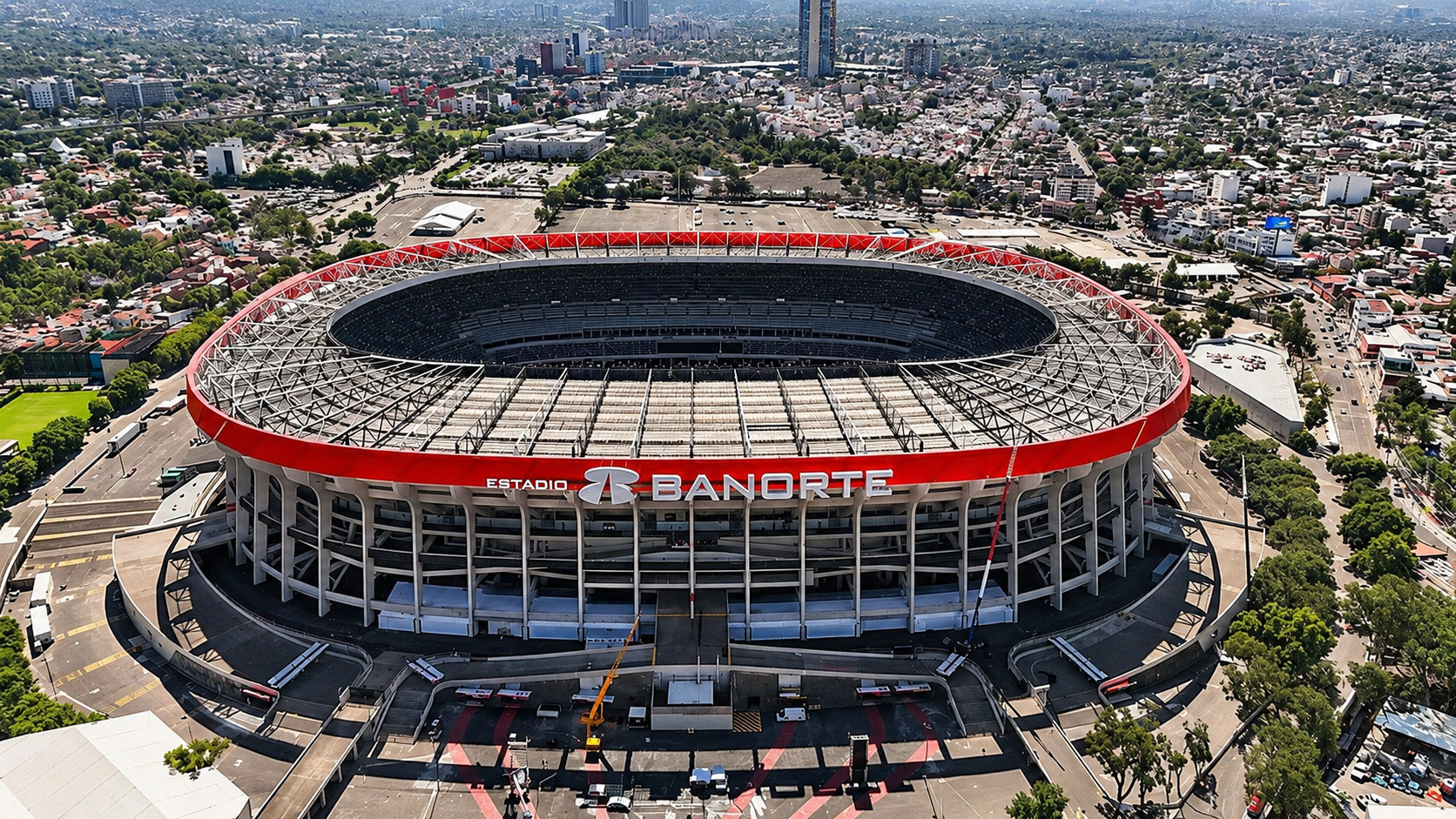
The bidding process formally opened in 2017, and on 13 June 2018, at the FIFA Congress in Moscow, member associations chose the joint “United” bid of the USA, Canada and Mexico over a rival bid from Morocco by 134 votes to 65. Existing infrastructure was a big part of the case: many NFL stadiums could be reused, alongside the high-altitude Estadio Azteca in Mexico City.
The expansion from 32 teams and 64 matches to 48 teams and 104 matches made this the most lucrative World Cup cycle in FIFA's history. FIFA had projected revenue of around $13 billion for the four years to 2026, and on the eve of the final its president, Gianni Infantino, said the total could top $15 billion. Either figure dwarfs the $7.57 billion FIFA reported for the 2019-2022 cycle that ended in Qatar: the first is about 70% higher, the second roughly double.
That is a striking jump given that, unlike Qatar, none of the three co-hosts had to build a new stadium, normally one of the biggest costs of hosting. Inflation cannot explain it either: US inflation peaked at 9.1% in 2022 and was 3.5% in the year to June 2026, and the cumulative rise in prices over the cycle comes nowhere near 70%. The more convincing explanation is that the tournament itself is much larger, and that FIFA's commercial machine of broadcast deals, sponsorship and ticketing has grown to match it.
Crucially, that revenue flows overwhelmingly to FIFA, not to the cities and taxpayers who host the games. Toronto's council approved a World Cup budget of around 380 million Canadian dollars, and research cited by Newsweek found that twelve of the last fourteen World Cups left host cities with net economic losses. The 1994 tournament in the United States set an attendance record that stood for more than thirty years, yet researchers later estimated host cities' cumulative losses at up to $9.3 billion.
Jobs That Never Showed Up
So what did the tournament itself change? Many expected unemployment in the host nations to fall, thanks to the jobs on offer, from stadium staff to media crews to entrepreneurs hoping to sell to visitors from all over the world. The first official figures did not bear this out.
According to the US Bureau of Labor Statistics, employment in leisure and hospitality, the sector most exposed to tourism, fell by 61,000 jobs in June 2026, in a month when the economy as a whole added only 57,000. The Bureau put the fall down to “weaker than usual seasonal hiring”, and New York's hotel association credited the city's strong June occupancy more to the Knicks' basketball playoff run than to football.
One month of data cannot settle the question, and the survey was taken in the tournament's opening days, but it is a useful reminder that forecasts of a World Cup boost to the US economy may have been too optimistic. Figures like these also feed into the thinking of the Federal Reserve when it sets interest rates.
Reading the Numbers Like an Economist
It is worth putting ourselves in the shoes of a small business owner to work out why expectations were confounded. One explanation is that the World Cup had been public knowledge for years, so firms and consumers had something close to perfect information: both sides could see the tournament coming and plan around it well in advance. Many businesses therefore hired ahead of the opening match; but as the tournament went on, demand for their goods and services may have fallen as fans whose teams had been eliminated went home, and employers cut back on staff accordingly.
The matches were also concentrated in a small number of large host cities, so smaller and more rural areas saw little of any economic uplift. Finally, because the World Cup is a temporary event, employers may simply have preferred to give existing staff longer and more frequent shifts rather than take on new hires they would only need for a few weeks.
None of this proves a direct causal link between the tournament and the employment data, but it does suggest that the economic effects of hosting a World Cup are largely short-term adjustments, and that its impact is often overstated.
The Price of a Ticket
For a match-going fan, the biggest cost may be the ninety minutes of football itself. Because the World Cup is held only every four years, and because each stadium has a fixed capacity, FIFA has substantial market power over ticket sales. In 2026 it used that power to charge each fan as close as possible to what they were willing to pay, a strategy economists call price discrimination.
Its main tool was dynamic pricing, used at a World Cup for the first time, under which prices rise and fall with demand. A fan who has already paid for flights and a hotel has relatively inelastic demand, meaning that their willingness to buy barely changes when the price goes up: faced with a scarce supply of remaining tickets, they are more likely to pay a higher price than miss the game altogether. That raises FIFA's producer surplus, the extra revenue a seller earns above the minimum it would have accepted.
The results were striking. According to the attorneys general of New York and New Jersey, average ticket prices rose by 34% between October 2025 and April 2026, and the top category of ticket for the final rose by 73%, from $6,370 to $10,990. NPR reported that the most expensive tickets for the 2022 final had cost about $1,600, and that a front-row seat in the lower bowl for the 2026 final was listed at more than $30,000.
In May 2026 the two attorneys general, Letitia James and Jennifer Davenport, subpoenaed FIFA over its sales practices, examining whether fans who had already bought tickets were moved to worse seats and whether the timing of ticket releases and claims of scarcity pushed prices up. Higher prices could in principle fund football development; but given the size of FIFA's existing budget, and the fact that the hosts' football infrastructure was already strong, it is hard not to conclude that the pricing strategy served FIFA's balance sheet rather more than it served the game.
Who Really Won
On the pitch, Spain won, beating Argentina 1 – 0 after extra time at MetLife Stadium on 19 July. Off it, the picture is mixed. By media counts, more than 6.8 million spectators attended matches, almost double the previous record, so demand was never in doubt. But that demand did not translate neatly into gains for local firms, workers or consumers.
The gap between FIFA's record revenue and the disappointing early employment data shows that the benefits of hosting were never as guaranteed as they were sold to be, and the pricing of tickets showed FIFA's ability to capture surplus from the very fans who make the tournament what it is. The biggest economic winner of 2026 may not have been the hosts, the businesses or the fans, but FIFA itself.
That leaves future bidders with a hard question to answer: whether a tournament that generates billions of dollars is really delivering what the people who watch it, and pay for it, were promised.