The Business of Responsibility
Companies now perform social responsibility for show, and the people their actions affect should help set and enforce their duties.

MOST people would agree, without much thought, that businesses should not poison rivers, exploit workers, or lie to their consumers. Yet they do, and they so often face no consequences for it. This is allowed to happen because of a system that judges success entirely on profit, and on nothing and no one else.
This is not really a question of ethics. It is a question of whether responsibility to people can survive in a system that has never truly had a place for it, and, if it cannot, whether businesses can safely be left as their own moral compass.
The Friedman Position
For most of the twentieth century, the dominant answer was given by the American economist Milton Friedman. He set it out in an essay for the New York Times Magazine in 1970, under a title that left nothing to interpretation: “The Social Responsibility of Business Is to Increase Its Profits.”
His position was simple and logical: companies owe nothing to anyone except profit for their shareholders, the people who own a slice of the company and have put their money into it. Decision-makers within an organisation who divert resources towards social causes are spending someone else’s money without permission, and that, Friedman argued, is a form of unaccountable power dressed up as a good deed. When a chief executive spends a company’s revenue on environmental programmes or social initiatives, they are using money that rightfully belongs to shareholders, without their approval or even their knowledge.
Shareholders believed they were investing in a business meant to provide them with profits. Giving them no say over which social cause is chosen, or over whether they would like to contribute to one at all, is very much a case of pulling the wool over their eyes.
But Friedman’s mistake lay in thinking that a purely profit-seeking company was therefore a safe one. A corporation that answers only to its shareholders is, in one narrow sense, more accountable: there is a single group it must satisfy, and a single number by which it can be judged. Widen the picture, though, and that narrowness is exactly what makes it dangerous. Organisations like these combine vast resources with no moral obligation to the world around them, and the consequences of that arrangement are not merely theoretical.
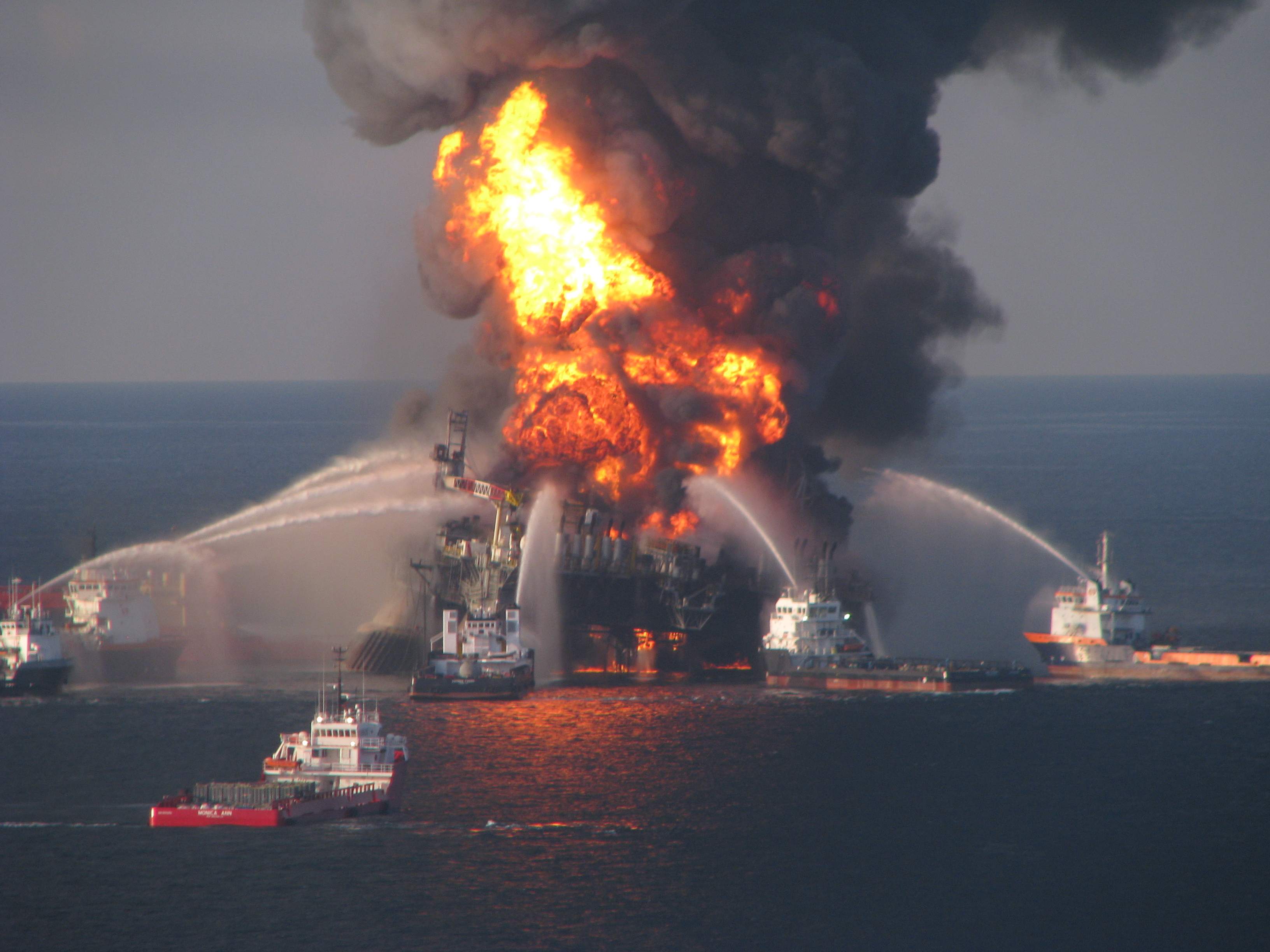
Volkswagen installed software in eleven million cars designed to deceive emissions tests, while its executives promoted clean motoring and its shareholders enjoyed high returns. Johnson & Johnson was found by an Oklahoma trial court in 2019 to have downplayed the addictive risks of the opioid painkillers it marketed, in a ruling that ordered it to pay $572 million. That judgment was later reduced, and then overturned on appeal in 2021, though the company went on to agree a $5 billion national settlement without admitting wrongdoing. BP spent $200 million rebranding itself as “Beyond Petroleum,” presenting itself as an environmentally responsible company, only to cause the worst marine oil spill in United States history when the Deepwater Horizon rig exploded in 2010.
One could say that none of these companies technically violated Friedman’s view. They were profitable, and their shareholders were rewarded. But the price was paid by everyone else: by the people breathing polluted air, the families affected by opioid addiction, and the communities along the Gulf of Mexico whose livelihoods depended on clean water.
When Responsibility Becomes Performance
This is where it becomes more complicated. BP’s behaviour pointed to a problem beyond simple irresponsibility. BP did not ignore its environmental obligations; it publicly claimed to be fulfilling them while privately doing the opposite. The practice is now common enough to have earned a name, greenwashing: claiming ethical credentials without genuinely earning them.
Corporate social responsibility was supposed to become a mechanism for accountability. Greenwashing turns it into an escape from accountability instead. Companies use it to release public pressure without ever changing their behaviour. It looks like progress from the outside, while nothing has changed on the inside.
In 2019, the Business Roundtable, an association of the chief executives of America’s largest companies, attempted to address exactly this. Its Statement on the Purpose of a Corporation carried the signatures of 181 chief executives pledging to serve employees, communities and society rather than shareholders alone.
Yet when the accounting researchers Aneesh Raghunandan and Shivaram Rajgopal compared the signatories with similar companies that had not signed, they found that the signatories had higher rates of environmental and labour violations, higher emissions relative to their industry peers, and larger lobbying budgets, with no evidence of any change in behaviour after signing. A separate study by the Harvard law scholars Lucian Bebchuk and Roberto Tallarita found that the signatory companies’ own governance documents continued to put shareholders first, and that most boards had never been asked to approve the pledge at all. The statement had changed the language, not the conduct.
Findings like these suggest that, when social responsibility can be performed rather than practised, the public often ends up rewarding good optics over good behaviour. The answer is not to abandon social responsibility. It is to recognise that the gap between what the corporate world says and what it eventually does will remain wide for as long as the system rewards short-term profit above everything else.
The Market Pressure Counterargument
One counterargument deserves a fair hearing: market pressure. Voluntary social responsibility is not purely idealistic, and irresponsibility can carry a real financial cost. When the emissions scandal broke in 2015, Volkswagen’s share price, the price at which a single unit of ownership in the company changes hands, lost around a third of its value within days, and BP’s brand has never fully recovered the public trust it lost in 2010. Episodes like these have encouraged some consumers to seek out brands they believe to be ethical.
Companies such as Patagonia and Ben & Jerry’s, which practise ethical and social accountability earnestly rather than paying lip service to it, have flourished. Patagonia built its business around environmental responsibility, and Ben & Jerry’s has been consistently vocal on social and political questions, each going further than its shareholders would have demanded.
There is evidence that this can pay. Research by Mozaffar Khan, George Serafeim and Aaron Yoon, published in The Accounting Review, found that firms scoring well on the sustainability issues that are financially material to their particular industry significantly outperform firms that score badly on them, while strong performance on issues immaterial to the business brings no such advantage. Markets, in other words, do appear to price social responsibility, but selectively, and only where it touches the business model directly.
The trouble is that market pressure is slow and unequal. It largely spares the companies further down the supply chain, the sequence of firms that produce and move materials and parts before a product ever reaches a shop. These suppliers, manufacturers and extractive industries operate out of public view, which is precisely where most of the harm occurs, while the consumer-facing business at the end of the chain builds a brand on ethics. This works reasonably well for a company like Patagonia, and catastrophically for the companies mining the raw materials Patagonia’s products are made from.
Consumer pressure also depends on the accuracy of the information consumers receive, and defeating that accuracy is exactly what greenwashing is designed to do. A market that cannot reliably tell genuine action from a public relations exercise cannot discipline companies effectively, and there lies the problem with leaving the question to the market at all.
What Would Actually Work
Businesses should have social responsibilities beyond those owed to their shareholders. But the more important point is that the question has been asked the wrong way round for too long. The real debate is not whether businesses should be responsible; it is how to make them follow through. Voluntary commitments produce statements. Rules with consequences produce change.
The concern Friedman raised, that unelected executives should not have unchecked power over what society looks like, is best answered not by trusting executives less, but by making sure that a company’s obligations are set and enforced by people who represent those affected. Businesses do not need to be trusted to do the right thing. They need to be put in a position where doing the right thing and making money are, as often as possible, the same thing.
Until that happens, corporate social responsibility will remain what it largely is today: something businesses perform for the public, while the decisions that matter are made somewhere else, for someone else, and everyone else picks up the cost.