The Best Investment of Your Life
Limited access to credit holds back education, and the Israeli conflict costs about 30 per cent of GDP, according to a Hebrew University economist.
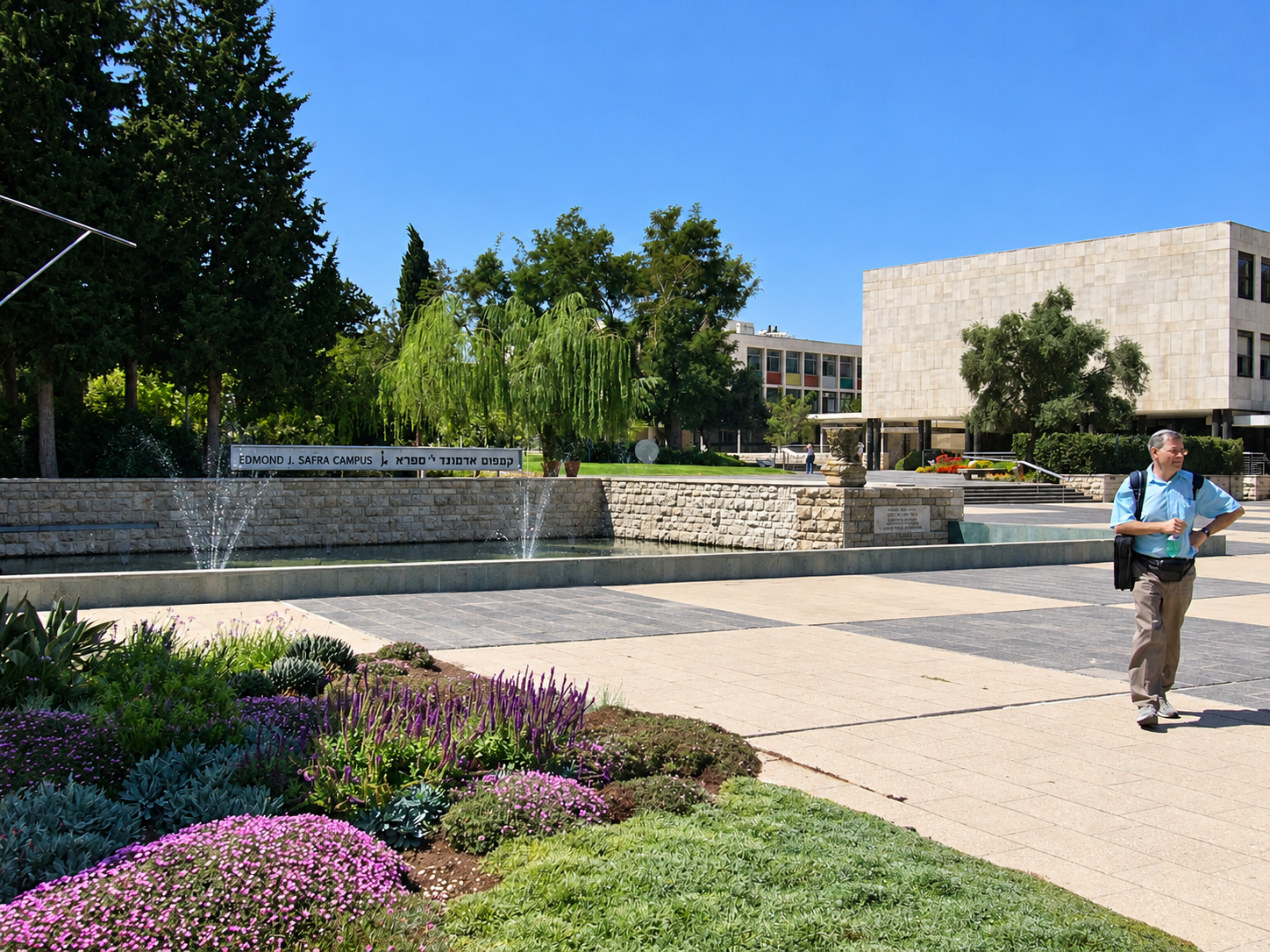

JOSEPH Zeira is a professor of economics at the Hebrew University of Jerusalem. He is best known for the Galor-Zeira model, developed with Oded Galor, which explains why poorer families can struggle to pay for education, and how that can keep them poorer over several generations. His research also covers how automation affects jobs and wages, and the economic costs of the Israeli-Palestinian conflict.
The Confluence: Your research shows that poorer families can struggle to invest in education, even when education would increase their children’s future earnings. Why does this happen, and how can it worsen inequality?
Dr. Zeira: What we showed is that when capital markets are imperfect, meaning people can’t necessarily borrow and lend any amount they want at the market price, you don’t get the optimal result. A number of important papers in the 1970s, particularly by Joseph Stiglitz and, before him, George Akerlof in his famous paper “The Market for Lemons,” established this [both economists showed that markets can break down when one side knows more than the other, as when a lender cannot tell whether a borrower will repay]. We applied that idea from microeconomics to macroeconomics, and asked: what happens when the investment people are trying to finance isn’t a business investment, but an investment in education?
It’s worth stressing that investing in human capital [people’s education and skills] became much harder after the Industrial Revolution. Before then, people learned their skills from their parents, through agriculture or apprenticeships. Once technology started changing rapidly, that channel broke down, and people needed general education instead: they had to learn to read and write to work with new machines and follow instructions, and to understand enough science to use those machines safely.
Education is costly, though, and if your parents don’t have money to pay for it, nobody will lend it to them, because it’s a risky investment. I might give someone money to educate their child, but that child will only earn a higher income far in the future, and there’s no guarantee the loan gets repaid. As a result, in countries without public education, you had situations, even into the twentieth century, where only 5 or 10 per cent of people ever went to school.
Governments had to step in and supply public education to larger and larger groups. What we show is that if the government doesn’t do this, a growing gap can open up over generations between wealthy and non-wealthy families, and that initial distribution of wealth can explain much of the difference between countries. If a country has fewer educated people, it will also have lower aggregate income [the country as a whole earns less], because education is closely tied to productivity.
The Confluence: You’ve also studied how automation affects inequality, between countries as well as within them. Why do some countries adopt labour-saving technology faster than others?
Dr. Zeira: Let me first explain what the underlying study did, since it’s become one of the foundational papers on automation. Instead of treating output as produced by two simple factors, capital and labour, I modelled production as a set of individual tasks, where firms decide whether each task is performed by capital or labour. That decision depends on two things: the cost of machinery, and the level of wages. If wages are high, firms have a stronger incentive to adopt machines instead of paying costly workers. As far as I know, it was the first model to show how a country’s technological choices depend directly on its wage level.
That has an important consequence: if a country has low wages, for whatever reason, geography, climate, lack of access to the sea, there’s less incentive for producers to adopt labour-replacing technology. Think of an electric dishwasher: a bar in New York will likely buy one, because paying staff to wash dishes by hand is expensive. A bar in a low-wage city may not, even if the owners know the technology exists, simply because manual labour is cheaper. So the wage rate itself shapes a country’s technological development, and countries that start out with low wages can fall further behind.
The more optimistic result is this: automation doesn’t simply eliminate all workers in the end, as some predict. If automation pushed too many workers out of jobs, unemployment would rise and wages would fall, and once wages are low enough, it no longer pays to automate further. So there’s a natural brake on the process.
That doesn’t mean technology has no other costs. In the current war in Gaza, for instance, I think we’ve seen how AI models can be used to commit atrocities, because they don’t think or feel or apply human judgement, they’re simply machines, and letting them drive decisions about bombing produces terrible outcomes. So I’m not without criticism of new technologies like AI, but I also think declaring that automation will simply wipe out all workers is an exaggeration.
The Confluence: In your book on the Israeli economy, you argue that the Israeli-Palestinian conflict costs Israel far more than what’s counted as direct defence spending, because of lost productivity. For readers who don’t know, what does that cost look like?
Dr. Zeira: There are two big opportunity costs beyond direct defence spending. The first comes from conscription. Every young Israeli man serves three years in the army, and every woman two, and many take a further year off afterwards, often travelling abroad. That means people enter the workforce, and start accumulating income and human capital, four to five years later than they otherwise would, and you can see this delay directly in wage statistics.
Since almost everyone retires around 65 regardless, those are years of production that are simply lost. My calculation shows this reduces Israeli output by 5.7 per cent of GDP [gross domestic product: the total value of everything an economy produces in a year]. Even under a peace agreement that still required a single year of service, rather than none at all, we’d still gain something like 4 per cent of GDP back.
The second cost comes from risk. Israel’s capital-output ratio, a measure of how much capital businesses use relative to what they produce, is around 1 in the business sector, compared to roughly 1.6 in the United States: a huge difference [in other words, for every dollar of output, American businesses use about 60 per cent more machinery, equipment and buildings than Israeli ones]. That lower capital intensity [lower levels of business investment] alone explains something like a 26 per cent loss of GDP.
The most plausible explanation for that gap is the much higher risk businesses face in Israel because of the long-running conflict. When risk is high, businesses invest less in machinery, equipment and structures, but they compensate by demanding a higher rate of profit. Workers, however, aren’t compensated in the same way: less capital in the economy means lower wages. So it’s largely workers, not business owners, who bear this cost.
Altogether, I estimate Israel loses something in the order of 30 per cent of GDP to the conflict, through conscription delaying careers and through the risk it creates for investment.
The Confluence: If a reader remembers just one thing from this conversation, what should it be?
Dr. Zeira: Keep on studying as much as you can. It’s one of the most robust results in economic science [one of the most consistent findings in economics] that every additional year of schooling increases your wages by roughly 8 per cent.
Going to school is the best investment of your life; there may be only one investment with a higher rate of return, which is putting on your seatbelt. It costs you almost nothing, and it increases your chances of staying alive. But other than that, going to school is the best investment you’ll ever make.