Cool Idea, Cool Impact, Cool People
A Ljubljana professor says creativity needs constraints, and that pressure backfires and even a few nights of poor sleep reduce it.
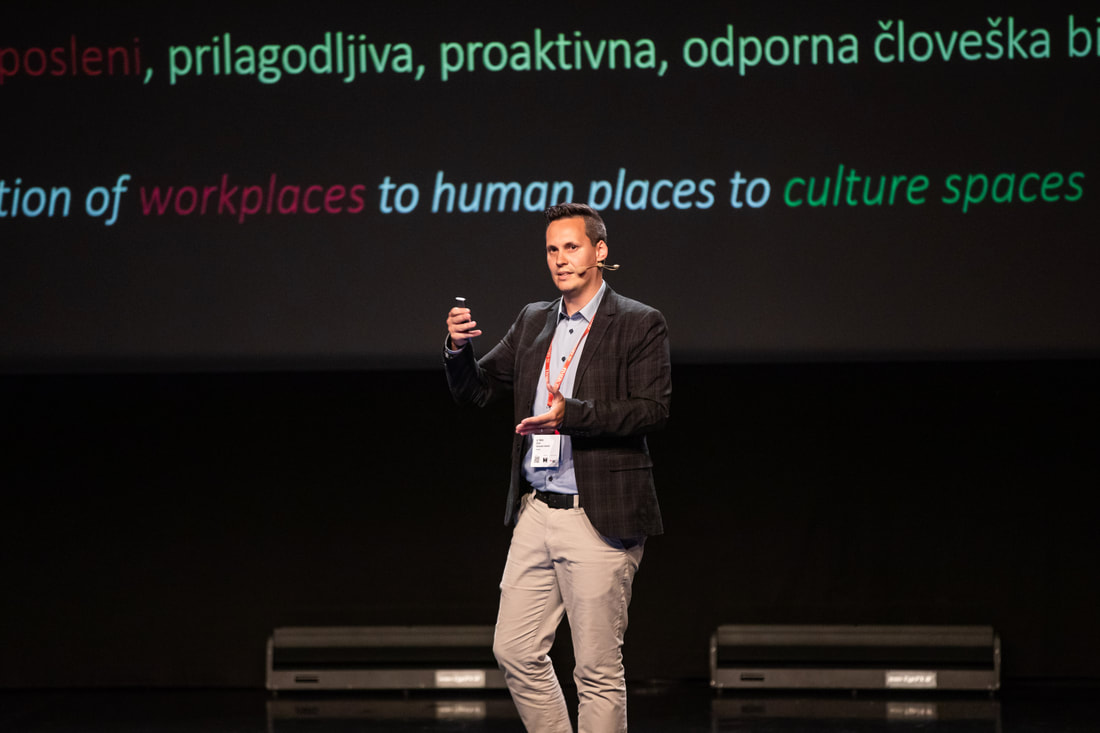

WHY do some teams keep producing new ideas while others, working just as hard, never do? Dr. Matej Černe, Full Professor at the School of Economics and Business, University of Ljubljana, studies exactly that: what makes people creative at work, what happens when software rather than a person becomes the boss (known as algorithmic management), and how sleep and recovery shape how well people perform. Anyone who will one day work in, or lead, a team will recognise the problems he describes.
The Confluence: You’ve spent years studying why some workplaces generate genuinely new ideas while others don’t, even when they try just as hard. What’s the biggest myth people have about creativity at work?
Dr. Černe: Maybe that creativity requires complete freedom and no structure. According to research, people do need useful constraints, clear problems, and something to push against. So the issue is not whether there is a box, but whether people can reshape it, with proactive job design approaches such as job crafting [employees reshaping their own role, for example by taking on tasks they are good at or changing how they work with colleagues], playfulness, and similar.
Too much control and pressure, and not enough time, suffocates creativity, but too little direction produces lots of interesting wandering and very little innovation, meaning the actual implementation of creative ideas.
The Confluence: Why can more pressure or bigger rewards backfire on innovation?
Dr. Černe: Pressure and rewards can increase effort, but effort, and even more efficiency or “production,” is not the same as creativity. Excessive performance pressure narrows focus, and people choose familiar, defensible ideas that don’t challenge the status quo, avoiding experiments that might fail.
Rewards can also turn idea generation into a competition, such as in performance climates [workplaces where people are constantly compared and ranked against each other] at work. People start protecting knowledge rather than combining it [for example, keeping a useful technique or contact to themselves instead of sharing it with a colleague whose idea it could improve]. You may get more ideas submitted, because you were told to do so, but fewer genuinely new ones that can make the difference in the long run.
The Confluence: What actually separates a workplace that talks about innovation from one that’s structured to produce it?
Dr. Černe: Innovative workplaces give people autonomy, varied tasks, and access to different kinds of knowledge. Psychological safety [the belief that it is safe to take interpersonal risks, such as speaking up, asking questions, or admitting mistakes] is also crucial, along with time to develop half-formed ideas, to play and try things out.
They also know how to select ideas without immediately killing everything unusual. We’d use the example, for our students, that the workplace that talks about innovation has posters, but a workplace actually built for innovation has trust, productive disagreement, some leeway to create even if it’s under the radar, and also dedicated people and dedicated resources.
The Confluence: Some of your recent work looks at algorithmic management, where software rather than a human manager assigns tasks and schedules, as it does for many delivery riders and warehouse workers. What changes about how people work and feel when an algorithm is calling the shots?
Dr. Černe: Algorithmic management can make work fast, consistent, and efficient. It can also make people feel watched, controlled, and replaceable. A human manager may understand why a day is different; an algorithm basically just registers that today’s number is lower.
The key question is whether technology supports human judgement or just slowly removes it, and thus removes little bits of humanity from workplaces, bit by bit.
The Confluence: You’re also researching sleep, recovery, and well-being using wearable devices. What’s something surprising you’ve found about how rest connects to how well, or how creatively, people perform?
Dr. Černe: It’s very important to know that rest is not the opposite of performance; it is part of performance. This is according to very recent research on human sustainability [the idea that work should support people’s physical, mental, and social health so they can keep growing and doing well over time].
Our research suggests that sleep shapes how people respond to demanding days and whether engagement translates into adaptability and creativity. It is not as simple as sleep more, perform better. Sleep quality, timing and latency [how long it takes to fall asleep], accumulated strain, and the fit between demands and recovery all matter. High performance is a rhythm.
What has been shown in our research is that employees actually manage to be resilient to one poor night of sleep and still engage and create at work in a similar manner, but once those nights accumulate to three to five poor nights, this then shows in their reduced cognitive and motivational capacity [their ability to think clearly and stay motivated], and hurts their creativity.
The Confluence: If you had to give one piece of advice to a 16-year-old who might end up leading a team or company someday, about building a workplace where people actually bring new ideas forward, what would it be?
Dr. Černe: It’s very important how you’ll react to new ideas. When someone brings you an unfinished or slightly strange idea, do not make them regret it. Your first reaction teaches everyone around you, sets the stage, and communicates whether ideas are genuinely welcome.
Curiosity is usually a better opening move than evaluation: share more, tell me more. Be curious, it’s what potentially still makes us different from machines. And care, care is important, the human touch.
The Confluence: Has anything from your own research changed how you structure your own working life?
Dr. Černe: Definitely, although I am not always an obedient participant in my own research. I take recovery much more seriously, especially sleep, taking care of “sleep hygiene” as our medical doctors call it: going to sleep at approximately the same time every day, not eating or drinking too close to sleep, not exercising too late, and sleeping in cooler, darker places.
I also protect periods for uninterrupted thinking, as this was shown to make the difference. I try to prioritise, ask myself what’s the actual value in every activity, and not confuse constant activity with useful work.
I also deliberately move between different projects and people, because unexpected connections often produce the best ideas. I do projects because of people, and have a clear guideline for when to take on new projects: cool idea, cool impact, cool people. This is literally pasted on a large piece of paper on my office wall.