The Neighbour Nobody Called
Four failures kept Central America, with its low wages and short route to the US, from winning the factories that went to Asia.

CENTRAL America is the narrow bridge of land that joins North and South America: Guatemala, Belize, El Salvador, Honduras, Nicaragua, Costa Rica and Panama, more than fifty million people between them. Most readers outside the Americas know exactly one thing about the region, and it is the canal that runs through our country – the fifty-mile cut across Panama that lets a ship pass between the Atlantic and the Pacific without sailing round the whole of South America. It is one of the most valuable pieces of infrastructure on earth, and it sits in one of the parts of the world that global manufacturing has most comprehensively ignored.
That is the puzzle worth sitting with. Central America has low labour costs – wages here are a fraction of American ones, because the cost of living and the pay people expect are lower, and that gap is exactly what a manufacturer looks for. It has the canal. The wider neighbourhood has enormous natural resources – Venezuela, just to the south of us, sits on the largest proven oil reserves in the world.
Above all, it is close: a container ship leaving a Panamanian port reaches the United States in a matter of days, not weeks (from Shanghai it takes two to three weeks to reach Los Angeles and four to six to reach New York). And yet Asia, on the opposite side of the planet, is the continent that makes America’s things. How did the far side of the world beat the near side?
The question stopped being academic this year. Fighting between Iran, Israel and the United States, which began on 28 February 2026, closed the Strait of Hormuz, the twenty-mile channel at the mouth of the Persian Gulf through which close to a fifth of the world’s oil is shipped. Economists at the Federal Reserve Bank of Dallas calculated that a full closure would push American crude to around ninety-eight dollars a barrel in the second quarter and, at an annual rate, take almost three percentage points off global growth in those three months.
This is what a chokepoint is – a stretch of water so narrow that, if it is blocked, a large share of the world’s trade has nowhere else to go. Oil is only the start. Fuel is one of a shipping line’s biggest costs, so dearer oil and longer routes both push up the price of moving a container, and containers had made shipping so cheap that most goods never had to worry about it.
For manufactured goods the pinch points that matter most are Suez and the Bab al-Mandeb strait at the southern end of the Red Sea. When the Ever Given, a ship operated by Evergreen, blocked the Suez Canal for six days in 2021, an estimated 9.6 billion dollars of trade a day was held up, and since late 2023 attacks near Bab al-Mandeb have pushed many ships round Africa, a detour that adds about 40 per cent to the distance. That is why companies have spent the last few years talking about nearshoring: moving production out of distant countries and into ones close to the customer, so that a war eight thousand miles away does not empty the shelves.
Nearshoring is the opportunity of a generation for Central America, and the region is not ready to take it. Four things stand in the way: infrastructure that does not work, schools that do not teach, governments that cannot be trusted, and neighbours that do not trade with one another. None of them is unfixable. All of them require a plan longer than a single presidential term. In Guatemala, Costa Rica and Panama a president cannot stand for immediate re-election, so a project begun by one government can be dropped, or investigated for corruption, by the next.
Roads That Go Nowhere
A factory is only as good as the road out of it. A company deciding where to build does not simply compare wages; it asks how many hours a lorry takes to reach a port, how often that road floods, and whether the port can turn a ship round in a day.
On that test the region fails. The World Bank’s 2017 study of infrastructure in Latin America and the Caribbean found that the region invests around three per cent of its economic output in infrastructure each year, against 7.7 per cent in East Asia and the Pacific – the very region that took the work. Spending less than half as much, year after year, adds up: highways are built slowly, roads are repaired late, ports are upgraded behind schedule and airports run below their potential.
The gap compounds. Poor infrastructure raises the cost of moving goods, which makes the region less attractive, which means less foreign investment, which means less money for infrastructure.
Panama is the clearest case of the waste involved: we own one of the great shortcuts of world trade and have not built the roads and port connections that would let goods actually move to and from it efficiently. A ship that crosses the canal pays and sails on, and the work it could have brought – unloading, assembling, finishing – goes to workers in another country. The canal is a toll booth. It could have been a factory floor.
China’s answer to the same problem was the special economic zone – a fenced-off industrial district with its own tax rules, its own customs arrangements and a port attached. Shenzhen was a fishing town in 1980; in 2024 it produced 3.68 trillion yuan (about 500 billion dollars) of economic output and is home to Huawei, BYD and DJI. The point is not that the model is magic. The point is that it was deliberate, and that Central America has produced nothing on that scale.
A Workforce Without the Basics
The second problem is education, and the figures are worse than most people in the region admit. In a joint study with the World Bank published in 2024, the Inter-American Development Bank found that three in four fifteen-year-olds in Latin America and the Caribbean cannot demonstrate foundational mathematics skills, and one in two cannot demonstrate foundational reading skills. Foundational here does not mean advanced. It means the level at which a person can work with a simple formula or understand a straightforward written instruction.
Manufacturing is not exempt from this. Even on a factory floor, the ability to count inventory, calculate what is missing and follow a written procedure is fundamental, and a workforce without those basics is uncompetitive in today’s market. A firm choosing between two countries with similar wages will choose the one where it does not have to teach arithmetic before it can teach the job.
That is part of what the firms that moved to East Asia found there: workers who had mastered the basics. In the 2018 PISA tests – the Programme for International Student Assessment, an OECD exercise that tests fifteen-year-olds in dozens of countries every three years – the top score went to four of China’s wealthiest provinces and municipalities, Beijing, Shanghai, Jiangsu and Zhejiang.
The lesson is not “be more like China”. It is that sustained, boring, decades-long investment in the basics moves these numbers, and that no country has ever built an export industry on a workforce that cannot read the manual.
The Odebrecht Problem
Corruption deters investment for a simple reason: a company cannot plan in a country where the rules are for sale. If a competitor can buy the contract you bid honestly for, the honest bid is a waste of money.
Latin America has a name for this, and it is Odebrecht. The Brazilian construction giant admitted in a 2016 plea agreement with the United States Department of Justice that it had paid more than 780 million dollars in bribes to politicians and officials to win contracts that earned it profits of some 3.34 billion dollars, across at least twelve countries. It agreed to a criminal fine of 2.6 billion dollars, to be shared between the United States, Brazil and Switzerland.
The scheme was not somebody else’s scandal: Panama, Guatemala, El Salvador and the Dominican Republic were all caught up in it, and the prosecutions ran on for years afterwards. According to the Department of Justice, 59 million dollars of bribes in Panama between 2010 and 2014 won Odebrecht contracts that earned it about 175 million dollars; in the Dominican Republic 92 million dollars of bribes led to 163 million in profit, and in Guatemala 18 million to 34 million.
That profit came out of public budgets that could have paid for roads, schools and ports, and in 2017 Odebrecht agreed to pay Panama a further 220 million dollars. In El Salvador, a former Odebrecht executive told prosecutors that the company had given 1.5 million dollars to the campaign of Mauricio Funes, president from 2009 to 2014.
The damage was not only the money. Odebrecht made the whole region look dangerous and volatile, somewhere risky to put capital, and it did so just as American companies – shaken by the tariffs the United States put on Chinese goods from 2018 and the supply-chain breakdowns of the pandemic – began looking for a safer alternative to Asia, and the region needed to look like one.
A company deciding where to build rarely studies seven small countries one by one, so a scandal involving one of the region’s biggest builders is easily read as a warning about all of them.
Neighbours Who Do Not Trade
The fourth failure is the quietest and possibly the most damaging. According to the Inter-American Development Bank’s 2025 assessment of regional trade, only fifteen per cent of Latin America and the Caribbean’s total trade happens inside the region, against fifty-five per cent in Asia and sixty-eight per cent in Europe.
That number matters more than it looks. Modern manufacturing is not one factory; it is a chain of them. A finished product is assembled from parts made by suppliers who are themselves supplied by others, and those firms need to be close together and able to sell to each other without friction, because every hour a part spends waiting at a border adds to its cost, and so to the cost of the finished product.
Asia’s fifty-five per cent is that chain showing up in the statistics. Latin America’s fifteen per cent is the absence of one. Countries in the region struggle to trade with each other because of differing product standards, slow customs procedures and distinct national regulations – so a Honduran component maker and a Costa Rican assembler, who ought to be natural partners, find it easier to deal with somebody overseas.
In 2017, for example, a truck took ten hours to cross less than a kilometre of the border between Guatemala and Honduras, because both countries demanded the same paperwork and handled it separately; a single shared online customs document introduced in 2018 cut the crossing to fifteen minutes. No supply chain forms, and a firm looking to nearshore finds seven small markets rather than one usable region.
What a Serious Plan Would Look Like
Start with the money. The World Bank’s 2017 review of the estimates found that the region would need to spend somewhere between three and eight per cent of national income on infrastructure, with most estimates around four to five, against less than three per cent today – a rise of roughly half or more, sustained over years, with the money spent where it is needed rather than on one showpiece project. The same report stresses that spending better matters as much as spending more.
Second, build special economic zones near ports and major cities, with laws that encourage business through temporary tax reductions or lower tariffs. Zones like this have spread fast: UNCTAD counted nearly 5,400 of them in more than 145 economies in 2019, up from about 4,000 five years earlier.
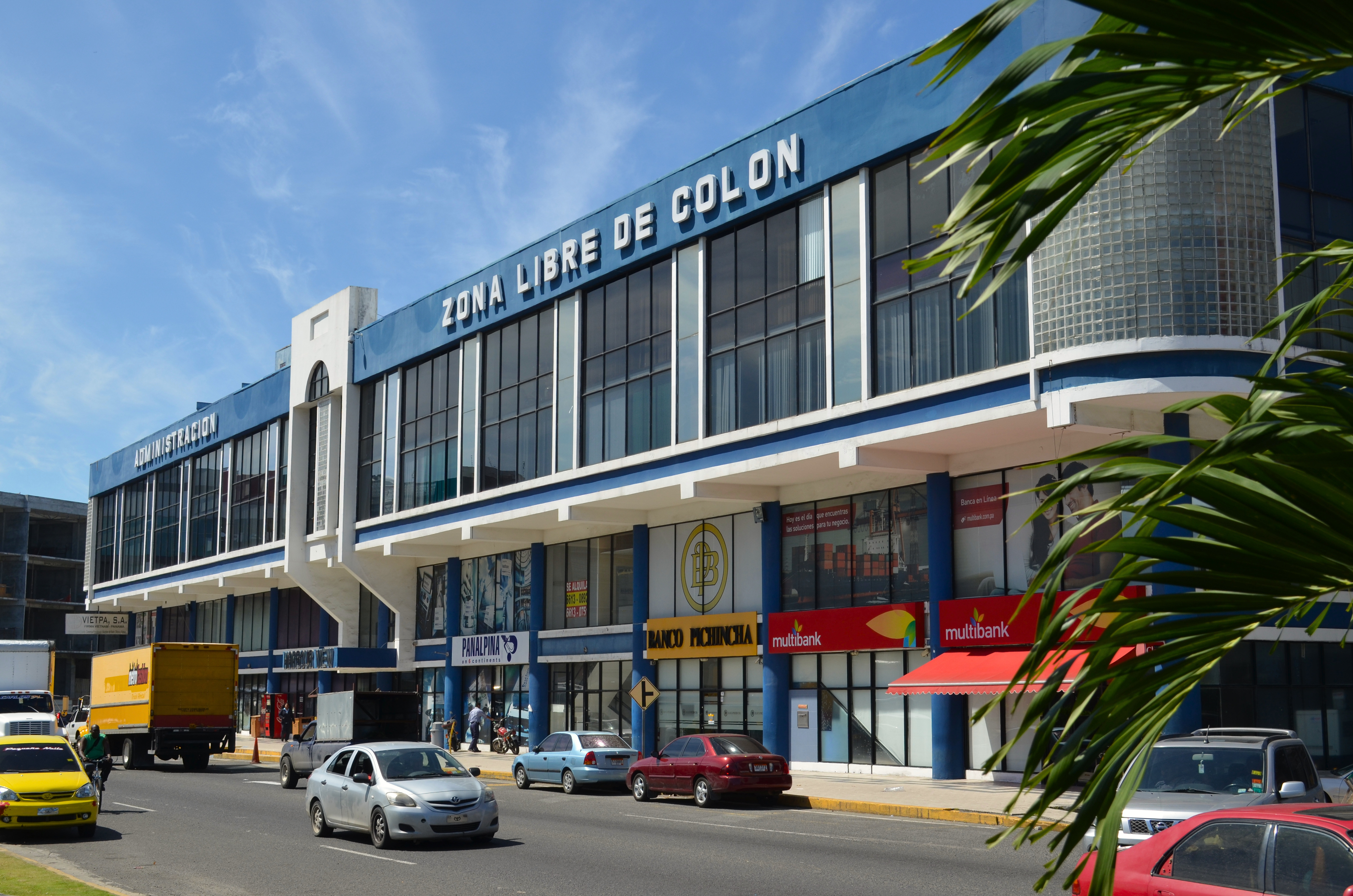
Shenzhen is the famous one, but the model already works closer to home: in Costa Rica, 394 free-zone companies produced 53 per cent of the country’s exports in 2019. Panama’s Colón Free Zone, open since 1948, is the largest in the Western Hemisphere, but it mainly re-exports goods made elsewhere without adding value; the privately developed Panama Pacífico zone on the old Howard air base, with more than 160 companies including manufacturers, is closer to what is needed.
The condition attached matters as much as the incentive: in exchange, companies should be required to create local jobs, train workers or invest in infrastructure, so that foreign investment still leaves skills, suppliers and tax revenue behind when the tax holiday ends.
Third, fix the schools, and start early. Teaching useful mathematics from a young age is what produces adults who can solve problems, and technical schools teaching logistics, welding and the other trades a manufacturing economy actually runs on would close the gap faster than any university expansion. Schools should be matching students with employers directly, and attendance requirements for graduation should mean something.
Fourth, enforce the law. Corruption traces back to a single pattern: the guilty are not punished. Mandatory asset disclosure for officials, anti-bribery statutes and conflict-of-interest rules exist in various forms across the region already; what is missing is enforcement and the transparency that makes enforcement visible.
Judicial reform belongs here too, though the mechanism needs care – the region’s legal systems are civil-law systems without jury trials, so importing the American jury wholesale is a bigger constitutional change than it sounds, and the aim, an independent and observable court, can be reached by other routes.
Fifth, let the neighbours trade. A Honduran component maker should be able to sell to a Costa Rican assembler as easily as to a customer in Texas. That means agreeing common product standards or accepting each other’s, using one customs document at every border, as Guatemala and Honduras began to do in 2018, and checking a truck once instead of twice.
Together, the seven countries are a market worth building a supply chain for; separately, none of them is.
The Window Is Open
Central America’s weak infrastructure, corrupt governments, failing schools and absent regional integration are the deficiencies that have left the region behind the rest of the developing world. Fixing them means prioritising infrastructure, attracting foreign firms on terms that benefit the country, rebuilding education, enforcing anti-corruption law and letting neighbours trade freely – in that order, and for longer than any one government lasts.
What makes this the moment is that the alternative has become visibly expensive. Every closed strait, every re-routed tanker, every extra week added to a shipping schedule is an argument for making things closer to where they are sold.
Central America has never used its geographic position relative to the United States as an advantage. It is the one asset we did not have to build, and we have wasted it for a century. If each nation can identify its own worst failure and act on it, the region has a prosperous future in front of it. The window will not stay open indefinitely; someone else will take the work if we do not.