The Data Will Tell You
The Freakonomics economist describes how he caught sumo wrestlers and teachers cheating, and defends his finding on abortion and crime.

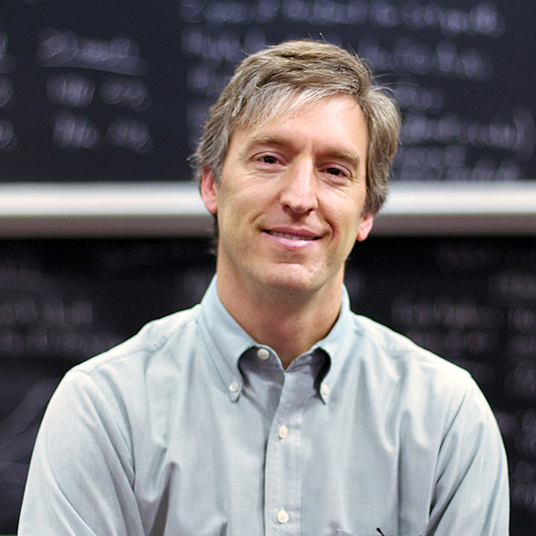
STEVEN Levitt is the William B. Ogden Distinguished Service Professor Emeritus of Economics at the University of Chicago. He won the 2003 John Bates Clark Medal, awarded to America’s most promising economist under 40, and co-authored the bestselling Freakonomics series with the journalist Stephen Dubner. He recently stepped down as host of the podcast People I (Mostly) Admire, and now runs the Levitt Lab, which is redesigning American high schools.
The Confluence: Much of your work uncovers people responding to incentives nobody designed on purpose, from sumo wrestlers to estate agents. If you could redesign one institution young people deal with every day, which perverse incentive would you target first, and how would you test whether your fix worked?
Dr. Levitt: The institution I’m actually tackling right now is high school education. It is about as broken as any institution could be. In my opinion, we are teaching the wrong material in completely the wrong way. Students are learning very little (by my estimate, only about 15 per cent are actively engaged) and creativity and joy are beaten out of them. Anxiety and mental health issues are sky high.
My attempts to change high school start from a very simple premise: how can we redesign it so that students actually want to be there? Wanting to be there is one of the most basic incentives that exist. If you want to find out more about my new high schools, check out thelevittlab.org.
The Confluence: Your analysis of cheating teachers in Chicago found the truth in patterns in the data rather than in confessions. What does that teach us about finding the truth when the people producing the data have every reason to hide it, and where is that approach most underused today?
Dr. Levitt: If people are cheating, the right data can usually uncover it. In practice, most cheaters either aren’t thinking about how to hide their behaviour in the data, or they try to cover their tracks in a way that makes the original cheating more obvious.
One of my favourite examples comes from sumo wrestling. After my book Freakonomics came out in Japan, showing how sumo wrestlers were rigging bouts [in a 2002 study with Mark Duggan, Levitt found that wrestlers on seven wins and seven losses going into their final bout, who needed an eighth win to protect their rank, won far more often than their records predicted], all of the cheating patterns completely vanished for two tournaments, before reappearing in the ones after that.
The only plausible explanation is that the people in charge issued an edict saying “no cheating the next two tournaments.” Once the media scrutiny went away, everyone went back to business as usual. The fact that the patterns changed so sharply the moment the media watched is arguably stronger evidence than my original data analysis.
As for where this approach could still do huge social good, my hunch is that there is enormous fraud in American government health programmes like Medicare and Medicaid, which cover the elderly and the poor. I have an economist friend in government whose personal goal is to catch a billion dollars of fraud a week. That is pretty stunning.
The Confluence: Your research linking legalised abortion to the fall in US crime [Levitt and John Donohue argued in 2001 that the legalisation of abortion in the 1970s helped explain the sharp drop in crime two decades later] was both statistically argued and morally explosive, and it drew fierce challenges. Looking back, how do you think about publishing findings like that, and what did the controversy teach you about how economics reaches the public?
Dr. Levitt: I can’t fully explain why that finding got so much attention when other work I thought was equally interesting never got any media coverage at all. I think the process by which academic results reach the broader world is pretty haphazard.
I would actually challenge the idea that the results themselves were morally explosive. They were fairly simple and straightforward. It was people’s understandably strong feelings about the legality of abortion, laid over our findings, that made it controversial.
I’m happy to report that a follow-up study [Donohue and Levitt, published in 2020], done about twenty years after the original research, confirmed the findings outside the original sample [that is, using later data the original study had not covered]. A good deal of other evidence has emerged to support the hypothesis since.
The Confluence: After decades inside academic economics, what do you think the discipline gets most wrong about which questions it chooses to ask?
Dr. Levitt: On the whole, I think economists have done a great job asking an incredibly broad range of questions. But the incentives built into academic publishing push economists toward questions that are too small and narrow: it is easiest to publish work when you can tie down every loose end, even if the question itself is a bit boring. Still, in spite of that pressure, economists have shown amazing creativity.
The Confluence: On your podcast, People I (Mostly) Admire, you talked at length with people far outside economics. Which of those conversations changed how you think about your own field?
Dr. Levitt: Honestly, I don’t think much at all about academic economics these days; it’s just not what interests me any more. Partly that’s because it has been so fun and exciting to talk with brilliant scientists and thinkers through the podcast.
I spent most of my working life intensely focused on being a producer of ideas and insights through my own research. Spending the last five years as more of a consumer and populariser of other people’s ideas has been a fun change of pace.