Small Country, Big Neighbours
Bangladesh balances India and China while keeping Japan and the West as partners, and a Dhaka scholar explains why its soldiers refused to fire on protesters in 2024.

RASHED Uz Zaman is a professor in the Department of International Relations at the University of Dhaka, where he has taught since 1998 and previously served as department chair. He has held fellowships and teaching positions at the University of Erfurt, Vanderbilt University, and the University of Reading. His research covers UN peacekeeping, civil-military relations (how a country’s armed forces relate to its elected government), and Bangladesh’s foreign policy.
The Confluence: Could you give our readers an introduction to your research interests and what got you into this field?
Dr. Zaman: I’ve spent much of my career working on issues related to South Asia, and for a long time specifically on Bangladesh’s participation in United Nations peacekeeping missions, which now spans 38 years. Since most of those missions have been carried out by the military, I started reading and writing about the armed forces themselves, which led me into the field I work in today: looking at how peacekeeping has shaped the orientation of Bangladesh’s military, what that means for democracy and gender mainstreaming [making sure policies take account of their different effects on women and men] at home, and how Bangladesh manages its relations with South Asian neighbours and with China.
The Confluence: Bangladesh sits between two major regional powers, India and China. How does a country its size navigate being surrounded by bigger powers without becoming dependent on one of them?
Dr. Zaman: Territorially, Bangladesh is a relatively small country: we’re bordered almost entirely by India, with a short border with Myanmar and a coastline on the Bay of Bengal. But in terms of population, we’re a big country, about 175 million people, which makes us one of the world’s most densely populated countries. Bangladesh was part of British India, then part of Pakistan as East Pakistan from 1947, and became independent after a brutal war in 1971.
From the beginning, the priority of every government has been development, which meant looking for economic assistance and export markets wherever they could be found. In the early years, given India’s role in the 1971 war, Bangladesh leaned toward the socialist world: India and the Warsaw Pact countries [the Soviet Union and its Eastern European allies]. After a change of government in 1975, the country shifted toward a more Western and Middle Eastern orientation, partly because the oil-price hike had accelerated economic expansion and labour demand in the Gulf.
Over time, Japan, the UK, the US and the European Union became major development partners and export markets, particularly for our garments industry, which is one of the world’s largest, alongside jute, shrimp and tea. Bangladesh’s economy essentially rests on two major economic pillars: ready-made garment exports and remittances [money sent home by Bangladeshis working abroad] from a large diaspora across the Middle East, Southeast Asia, Europe and the US.
At the same time, we share nearly everything with India: 54 international rivers, close to $12 billion in annual bilateral trade heavily in India’s favour, and deep cultural and family ties. Whichever party is in power, India is the single most important factor in Bangladesh’s foreign policy.
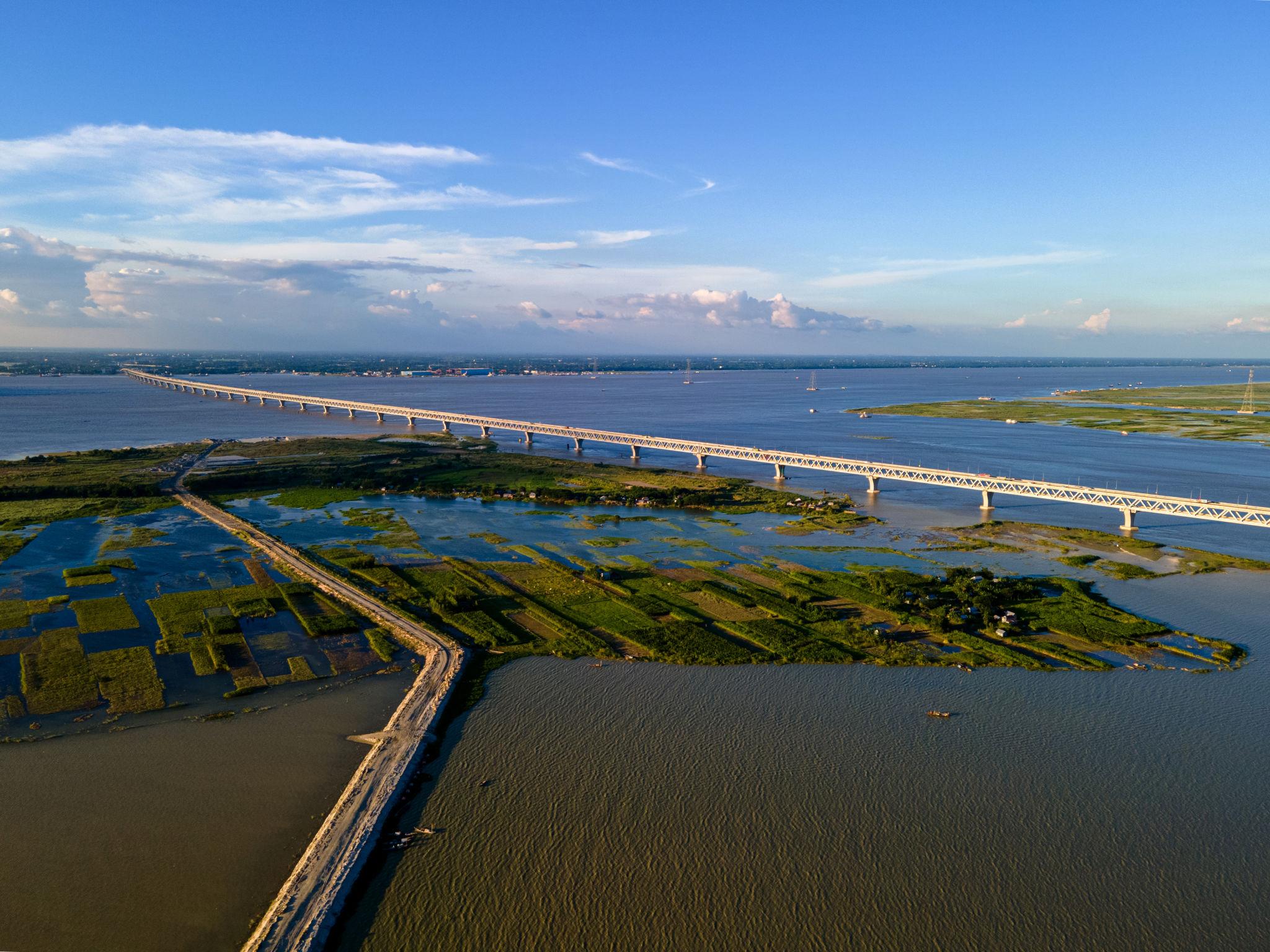
But since the early 2000s, Bangladesh has also needed far more infrastructure financing than any single partner could provide, so policymakers turned to China as well. Much of that Chinese-financed infrastructure, roads and bridges across our delta, also benefits India in practice, by shortening the route between India’s northeastern “Seven Sisters” states [seven Indian states connected to the rest of India only by a narrow strip of land north of Bangladesh] and the Indian mainland. Japan remains another major partner, currently financing a deep-sea port complex in the southeast.
It hasn’t always been easy to balance India’s interests against China’s, especially after the political upheaval of July and August 2024, when Bangladesh’s prime minister fled to India [Sheikh Hasina, after weeks of mass student-led protests] and relations became strained for a period.
But alongside all of this, Bangladesh is also one of the world’s most climate-vulnerable countries: melting Himalayan glaciers threaten the rivers that define us, and dealing with water scarcity, rising salinity and natural disasters requires collective regional cooperation with India, China and Nepal alike, since these aren’t problems any one country can solve alone.
The Confluence: Bangladesh has had its own history of military coups. Does sending so many soldiers abroad on UN missions, under international scrutiny, make a military less likely to intervene in domestic politics, or is that too simple an explanation?
Dr. Zaman: It’s more complex than that, though there’s something real there. Bangladesh’s early years were turbulent, including a violent change of power in 1975 [the assassination of the founding leader, Sheikh Mujibur Rahman, in a military coup] and further military takeovers into the early 1980s. Things became quieter from the mid-1980s.
Our first peacekeeping mission was in 1988, observing the Iran-Iraq border, and from 1991 onward we began deploying much larger units. Bangladesh has since been consistently among the top troop-contributing countries to UN missions, including one of the world’s first fully female-formed police units, deployed to the Democratic Republic of Congo and Haiti.
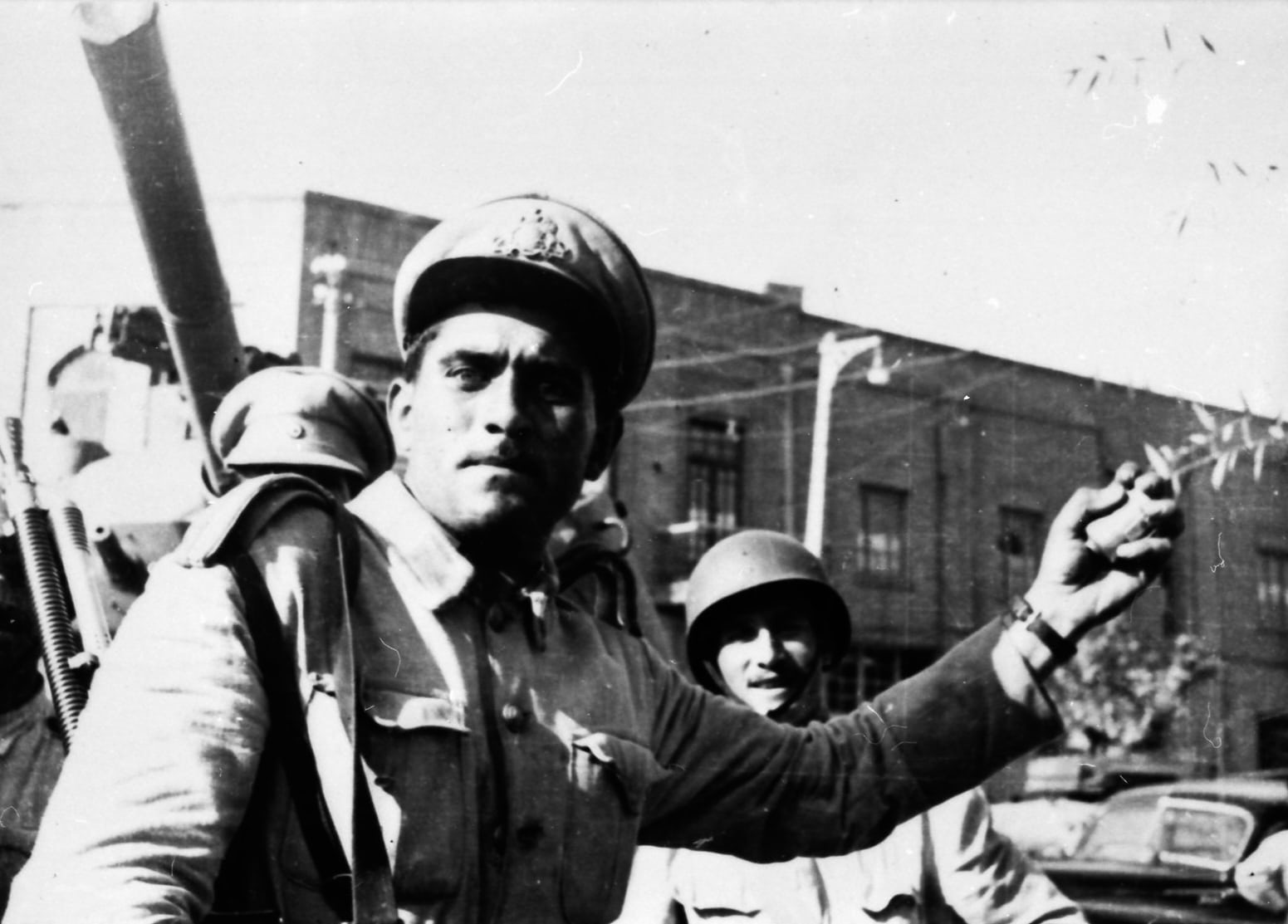
Peacekeeping has shaped the military’s orientation in real ways: troops operated under civilian UN leadership, worked alongside foreign militaries, and took part in missions explicitly aimed at building democracy elsewhere. Over time that exposure seems to have shaped how officers and troops think about politics at home. I believe that’s part of why, in July and August 2024, junior officers and troops refused to fire on civilian demonstrators.
But I’d caution against attributing Bangladesh’s democratic progress to peacekeeping alone. The deeper explanation is generational and structural: the military that emerged in 1971 was staffed by officers who’d spent their professional lives inside the Pakistani military structure, with all the assumptions that came with that, including a pattern of coups that continues in Pakistan today.
As that generation has retired and been replaced by officers born and raised in an independent Bangladesh, drawn from every region, religion and linguistic group in the country, the military has increasingly come to reflect the diversity of Bangladeshi society rather than standing apart from it. That shift in social composition, alongside the effect of peacekeeping exposure, is what I think has moved the military toward deference to elected civilian leadership and a focus on professional efficiency rather than intervention.
The Confluence: Of everything you work on, which do you think is least understood by people outside Bangladesh, and what would you most want a young international audience to take away?
Dr. Zaman: I’d take all of it together and say that Bangladesh as a whole is often misunderstood. It’s frequently reduced to images of poverty, weak governance or militancy, when what’s actually underrepresented is the complexity, nuance and diversity that make up the country, and that underlies every one of the specific areas I work on.
If there’s one thing I’d want readers to take away, it’s that: look past the stereotype and try to understand the country on its own, complicated terms.