The Hidden Cost of Canada's Housing Crisis
Canada's housing shortage also raises costs for international students in homestays, and the author wants more supply and standard contracts.
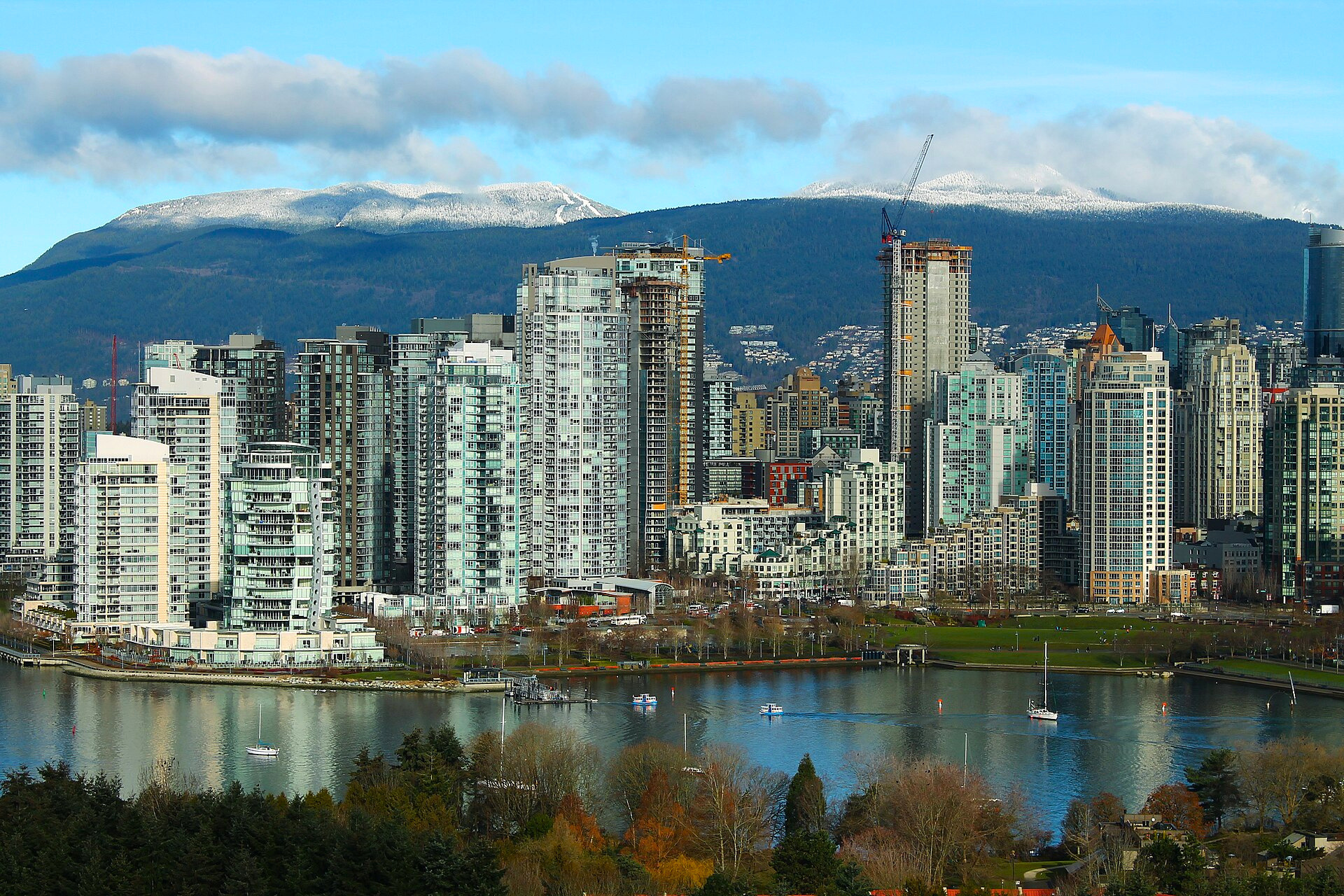

CANADA is often described as a country with abundant land and resources. It has the second-largest land area in the world and a population of only around 41.5 million, which makes it seem like a country with plenty of room to house its people. Yet housing affordability has become a significant issue across Canada. The problem is usually associated with Vancouver and Toronto, the country’s two most expensive housing markets, but it is not limited to them: people in Ottawa, Montréal, Halifax and many other cities also struggle to match the cost of housing with their incomes.
Canada’s housing crisis is usually discussed through home prices, rents, vacancy rates (the share of rental homes sitting empty and available) and the gap between housing supply and demand. These matter. But focusing only on people buying homes or signing conventional leases misses another group. International students rarely buy homes or sign leases, yet high housing costs can still reach them, all the way down to the price of the room they live in.
When Housing Costs Reach the Homestay Market
For an international student arriving in Canada, finding a place to live is not simply a question of finding an affordable room. Many Canadian high schools do not provide accommodation on campus, and younger students may struggle to access conventional rental housing at all. This is where homestay becomes important: an arrangement in which a student lodges with a local family, usually paying a monthly fee that covers the room and meals.
But homestay is still part of the housing system. A host family has its own housing costs: rent or mortgage payments, utilities, food, maintenance and other household expenses. When the surrounding housing market becomes more expensive, the cost of providing a room rises with it.
This does not mean that every increase in housing prices automatically produces the same increase in homestay prices, but it does create upward pressure. The connection is indirect but important: higher housing costs can become higher homestay costs, which become higher living costs for international students. It is an overlooked route by which a national housing problem reaches people who are not in the housing market as buyers at all.
One school district shows the trend. According to West Vancouver Schools’ published fee schedules, its monthly homestay fee rose from C$1,100 in the 2020 – 21 and 2021 – 22 school years to C$1,600 in 2026 – 27: an increase of C$500 a month, or about 45 per cent. Those figures do not prove that housing costs were the only cause, but they are a concrete example of how much more homestay now costs an international student.
Why Homestay Fills the Gap
If students had plenty of affordable and accessible alternatives, a higher homestay price would not necessarily be a serious problem: they could simply choose somewhere else. The reality is more complicated.
Analysing census data, Stick, Hou and Zhang found that most international students in the municipalities they studied depended on the rental market for housing, with the share ranging from 65 per cent in Brampton to 92 per cent in Montréal. In a companion study, the same researchers found that international students were considerably more likely than Canadian-born students of the same age to live in unsuitable housing (homes without enough bedrooms for the number of people in them), with rates running from 25 to 63 per cent across the ten municipalities with the largest international student populations.
Together, these findings show how closely international students are tied to a rental market that is already under pressure.
Homestay fills an important gap within that market. A product becomes harder to substitute, that is, to swap for something else that does the same job, when its alternatives are expensive, inaccessible or inconvenient. Homestay may therefore remain in demand even as its price rises: not because students prefer higher prices, but because their alternatives are limited. That is where the issue moves from housing affordability to bargaining power.
The Hidden Economics of Homestay
The economics of homestay can be understood through two connected effects: the cost effect and the choice effect. The first is straightforward. When housing, utilities, food and other household expenses become more expensive, the cost of running a homestay rises, and hosts may respond by raising the price they charge.
The second effect is more subtle. If students have many affordable alternatives, they can respond to a price increase by moving to another homestay, renting a room, sharing a flat, or choosing another form of accommodation altogether. But if those alternatives are hard to access, changing accommodation becomes costly, and that gives the provider greater bargaining power: the ability to set terms because the other side has nowhere better to go.
A student who depends heavily on homestay may therefore accept a higher price, not because the price is reasonable, but because the alternatives are worse. International students experience the housing crisis not only through the cost of accommodation, but through the shrinking number of realistic alternatives available to them.
When a Housing Arrangement Becomes a Power Relationship
Once housing becomes difficult to leave, it is more than a simple transaction between buyer and seller: the ability to leave is itself a form of bargaining power.
Consider a student who faces an unexpected additional charge, a disagreement over a deposit, a dispute about damage, unclear rules about meals or guests, or an argument over the condition of the room. In a competitive market with many affordable alternatives, the student could simply leave and find another place. But moving is not free. It can mean paying another deposit, arranging transport, changing arrangements with a school or agency, and spending time searching. For an international student unfamiliar with the local market, the cost of switching is higher still.
None of this means that homestay providers generally exploit students. The problem is structural: when one side has far fewer alternatives, the two sides do not enter the agreement as equals, and ordinary disagreements become harder to challenge.
Unclear refund rules create disputes when a student leaves early; damage claims are hard to settle when responsibility is unclear; extra household charges become contentious when they were never explained. Even disagreements over room conditions or house rules become more serious when the student feels that leaving is not a realistic option. The problem is therefore not only what a student pays, but how much power they have to say no.
The Problem Behind the Problem
This changes how the housing crisis should be understood. The question is not simply how many homes Canada has or how expensive they are, but who has access to them, what alternatives people have, and how much bargaining power they hold when housing becomes a necessity. Homestay is not the root of Canada’s housing crisis. It is one of the places where the pressure created by that crisis becomes visible.
Building More Homes Is Necessary. But Is It Enough?
If housing costs are part of the problem, then increasing housing supply has to be part of the solution, and Canada has already introduced policies aimed at doing so. The federal Housing Accelerator Fund gives municipalities money to remove barriers to construction, increase density, speed up approvals and encourage development near public transport.
Federal reporting as of March 2026 recorded 238 local governments with agreements under the programme, committing C$4.37 billion to fast-track permits for 120,382 net new homes. More housing can reduce pressure on the market over time, although the effect on prices and rents depends on where, what type, and how quickly it is built.
For international students, more housing could bring two benefits. First, lower housing costs would ease the pressure on host families, and with it the upward pressure on homestay prices. Second, more affordable rental options would give students more alternatives, reducing their dependence on a single provider and strengthening their bargaining power.
But building homes alone cannot solve every problem. Even in a market with more supply, some international students will still choose homestay for its convenience, meals, supervision or local support. Canada therefore also needs protections within the homestay system itself.
Those protections are largely practical. Standardised contracts could define clearly what is included in the price. Transparent pricing could reduce unexpected charges. Clear rules on deposits, refunds, cancellation and early termination could make disputes easier to resolve. Most importantly, students should have access to an independent dispute-resolution process.
Canada may need to build its way out of the housing crisis, but it also needs to protect the people already living in the gaps that crisis has created.