The Anatomy of a Rate Hike
Rate hikes are warranted against energy-driven inflation but do little about its cause, so governments also need to cut deficits and reform supply.

THE most recent round of central bank meetings wrapped up with rate rises across many major economies, alongside projections for further tightening [raising interest rates to slow the economy and bring down inflation]. The European Central Bank raised its deposit rate to 2.5 per cent, warning that higher energy costs could keep inflation well above its 2 per cent target into 2027. Though the Bank of England held its benchmark rate steady at 3.75 per cent, it delivered sharper inflation forecasts alongside a warning that prolonged geopolitical tensions may demand a tighter monetary stance. At the same time, the Bank of Japan continued its gradual policy normalisation, raising its rate to 1.25 per cent.
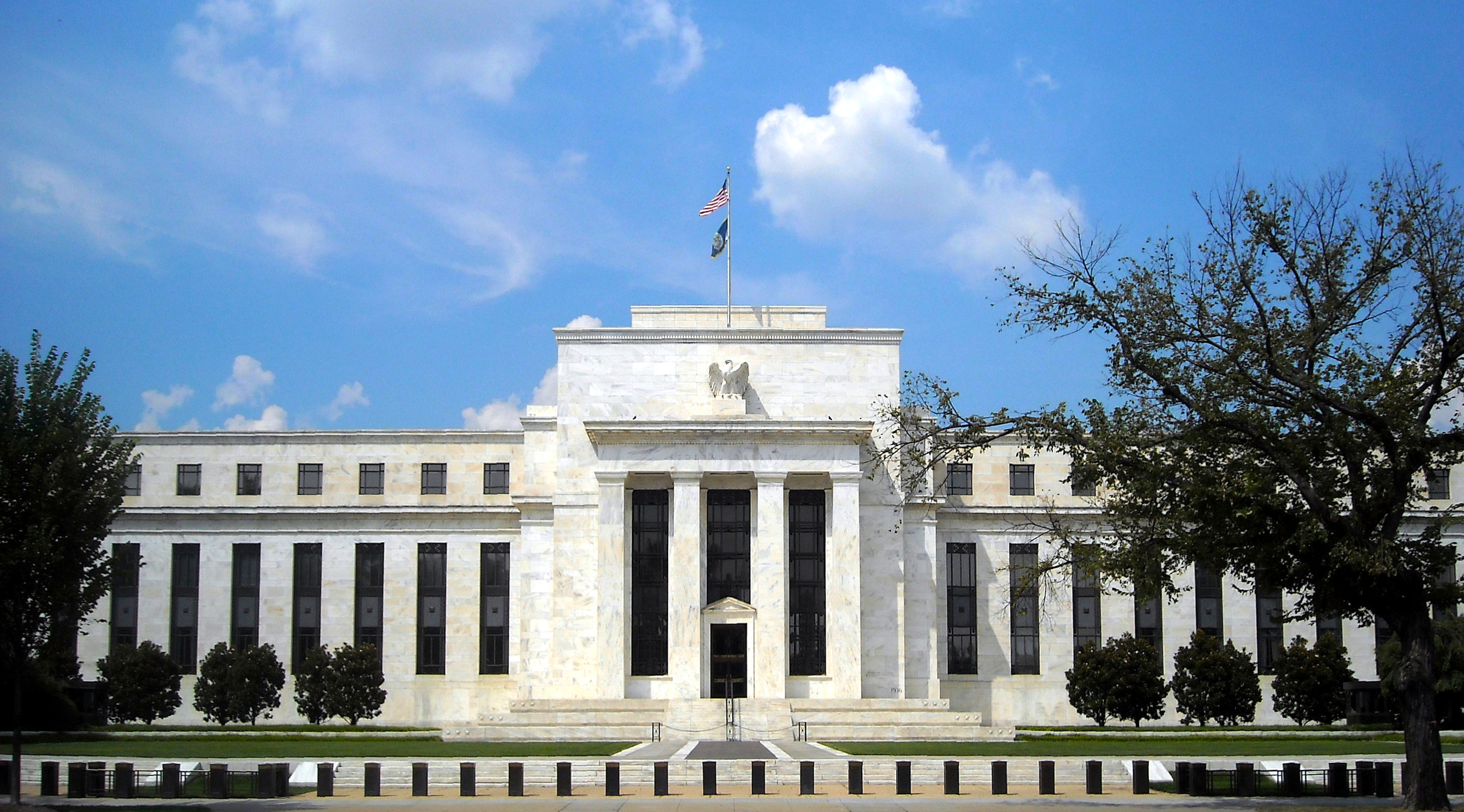
Most importantly, the US Federal Reserve also chose to raise rates by 25 basis points [0.25 percentage points]. The decision underscores genuine concern over price stability, a message reinforced by elevated inflation projections and a steeper path for future rate increases.
The move has soothed concerns about the Federal Reserve’s credibility, which has been under siege from relentless political lobbying. President Trump supports his calls for a 1 per cent interest rate by describing the US as the “most creditworthy” government, arguing that it should therefore enjoy the lowest borrowing costs. Not only does this fundamentally disregard the broader economic role of interest rates; it is also ironic. That creditworthiness relies heavily on trust in the institution and the government: trust that has deteriorated rapidly in recent years, driven largely by the president’s erratic decision-making and the country’s spiralling debt.
By raising rates despite pressure to do the opposite, the Federal Reserve has demonstrated that it can maintain its independence and act in the best interest of the economy, rather than bending to political will. Its chair, Kevin Warsh, said financial conditions were still not restrictive enough, a further signal that the decision was driven by the economy rather than by politics.
Ultimately, the move is significant both for what it signals about the institution and for how it addresses inflation. But the central question is whether monetary policy can actually solve the problem.
The Effectiveness of Monetary Policy
Inflation has been above target across many major economies for a considerable period. In the US, the Fed aims to keep inflation at or below 2 per cent, and it has been above that level for several years.
Blame for this has largely rested with central banks: a fair criticism, given that price stability is their primary objective. However, it is also important to acknowledge the diverse, unprecedented factors that have driven inflation in recent years. From the pandemic to the Russia-Ukraine war, and from aggressive economic weaponisation to conflict in the Middle East, the world has experienced a series of shocks that have taken a toll on the global economy, a trend likely to persist as the decade continues. When the forces pushing up prices are this varied, an interest rate is an increasingly one-dimensional tool in response.
At least for now, the energy crisis stemming from the war in Iran is widely considered the most pressing inflation risk. This is a classic example of cost-push inflation: higher production costs translate into higher consumer prices, as supply-side pressure forces firms to raise prices to protect their profit margins. That makes the effectiveness of monetary policy a valid concern, because interest rates are fundamentally a demand-side tool.
Raising rates shifts incentives, mechanically lowering aggregate demand [total spending in an economy] by reducing consumption and investment, two of its key components. But when current inflation is the result of higher production costs, curbing demand may do little to temper price pressures. Instead, it risks dampening economic growth, as already hard-pressed consumers become even more reluctant to spend, compounding the strain on both the demand and supply sides of the economy.
With a strong labour market and robust growth, this may not be so pressing a concern for the US, where an “overheating” economy could benefit from lower aggregate demand. The same cannot be said for other major economies currently struggling with meagre growth, high debt and stalling productivity. In these cases, raising rates puts downward pressure on already weak demand while doing little to relieve the inflation that comes from geopolitical tensions. That leaves stagflation [high inflation combined with stagnant growth] as a very real risk.
Building Resilience
There is no doubt that the current inflation picture warrants rate hikes. Changes in monetary policy are also explicitly designed to target the second-order effects of inflation, which inevitably seep into the demand side over the long run. The argument here is not that raising interest rates is the wrong decision. Rather, it is that monetary policy has become the default tool for fighting inflation, and that relying on it so heavily carries risks.
This over-reliance is also largely why price levels have drifted so far from central bank targets. From the first shift in prices, to the decision to adjust rates, to the actual transmission of those rate changes through the economy, there is a considerable time lag at every stage. Meanwhile, because interest rate changes exert such a powerful influence on wider economic activity, policymakers often act with hesitation. Taken together, it becomes clear how inflation can easily spiral as uncertainty compounds these built-in delays.
Building supply-side resilience must therefore become a priority. It is the only way to equip countries to withstand these unprecedented shocks, rather than being forced to react to them in a state of panic. Interest rates cannot be adjusted as a solution to every economic fluctuation, so over the long run, part of the responsibility for price stability must also rest with governments, shared with the central bank rather than delegated to it entirely. The economist Mohamed El-Erian has been a prominent advocate of this view.
In practice, this means making meaningful investments in energy infrastructure, resource stockpiles, innovation and technology: building an internal buffer that cushions economies against damaging external shocks. This is no easy task, but it does not have to be a utopian one. With fiscal discipline, targeted policy and effective coordination, these efforts can gradually build economies equipped to navigate an increasingly erratic world. If we are serious about economic resilience, this is the path forward.
Fiscal Consolidation
The first step must be fiscal consolidation [reducing a government’s budget deficit and debt]. Massive existing debt burdens restrict a government’s ability to use countercyclical policy [spending more or taxing less during downturns to cushion them] during short-term shocks, and make critical long-term investments far harder to carry out. Furthermore, a rising interest rate trajectory will inevitably push up bond yields [the interest governments pay on their debt], which risks triggering additional borrowing simply to cover higher financing costs.
To avoid paying these higher rates on long-term debt, governments have increasingly turned to issuing short-term bonds, sidestepping the term premium [the extra return investors demand for lending over longer periods]. However, this strategy leaves them far more exposed to the very rising borrowing costs they sought to escape, because short-term debt has to be refinanced much more often. In the US, Wall Street has been expecting the Treasury to issue around $1 trillion of short-term debt as borrowing costs climb.
If this approach persists, the self-reinforcing cycle of rising yields and swelling borrowing will only intensify. The only exit is making the difficult decisions required to rebalance budgets: raising taxes and cutting spending.
However, time inconsistency presents an age-old barrier. Because today’s governments are unlikely to still be in power when long-term borrowing costs come due, they have little incentive to rein in spending to cap yields, and every incentive to rely on short-term debt to cover immediate obligations.
The path to fiscal stability is uncertain, but that does not diminish how desperately it is needed if meaningful supply-side reform is ever to be possible. Taming inflation is one thing; addressing its root causes is another. That responsibility can no longer rest solely with central banks. It is time for governments to step up and strengthen their economies from the foundations, rather than merely propping them up when they begin to wobble.