The Economics of the Living Dead
Georgia's former economy minister explains why failing Soviet-era firms survived for years, and calls for strict bankruptcy laws.
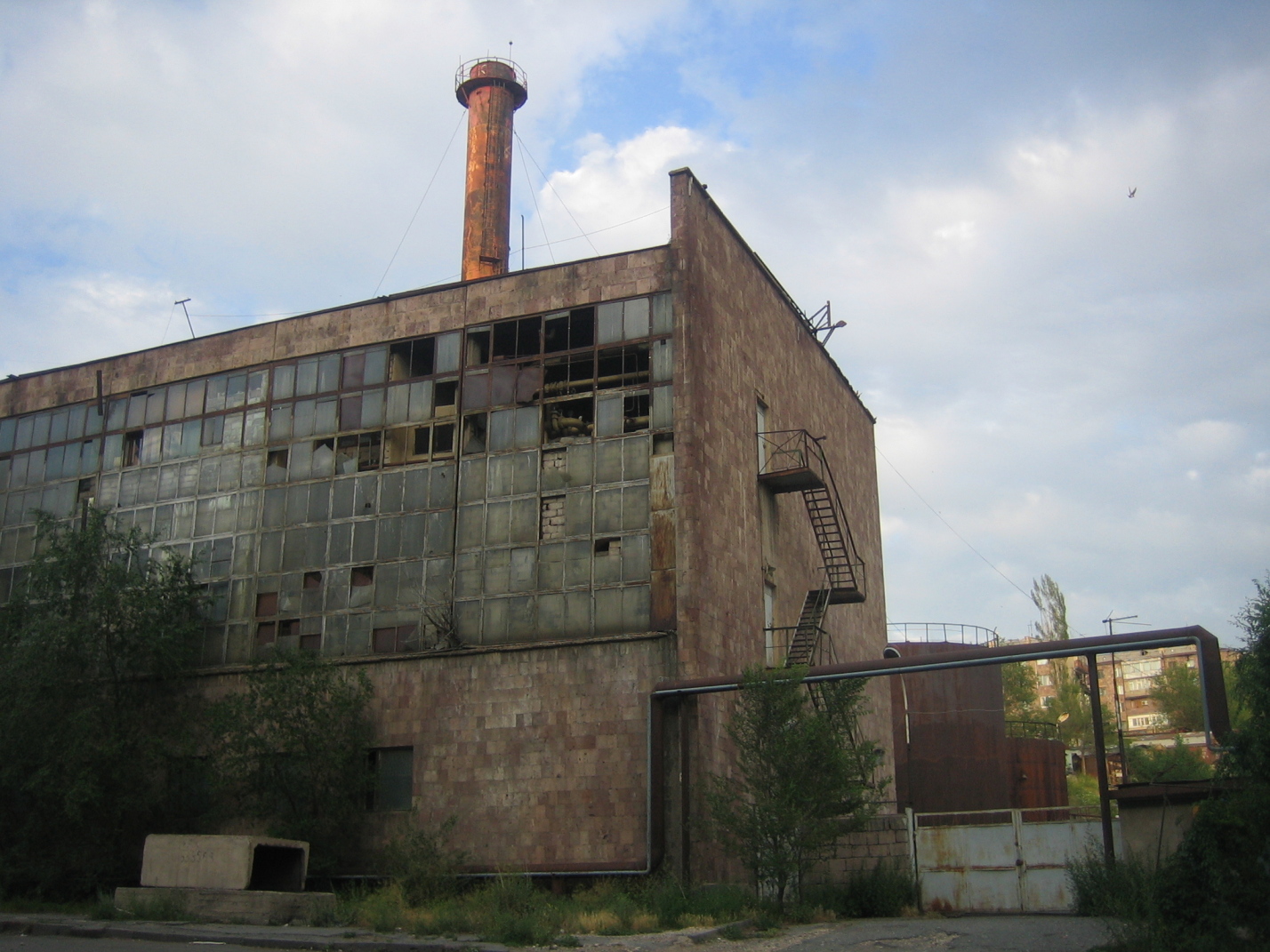

VLADIMER Papava is a Georgian economist who served as Georgia’s Minister of Economy from 1994 to 2000, overseeing the country’s market reforms. He is the originator of “necroeconomics,” a theory explaining why unproductive, Soviet-era enterprises survived the transition to a market economy. In simple terms, he explained why businesses that should have failed after the fall of communism kept going.
The Confluence: What first drew you to studying post-communist economies, and how did the idea of “necroeconomics” take shape for you?
Dr. Papava: As someone from post-Soviet Georgia, I was interested, as an economist, in understanding the specific features of the post-communist economy and how it differs from both a command economy [where the state decides what is produced and at what price] and a market economy.
From 1994 to 2000, I served as my country’s Minister of Economy, and during that period I directly oversaw the implementation of market reforms. At the time, the prevailing view was that selling state-owned enterprises to private owners would be sufficient to ensure their effective operation. In reality, everything proved much more complicated, since many privatised enterprises were unable to sell their products because their technologies were so outdated that it was, in principle, impossible to produce competitive products with them. Technology was not upgraded because the command economy fundamentally precluded competition.
When I was no longer in government and had returned to academic work, I was discussing the problems of the post-communist economy with a student one day, and the word “necroeconomics” suddenly slipped out of my mouth, from the ancient Greek nekrós, meaning “dead.” I began to ask myself, why do “dead” enterprises, or “necroenterprises,” continue to exist rather than disappear from the market?
I was helped toward an answer by Nelson and Winter’s An Evolutionary Theory of Economic Change [a 1982 book arguing that firms behave according to ingrained habits rather than perfect calculation] and its concept of “routine,” the customary rules that regulate a firm’s behaviour. Under a command economy, a routine developed whereby, absent competition, managers could write off debts and receive preferential contracts with the help of ministries and party bodies, and elements of that routine were preserved during the transition to a market economy.
The bearer of this routine is, I argue, a new type of person I call homo transformaticus, no longer homo sovieticus [the Soviet citizen who relied on the state for everything] but not yet homo economicus [the self-reliant, profit-seeking individual of economics textbooks]: focused on maximising profits like homo economicus, but, like homo sovieticus, still dependent on and hoping to extract benefits from the government. It is homo transformaticus who provides fertile ground for the necroeconomy, and overcoming it largely depends on that figure’s successful transformation into homo economicus.
The Confluence: What’s the most common misconception people have about why some post-communist countries transitioned successfully in market reforms, while others didn’t?
Dr. Papava: The most common misconception is that success depends entirely on the governments that implement reforms. People who think this way, as a rule, do not ask themselves why genuinely reformist governments come to power in some countries but not others. The answer lies in the human factor.
Eastern European countries, and the Baltic states of Estonia, Latvia, and Lithuania, were incorporated into the communist system after World War II, while other countries that became part of the USSR had entered the system more than two decades earlier. This difference in timing was sufficient to more thoroughly eradicate homo economicus in the latter countries through persecution under Soviet leader Joseph Stalin and to more deeply stimulate the emergence of homo sovieticus.
Consequently, by the late 1980s and early 1990s, Eastern Europe and the post-Soviet Baltic states still had a generation that preserved a historical memory of certain elements of a market economy and were significantly more prepared for the transition than other post-Soviet countries.
The Confluence: Is there a finding from your research on economic transformation that surprised even you, something that ran against the conventional wisdom about transition economies?
Dr. Papava: What surprised me most was the conclusion that, especially at the initial stage of reforming a command economy, a “market” could exist in which there was supply but no demand [factories kept producing goods that nobody wanted to buy]. I later explained this phenomenon through the existence of a necroeconomy, based on the aforementioned routine, which itself underwent some modification during the transition.
The Confluence: If you were advising a country just entering post-communist reforms today, what is one practical lesson from “necroeconomics” you would want policymakers to actually act on, not just acknowledge?
Dr. Papava: In order for market reforms to be successful, we need to develop and adopt strict bankruptcy legislation [laws that decide when a business that cannot pay its debts must close], on the basis of which it is possible to clearly identify “necroenterprises” and apply specific liquidation procedures [the legal process of closing a firm and selling off its assets] to them by law. Only in this way can we rid ourselves of the heavy legacy of the communist past.
The Confluence: What do you wish the general public understood better about how economies actually recover or fail to recover after communism?
Dr. Papava: I believe that, for a better understanding of any economic problem, including the post-communist economy, we should always bear in mind the role and significance of the human being in the economy, as the central factor shaping everything that happens, not only in the economy but in any sphere of social life.