Six Months, Six Years, Sixty Years
The chair of the Bank of Mongolia’s Supervisory Board describes the risks of running a central bank in a young democracy and argues that unequal votes need fixing.
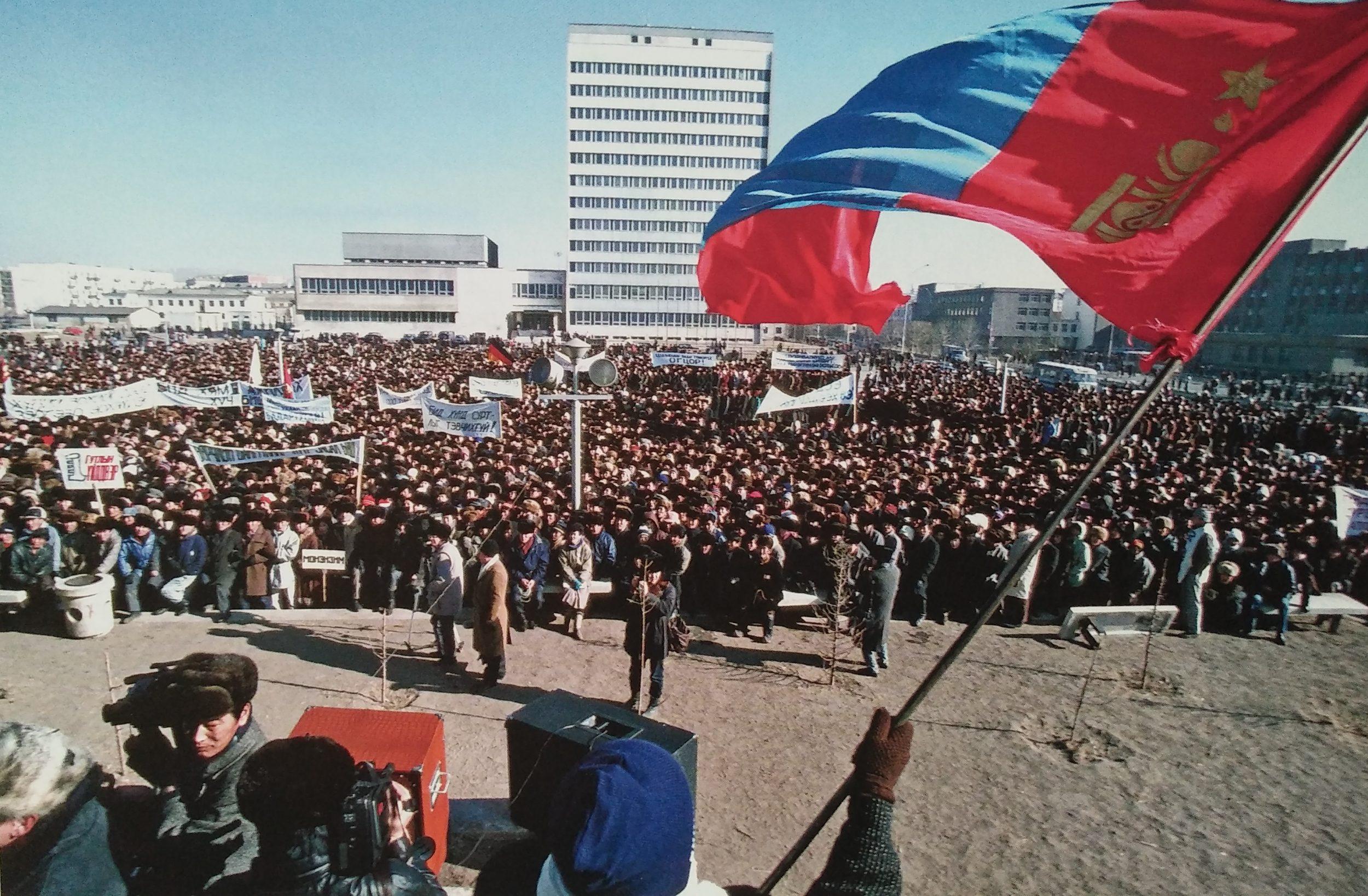

UUGANBAATAR Ninjbat is Chairman of the Supervisory Board of the Bank of Mongolia, the country’s central bank. Born in rural Mongolia in 1982, he studied in Türkiye and Vienna before completing a PhD at the Stockholm School of Economics. He returned to Mongolia to join a university mathematics faculty, and later moved into public policy and fiscal consultancy.
The Confluence: Could you tell us about your background, and a couple of early experiences that shaped how you think about economics?
Dr. Ninjbat: I was born in 1982, eight years before the transition from the Soviet system to democracy began. My childhood in the Mongolian countryside was a happy one, though my parents’ generation carried most of the cost of that transition.
You can trace the transition through small things. Our generation was the first in Mongolia to try Nutella, and it’s stayed with me as one of the best tastes of my childhood. Years later I watched a film with a scene where a wealthy passenger on a cruise ship has Nutella flown in by helicopter because the ship has run out, and it struck me as the same story from the other end.
The other memory is watching Hollywood films for the first time, instead of the Soviet-style films we’d grown up with. There was a cinema in my town that showed the same Jean-Claude Van Damme film thirteen times, each night advertised under a different title. We kept paying to see it. That was my first experience of information asymmetry, where one side of a deal knows something the other doesn’t: the market can be efficient and interesting, but also genuinely tricky, because you don’t always know what you’re buying.
After my PhD, I’d spent twelve years abroad, and I realised how much I missed home. I made the decision to return to Mongolia, against the advice of most of my professors, who thought I should stay in Europe or try for the US. Back home, I chose to join a university’s mathematics faculty rather than its economics faculty, since my research was closer to what the mathematicians were doing. Those were the most productive years of my academic life, until COVID.
During the pandemic I expected to be enormously productive, with no distractions, but after six months of quarantine I hadn’t managed to prove a single theorem. It was a genuinely shocking experience. I turned instead to public engagement: YouTube lectures on taxation, and microsimulation models, computer models that simulate how a policy change affects individual households, for evaluating policy. That work led to a seat on the Fiscal Stability Council, and eventually to my nomination as Chairman of the Supervisory Board of the Bank of Mongolia.
The Confluence: You chair the Bank of Mongolia’s Supervisory Board. How does central bank oversight differ in a resource-dependent country like Mongolia compared with a rich-country central bank like the US Federal Reserve?
Dr. Ninjbat: Central banks tend to look alike from the outside: the balance sheet structure and the basic monetary policy framework [how a central bank sets interest rates and manages the money supply] are broadly similar everywhere. Where they really differ is in governance.
Broadly there are two traditions. The Asian style, as at the Bank of Korea or the Bank of Japan, centres on one strong, publicly prominent governor backed by highly qualified staff. The Bank of England style spreads responsibility across several strong figures on a board of governors, who share the decision jointly through formal institutional structures.
The Bank of Mongolia sits in between the two, and is still trying to settle where exactly. It has collective mechanisms, a Monetary Policy Committee and a Supervisory Board, but also a strong, accountable governor. That has advantages, but it creates friction in the everyday running of the bank too.
Then there’s the resource dependence itself, which cuts both ways. Our main exports are coal and copper, plus some gold, traded mostly with China. Unlike oil, they’re not especially liquid, easy to sell quickly at a stable price, and unlike Chile, a comparable copper exporter with sea access, Mongolia is landlocked, so our revenue is stable but doesn’t grow as fast as in other resource-rich economies.
The Confluence: You’ve also written about the interaction between Mongolia’s young democracy and its central bank. What’s the biggest challenge there?
Dr. Ninjbat: Since the transition began in 1990, we’ve been trying to build a democratic system, and that takes time: not just new rules, but changed habits, functioning political parties, working institutions.
There’s a British sociologist, born in Germany, who was for years director of the LSE [Ralf Dahrendorf], and who wrote a short book in the 1990s addressed to reformers in Eastern Europe [Reflections on the Revolution in Europe, 1990]. His argument was that it takes six months to write a new constitution, six years to get a working version of a democratic system running, and sixty years to build a real one. Counting from 1990, we’re roughly at the midpoint: about thirty years still to go.
Being a central bank inside what I’d call a baby democracy brings a specific challenge economists call fiscal dominance, where government spending decisions end up forcing the central bank’s hand. Governments face election cycles, so when a commodity boom hands them a windfall, they tend toward fiscal expansion, spending more than usual.
That forces the central bank to tighten monetary policy in response, raising interest rates, and if rates have to rise a long way to compensate, long-term investment becomes too costly to undertake. You can survive on today’s income, but without investment, growth a decade out suffers. That’s a real risk for a resource-dependent economy still building its institutions.
The Confluence: You’ve done mathematical work on Mongolia’s electoral system and found that votes didn’t actually carry equal weight across the country. In plain terms, how can a vote in one part of a country end up mattering more than a vote somewhere else, even in a normal democracy?
Dr. Ninjbat: Designing an electoral system is part of designing democratic institutions generally, and as I mentioned, we’re perhaps halfway to a fully operating democracy. Like central banks, electoral systems share some commonalities across democracies but differ a lot in the details.
There are two big classes: the proportional system [where parties win seats in proportion to their share of the national vote], and the majority-based first-past-the-post system, where whoever gets the most votes in a district wins it outright. Each has advantages over the other. The third class, which we’ve now adopted, is a mixed system containing elements of both, meant to reduce disproportionality in how seats are allocated relative to votes.
The second important aspect is allocating seats across regions, the electoral districts. The infamous case of gerrymandering, drawing district boundaries to favour one outcome, is now well known, and you want to avoid that and similar discrepancies as much as possible.
One principle to follow here is “one person, one vote, one value” (OPOV), which roughly means everyone’s vote carries the same weight in the overall result. But because electoral districting is mostly based on a country’s administrative units rather than on population distribution, the principle is often violated: cities with high population concentration don’t get as many seats as the principle would imply.
The Confluence: What did you and your collaborators propose to fix that, and did any of it get adopted?
Dr. Ninjbat: We proposed increasing the share of seats elected proportionally in parliament. Since those seats are voted on by the entire country, this brings the system closer to OPOV, and we succeeded to some extent. The other options were to redesign the electoral districts themselves, or how seats are distributed across them. We managed to raise those issues, but we haven’t yet seen positive results in that direction.
The Confluence: If a teenager takes away only one idea, either about how a resource-dependent economy like Mongolia manages risk, or about how maths can make democracy fairer, what would you want it to be?
Dr. Ninjbat: These are two rather different blocks within the state-building process, but at a high level they tend to go hand in hand: the 2024 Nobel Prize in economics was given for research supporting that thesis [awarded to Daron Acemoglu, Simon Johnson and James Robinson for showing how a country’s institutions shape its prosperity].
Often, though, they act in tension. Elections create fiscal imbalances that can be a source of macroeconomic risk, and economic crises can lead to political unrest, which in turn can undermine democratic institutions. An economy requires efficiency and speed; a democracy needs time.
At the end of the day, being a keen learner is what matters. Studying social sciences doesn’t mean you should ignore maths, and studying economics shouldn’t stop you from reading sociology or politics.