Look Sideways
Powerful groups divide people so that they blame one another, and the article gives cases from Ancient Rome to modern policing.

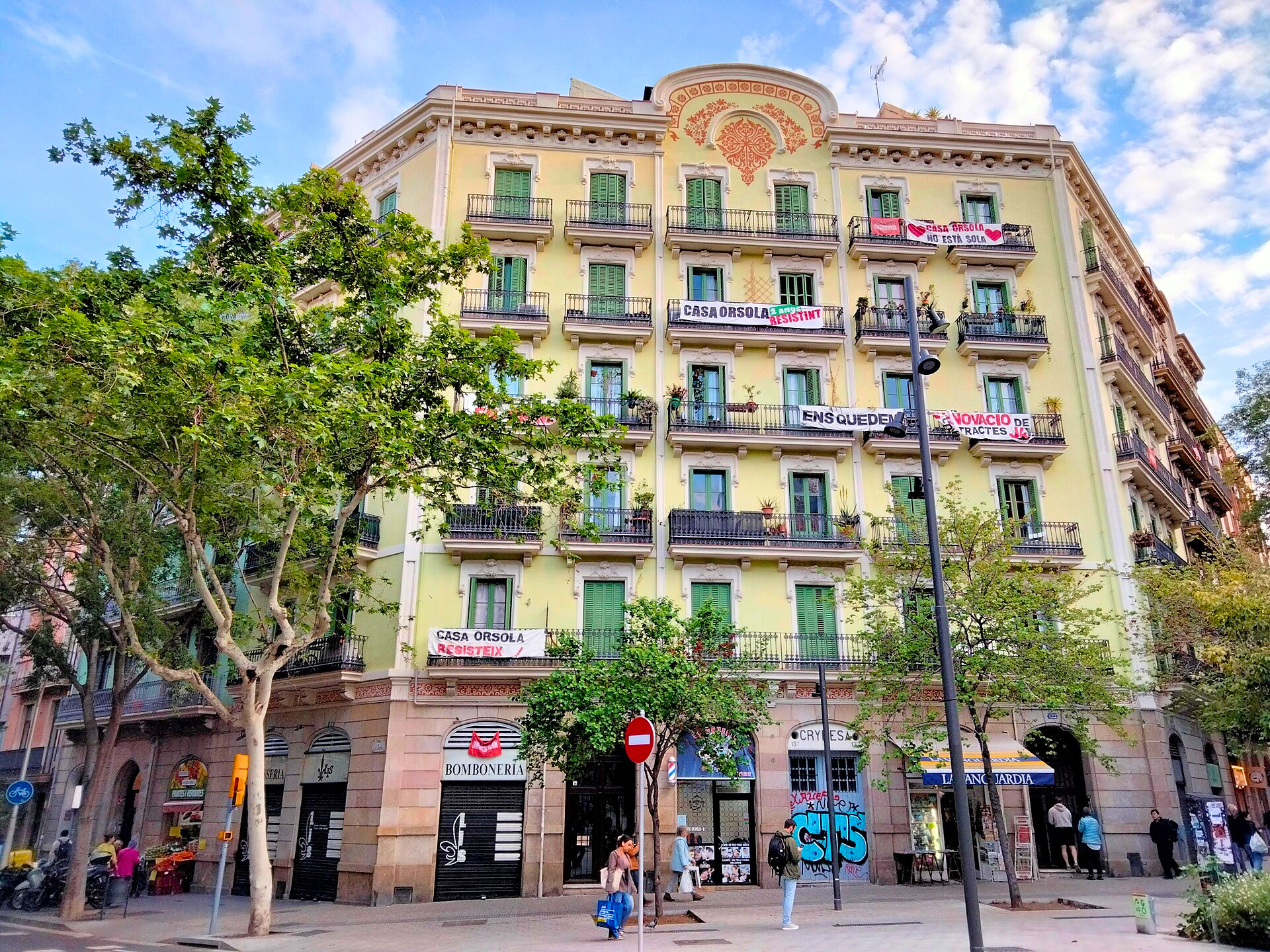
YOUNG generations face contemporary economic and political problems so constantly that we have normalised them and come to regard them as simply our reality. The moment an average young adult enters the workforce, they meet rising housing costs, insecure jobs, widening inequality and a politics few of them believe in.
Although enormous numbers of people experience the same structural pressures, political discourse teaches us to direct our frustration towards other groups who are victims of those very pressures. And so people who share a problem are encouraged to see one another as competitors – which allows political division to persist as a mechanism of power.
Looking Sideways, Looking Upwards
For this arrangement to survive, people have to be taught to look sideways – towards those apparently competing for the same limited resources. Immigrants, racial minorities, welfare recipients, neighbouring communities and rival political tribes are blamed for conditions they did not create. Looking upwards would mean asking a different set of questions: who owns the resources, who holds political influence, who controls the institutions, and who benefits from the distribution of power as it currently stands.
The technique is as old as organised power. Ancient Rome, after defeating its Latin neighbours in 338 BC, deliberately gave each conquered city different rights and different terms, so that they had more reason to compare themselves with each other than to unite against Rome; later writers summed up the approach as divide et impera, divide and rule.
In colonial Virginia, after poor white servants and enslaved Africans rose up together in Bacon’s Rebellion of 1676, the colony’s laws increasingly separated the two groups, culminating in the slave codes of 1705; the historian Edmund Morgan argued that this was a deliberate effort to give poor white colonists a status to defend instead of a common grievance to share. And in British India, the partition of Bengal in 1905 and the separate Hindu and Muslim electorates introduced in 1909 encouraged Indians to organise politically by religion rather than together against colonial rule.
This is not a new problem, and the point of this article is that we can watch it happen in the historical record. The Cold War is the clearest modern case, because during it a whole vocabulary existed for reframing an upwards question as a sideways one and then burying it.
Movements that challenged established economic arrangements – over who owned oil, or land, or copper – were routinely translated into the language of communism, and once translated they could be dealt with as security threats rather than as arguments about ownership. Three episodes make the pattern visible, and all three are now documented in declassified American government records rather than merely alleged.
Iran: Oil, Sovereignty and a Coup
After the Second World War, Iran emerged politically and economically weak. Britain and the Soviet Union had invaded in August 1941, and Reza Shah abdicated the following month in favour of his son. The country was left with poverty and economic disruption, and the new Shah, Mohammad Reza Pahlavi, exercised limited political authority: as the historian Ervand Abrahamian describes, real power in the 1940s lay largely with parliament, the landed elite and the occupying powers rather than with the young monarch.
In 1951 the Iranian parliament nationalised the oil industry and Mohammad Mosaddegh became prime minister. The move directly challenged Britain’s established economic position through the Anglo-Iranian Oil Company, the forerunner of BP, which had held the concession on Iranian oil for decades on terms extremely favourable to London.
Britain responded with an economic embargo – a ban on trade intended to force a government’s hand – and pursued the dispute internationally, framing it as a legal question. Underneath the legal argument was a straightforward conflict between Iranian control over its own natural resources and British economic interests.
The economic dispute soon escalated into a political crisis. Britain pushed for Mosaddegh’s removal, and found the argument that worked by emphasising Western fears of communist expansion. American cooperation followed: after Eisenhower took office in January 1953, support within the CIA for intervention strengthened.
It matters, though, that Iran’s difficulties were substantially its own. Mosaddegh faced real domestic opposition, including tensions with religious leaders, with political rivals, and with the growing communist Tudeh Party. Those divisions created the opening that foreign intervention needed – a coup does not succeed in a united country.
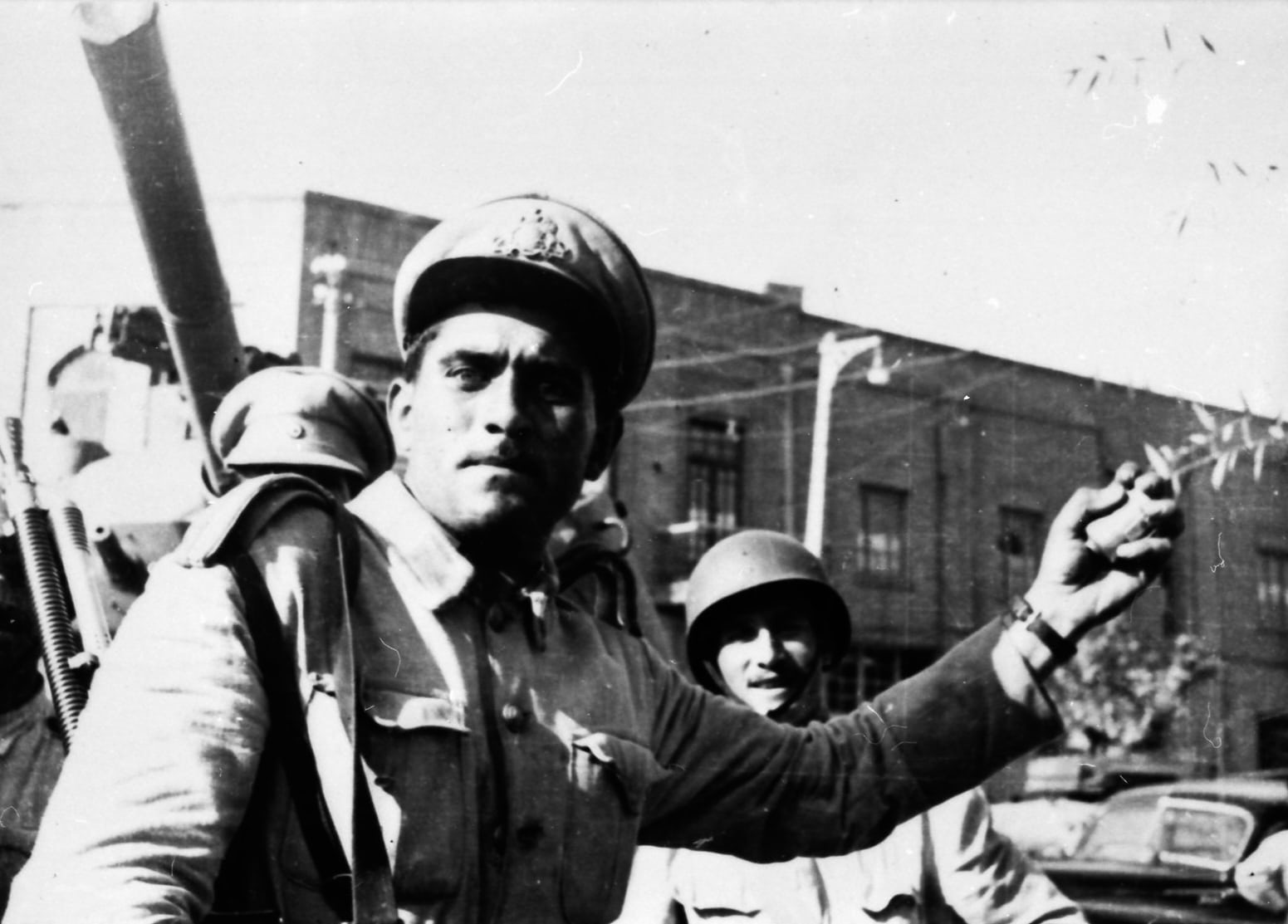
What followed was the operation the CIA codenamed TPAJAX, better known as Operation Ajax. The Shah hesitated to dismiss Mosaddegh, and the first attempt to remove him in mid-August 1953 failed outright. The second did not. Under intense pressure from American and British officials, Mosaddegh’s government collapsed in August 1953 and General Fazlollah Zahedi was installed as prime minister.
A Western-led consortium took over Iranian oil production the following year. On paper, Iran now owned its oil through the National Iranian Oil Company, and profits were split 50 – 50 between Iran and the consortium. In practice, the foreign companies ran production and exports: British Petroleum held 40 per cent of the consortium, five American oil companies another 40 per cent between them, Royal Dutch Shell 14 per cent and the French CFP 6 per cent, and the consortium refused to open its books to Iranian auditors or give Iranians seats on its board.
Iran had won half the profits on paper, but lost real control over the industry it had nationalised. The Shah, meanwhile, consolidated political power. In 1957, with assistance from the United States and Israel, the security organisation SAVAK was established; it would spend the next two decades enforcing his rule.
For decades this was denied or quietly omitted from the official record. The American government’s own documentary history of the period was published in a version that removed all reference to the role of American and British intelligence; a corrected volume was not released until 2017, and it contains the first explicit official acknowledgement of TPAJAX.
The Iranian crisis therefore cannot be understood solely as a contest between democracy and dictatorship, nor simply as a struggle over oil. It was a conflict in which national sovereignty was at stake, foreign economic interests did lasting damage, and domestic political division became entangled with Cold War strategy. The obvious question is who controlled Iranian oil. The upward question is who actually posed a threat, and to whom.
Guatemala: A Coup Against Communism, or for Banana Profits?
On 27 June 1954, the democratically elected Guatemalan president Jacobo Árbenz Guzmán was removed from power in a CIA-sponsored coup, the operation codenamed PBSUCCESS. Two years earlier, in 1952, Árbenz had introduced an agrarian reform programme aiming to redistribute uncultivated land to Guatemala’s largely landless rural population. It fell heavily on the United Fruit Company, an American corporation with vast Guatemalan landholdings, much of it unfarmed, and with close connections to senior figures in Washington.
The United States tied Árbenz’s government to a communist threat, and that label supplied the political justification for intervention. How far the coup was driven by United Fruit’s commercial interests and how far by genuine Cold War anti-communism is still argued over by historians, and honest accounts hold both together.
What is not in dispute is the mechanism this article is tracing: a conflict over land ownership and economic redistribution was converted into a confrontation about communism, and once converted, it was no longer a domestic argument Guatemalans could settle for themselves.
Chile: How the Fear of a Possibility Shifts Nations
The same collision between geopolitical threat and economic transformation reappeared in Chile. American concern centred on the prospect that Salvador Allende would nationalise the two major American-owned copper companies, Anaconda and Kennecott. That concern long predated his presidency.
In the 1964 presidential election the CIA spent some three million dollars supporting the campaign of the centrist Eduardo Frei – underwriting, according to the United States Senate’s own subsequent investigation, slightly more than half the total cost of it – partly out of fear that an Allende victory would carry Chile towards communism.
Allende nonetheless won the presidency in 1970. The response was not acceptance. That same Senate investigation found that eight million dollars was spent covertly in the three years between 1970 and the military coup of September 1973, with over three million in the 1972 financial year alone, and recorded that President Nixon had instructed the CIA to play a direct role in organising a coup to prevent Allende taking office in the first place.
Nationalisation sat at the centre of the tension throughout, but it was not the whole story: the historian Tanya Harmer, drawing on declassified archives from across the Americas, concludes that while American business interests added pressure, Nixon and Kissinger’s hostility to Allende was driven above all by ideological fear that a second socialist state in Latin America, alongside Cuba, would spread communism across the continent. The crisis it fed culminated in the coup of 11 September 1973.
From Foreign Operations to Domestic Policing
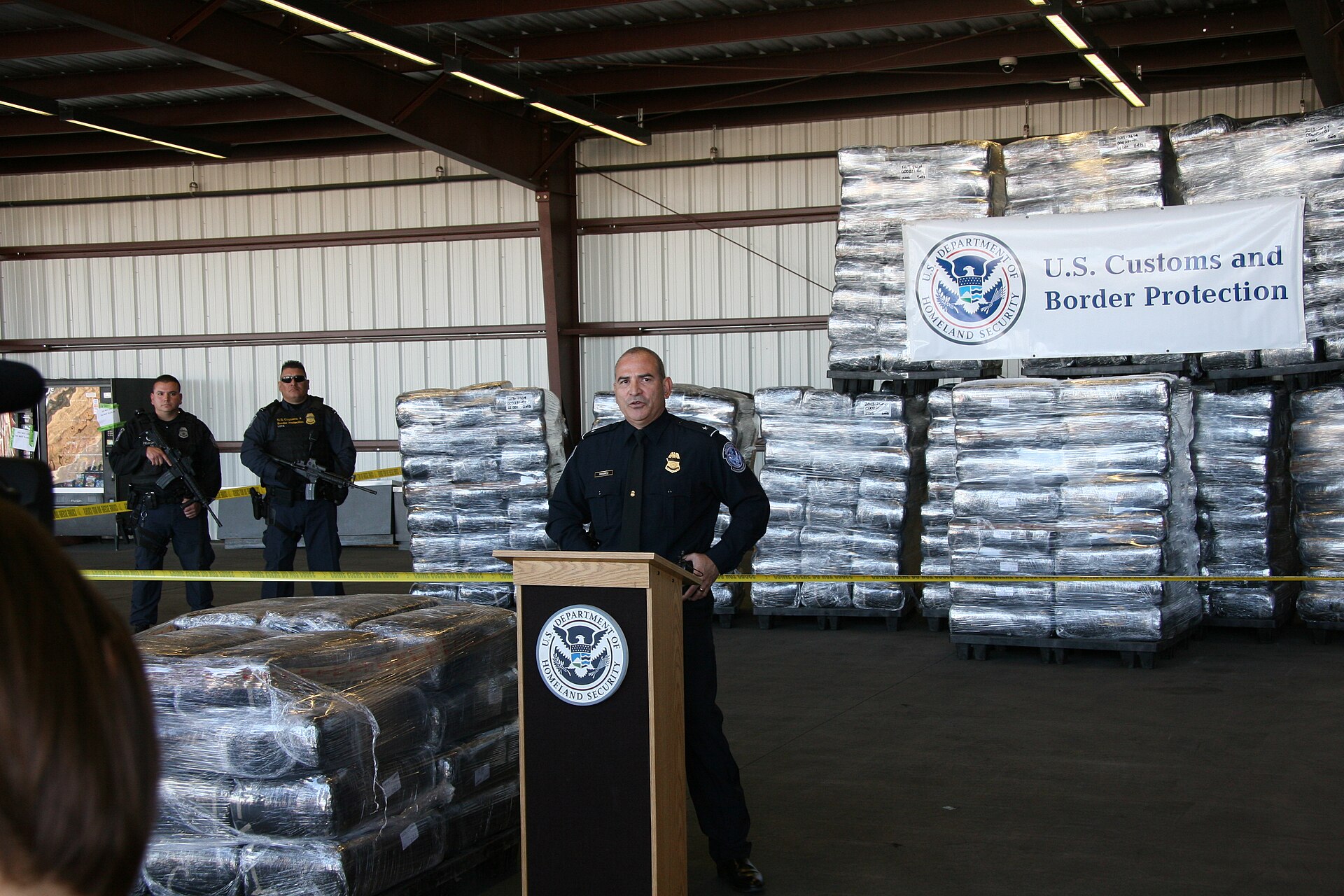
Practices developed through foreign conflict and national-security policy do not stay abroad. They shape domestic governance too, through policing, interrogation, surveillance and militarisation, and the continuity is institutional rather than accidental: the same agencies, doctrines and habits of mind persist.
Governments identify internal threats and build intelligence-led policing around them, in the hope of control and of knowing what their populations are doing. The clearest Cold War example is the FBI’s COINTELPRO programme, which ran from 1956 to 1971. Set up to counter communist influence inside the United States, it expanded to spy on and disrupt civil rights and anti-war groups, including Martin Luther King Jr., treating Americans campaigning for equal rights as a domestic security threat. The same Senate investigation that documented the Chile operations exposed it in 1976.
The specifics depend on domestic context, but the same problems recur. Civil liberties tend to be among the first casualties, through the erosion of privacy, pressure on free speech, and the weakening of protections against unreasonable search.
The evidence that this bears unequally on particular communities is not anecdotal. Carvalho, Mizael and Sampaio reviewed sixteen empirical studies of racial prejudice and police stops published between 2014 and 2019, conducted in the United States, England, Wales and the Netherlands. Black men were the most frequent targets of police stops across that literature.
People who had been stopped reported markedly negative perceptions of the police afterwards, and the review identified the stop-question-and-frisk strategy used by some American police departments as a form of stop that favoured racial selectivity, with traffic stops emerging as a particularly favourable environment for racially biased decisions by individual officers.
Examples of this kind show how the division of a society into perceived threats becomes institutionalised – written into procedure, budget and training rather than merely held as an opinion. Once that has happened, attention is directed towards particular communities and away from the structural conditions producing the pressures everyone is under.
Conclusion
What links Tehran in 1953, Guatemala City in 1954, Santiago in 1973 and a traffic stop in a British or American city is not a single conspiracy. It is a repeated manoeuvre. In each case a question about ownership and distribution – who holds the oil, the land, the copper, the power – was reframed as a question about threat, and the reframing determined what could be done next. Once a government or a community has been classified as a danger, the argument about resources is over before it starts.
The Cold War examples are useful precisely because they are finished, declassified and no longer politically live for most readers. We can see the whole shape of them, which is exactly what we cannot do with our own moment.
The habit worth taking from them is not cynicism but a question, and it is a simple one. When you are told to be angry at another group who are visibly struggling with the same rising rents and the same insecure work as you, it is worth asking who benefits from your looking sideways rather than up.