The Balance Has Shifted
A former President of the UN Security Council says the West misread China's rare-earth restrictions and calls Vietnam Asia's most underestimated emerging economy.
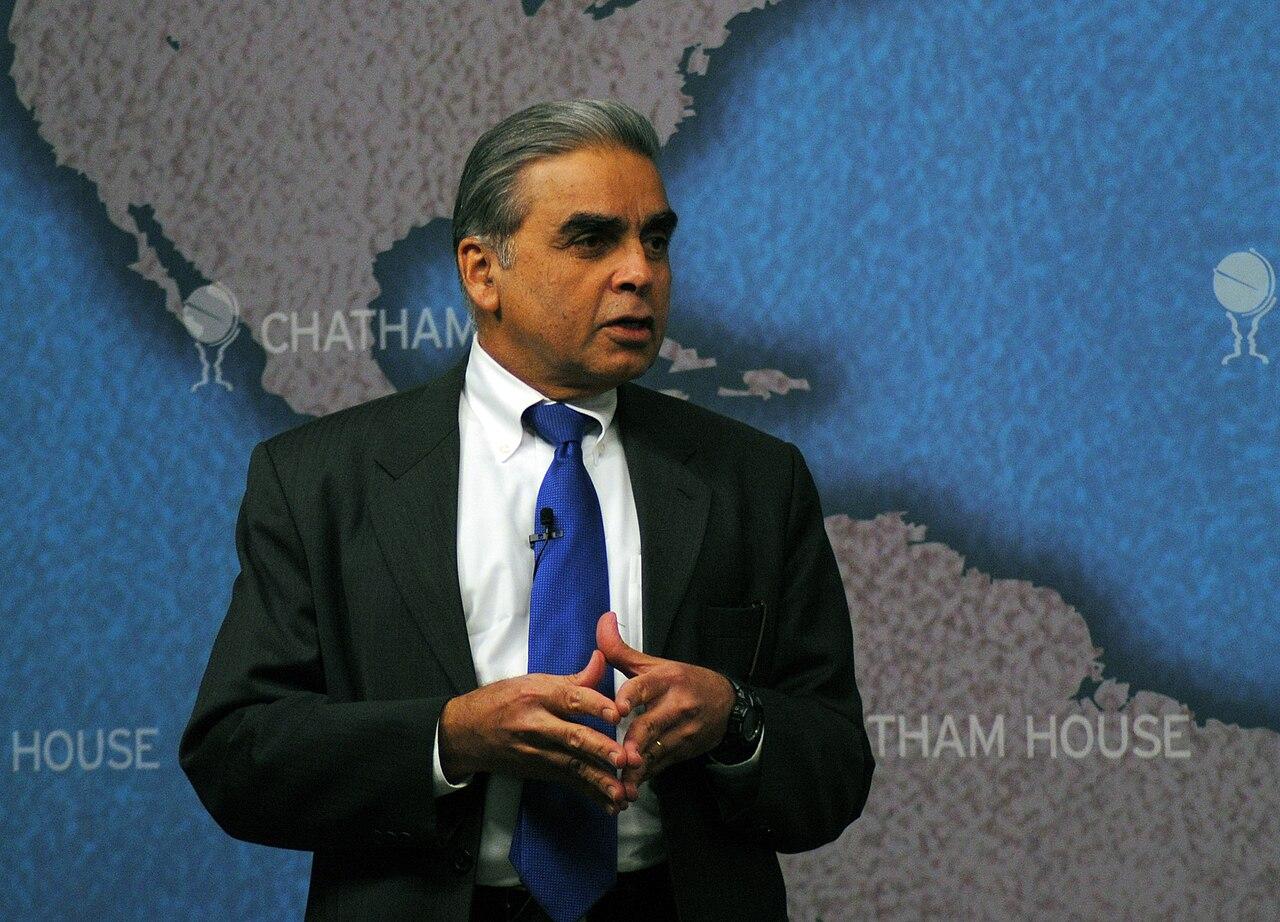

KISHORE Mahbubani has spent half a century watching the balance of world power move. As a Singaporean diplomat he served twice as his country's ambassador to the United Nations and, in 2001-02, as President of the UN Security Council. He later became founding dean of the Lee Kuan Yew School of Public Policy, and is now a Distinguished Fellow at the Asia Research Institute of the National University of Singapore.
His books, including Has China Won?, argue that the 21st century will be shaped by Asia's return to the centre of the world stage. We put three questions to him: about a recent event he thinks the West misread, about what a teenager outside Asia should understand about the world order, and about the country he thinks is most underestimated today.
The Confluence: You've argued that the 21st century will be shaped far more by Asia's return to the centre of the world stage than most Western commentators are prepared for. Is there a recent event whose significance Western media largely missed, but that historians will point back to?
Mahbubani: The specific recent event that the Western media has largely missed the significance of was the decision by the government of China to restrict the supply of critical minerals including rare earths [a group of metals used in the magnets inside electric motors, smartphones and fighter jets] on 4 April 2025, in apparent retaliation for the high tariffs and semiconductor controls imposed by the US on China.
Since the US and Chinese governments called a truce on the trade war on 11 May, a month after this decision, this move may not have had a great psychological impact in the West. The Western media certainly didn't understand the broader significance of these restrictions.
Symbolically, Beijing's rare earth export controls sent a very powerful signal. For the first time since the beginning of the Century of Humiliation in 1839, when the British forced China at gunpoint to open its markets to opium, China had retaliated effectively against coercion from a great power.
If China had fully implemented an export ban on rare earths, several major industries in the US would have been paralysed, including, for example, the automotive industry. Indeed, Ford had to temporarily shut down one of its plants in May 2025.
Clearly, the balance of power between China and the Western powers has shifted significantly. The West can no longer kick China around. I believe the West has not fully understood the significance of this new geopolitical reality.
The Confluence: For a teenager growing up outside Asia, what's one assumption about the future world order they should probably let go of, and what should replace it?
Mahbubani: For a teenager growing up outside Asia, it's important to understand that the current world order is not in balance and does not reflect contemporary geopolitical realities.
Here's a simple example. Broadly speaking, voting shares in the IMF [the International Monetary Fund, which lends to countries in financial trouble] are supposed to reflect a country's share of the global GDP. Currently, China and the EU have similar shares of the global GDP, around 17 to 18 per cent. However, the EU's voting shares at the IMF add up to about 26 per cent, while China's voting share is about 6 per cent. The EU has been fighting a fierce rearguard action to avoid reducing its voting share.
This is unwise. If international institutions do not adequately represent the needs and interests of the new great powers, these new great powers will have less incentive to cooperate with their rules and policies. The world is safer and more stable when the major powers have a good reason to work together. Hence, all of us should advise the EU member states to accept these new geopolitical realities.
The Confluence: Of the countries currently rising, which one do you think is most underestimated right now, and what's the clearest evidence for that?
Mahbubani: The most underestimated country in our world today is Vietnam. When the Cold War ended in 1991, Vietnam was one of the poorest countries in the world, as it had been involved in continuous wars and geopolitical struggles for almost 50 years. 3.8 million Vietnamese were killed in the war between the US and North Vietnam.
Even after the war ended in 1975, there have been more than 105,000 casualties of unexploded ordnance [bombs and shells that failed to go off and can still explode decades later]. There are still 800,000 tonnes of unexploded bombs and mines all over Vietnam.
Everyone expected that Vietnam would remain a basket case after years of warfare. Instead, Vietnam made an amazing turnaround. It opened its economy, joined ASEAN [the Association of Southeast Asian Nations] in 1995, and laid out the red carpet for Western investors, including American investors.
As a result of these wise, pragmatic decisions, the Vietnamese economy took off. Its GDP was 8 billion US dollars in 1990. In 2025, it was 494 billion US dollars. In short, the Vietnamese GDP multiplied by nearly 62 times in 35 years!
Jim Yong Kim, who was then the President of the World Bank, said in 2016: "In the last 30 years, Vietnam has become one of the world's great development success stories, rising from the ranks of the poorest countries. On the strength of a nearly 7 per cent average growth rate and targeted government policies, tens of millions of people have lifted themselves out of extreme poverty."
Indeed, in 1992, Vietnam's extreme poverty rate was 57.4 per cent, meaning that most Vietnamese people were living on less than US$3 a day. By 2022, this number had fallen to just 1.9 per cent.
In the 1980s and 90s, people often spoke of the four Asian economic tigers: South Korea, Taiwan, Hong Kong and Singapore. Vietnam will be the next Asian economic tiger.