A Country-less Currency, and a Country Drowning in Its Currency
Why the dollar prices trade between other countries, and how demand for the Swiss franc left Switzerland's central bank holding one of the world's largest balance sheets.
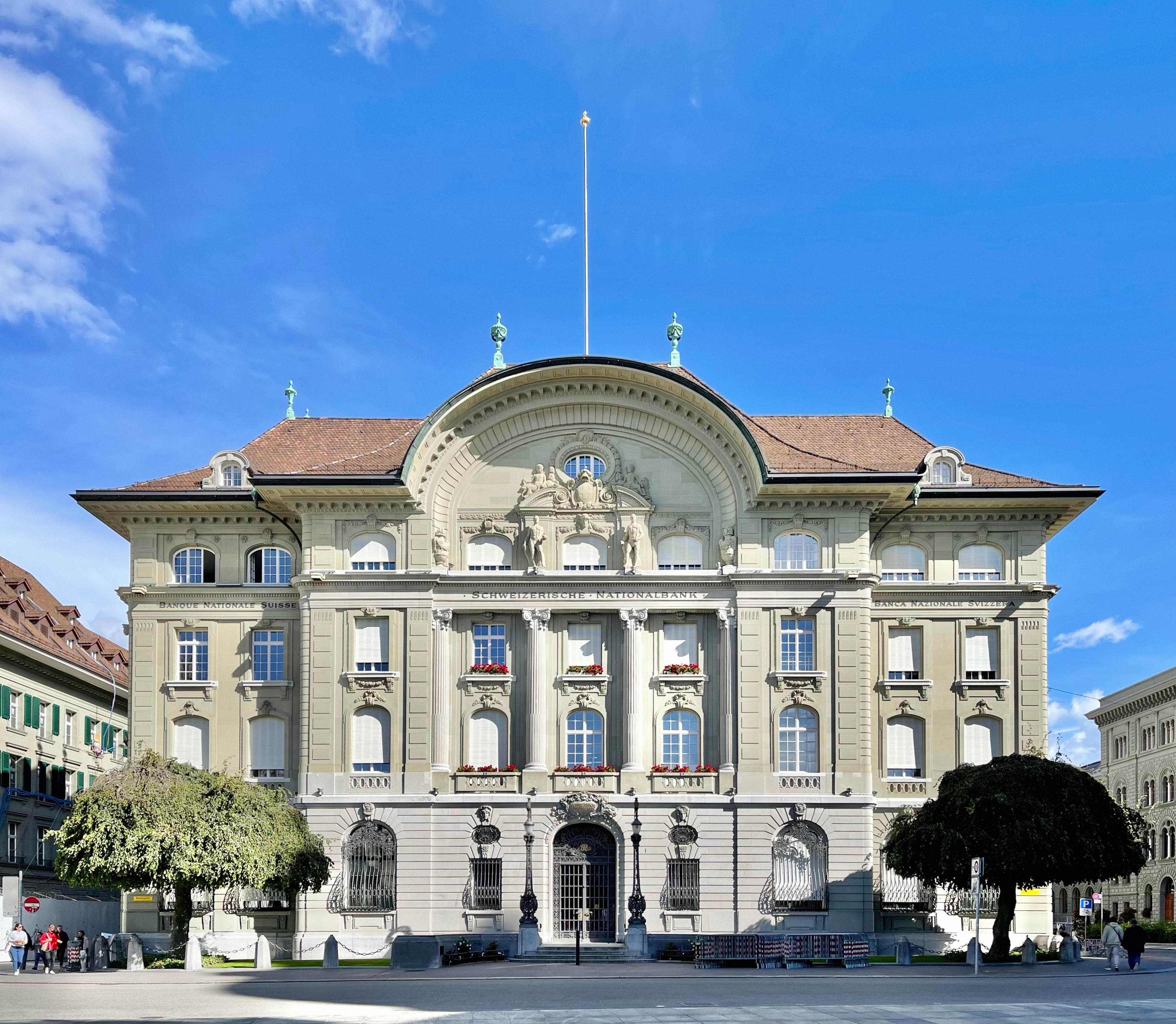

CÉDRIC Tille is a professor of international economics at the Graduate Institute of International and Development Studies in Geneva. He studied economics in Lausanne, earned his PhD at Princeton, and spent nine years as an economist at the Federal Reserve Bank of New York before joining the Graduate Institute in 2007. His research focuses on monetary policy and international capital flows.
The Confluence: Could you tell us about what you work on, and how you first got into economics?
Dr. Tille: My focus is macroeconomics: the branch of economics that looks at a country’s economy as a whole, rather than individual firms, which is microeconomics. I work on monetary policy and international capital flows, from both theoretical and empirical angles. Our students at the Graduate Institute, mostly at master’s and doctoral level, go on to work at central banks, the IMF, and similar policy institutions.
Getting into economics was a bit of an accident. My dream job had been to be a fighter pilot, but glasses ruled that out. In high school I discovered an interest in economics, went to college, it went well, and there I go. I wasn’t someone who dreamt of being an economist from an early age, but I liked it, and it’s been going well ever since.
The Confluence: The dollar is often called the world’s currency, but people don’t really know why. You research the dollar’s role as a vehicle currency. What does that mean, and why does everyone use dollars even in trades that don’t involve the United States?
Dr. Tille: This is about the international role of currency, which has several dimensions. Central banks, especially in emerging economies, hold a lot of their reserves in foreign currencies, and the dollar has a dominant role there, though not an exclusive one. Cross-border loans and deposits are also largely in dollars. Cross-border securities, such as bonds traded internationally, are mostly in dollars too. Payments are another dimension, where the dollar has a big role but is relatively less dominant; the euro, and increasingly the renminbi, China’s currency, have a growing share.
Then there’s the invoicing currency, connected to trade. Say I’m exporting Swiss cheese to a customer in Germany. We agree I’ll deliver it in three weeks and sign a contract. What currency do we set the price in? It could be Swiss francs, it could be euros, since my customer is in Germany, or it could be dollars, even though the dollar is the currency of neither Switzerland nor Germany.
Research I’ve been part of documents that the dollar has a very large presence in exactly this kind of trade. You might say, well, the US is a big country, so it’s natural its currency plays a large role. There’s some truth to that, but the dollar’s role is well above the economic size of the US in the world, whereas the euro’s international role in trade is more in line with Europe’s actual share of trade.
A lot of this comes down to commodity trade: raw materials and agricultural goods are overwhelmingly invoiced in dollars. There are two main reasons. First, there’s what economists call a coalescing effect. If I’m selling cheese, there are plenty of other cheesemakers in the world, and if exchange rates move, my price relative to my competitors shifts too, which customers don’t like. So if other exporters use dollars, I’ll tend to follow, simply so I don’t stand out. This matters much more for goods that are close substitutes, like wheat, than for strong, distinctive brands like watches, where customers want that product and nothing else.
Second is hedging: matching the currency you’re paid in to the currency your costs are in, so a swing in exchange rates cancels out rather than costing you money. If a firm’s costs, say oil, are priced in dollars, it makes sense to also be paid in dollars. These are the two main factors, though there’s a rich body of research on others: firm size matters, and there’s early evidence that trade sanctions and geopolitical tension affect currency choice too.
The Confluence: Switzerland is famous for having one of the world’s safest currencies. Why did the franc become a safe haven, and does that safety come at a cost, for example to Swiss exporters?
Dr. Tille: It’s not about political power. We’re a country of nine million people. It’s really about institutions. The central bank has historically delivered very low inflation, so if you hold Swiss francs, their purchasing power stays stable. Our political institutions are also very stable. The government consists of seven people from a mix of four political parties, so it’s a coalition government by construction. And if parliament passes a law that a group of citizens objects to, and they can gather enough signatures, we hold a referendum on it. It’s quite common for the population to tell the government no. There’s also a strong respect for property rights.
The Confluence: The Swiss National Bank has one of the largest balance sheets in the world relative to the size of its economy. What does that tell us, and what problem does it create?
Dr. Tille: The SNB is now the largest central bank in the world relative to the size of its economy. That happened because global crises repeatedly send capital fleeing into Swiss francs as a safe haven, and the SNB has had to intervene heavily in currency markets to prevent the franc from appreciating so much that it destroys the competitiveness of Swiss exporters. So being trusted becomes its own kind of burden: a small, open economy ends up managing a balance sheet built to absorb everyone else’s panic.
The Confluence: Emerging-market central banks now hold large foreign-currency reserves too. How does their situation compare with Switzerland’s?
Dr. Tille: It’s a different problem. Many emerging-market central banks face the risk of investors’s trust in their currency weakening, and hold large reserve portfolios to be ready for this. Switzerland’s problem is the opposite, as reserves are accumulated to prevent the franc from being too strong..
The Confluence: The US trade deficit and China’s surplus keep widening. Is that automatically a crisis?
Dr. Tille: Not automatically. It reflects a genuine imbalance, the US saving too little and running persistent deficits (including budgetary), financed by foreign demand for dollar assets, and China saving a great deal and exporting the difference between its production and consumption. It’s sustainable for a long time precisely because the dollar’s role gives the US unusual room to keep financing that deficit. Whether it’s wise policy is a separate question.
The Confluence: China’s industrial policy has produced excess capacity in areas like electric vehicles. Where does that capacity go next?
Dr. Tille: China has investing in an enormous manufacturing capacity that raised the supply of goods. The demand by domestic actors (firms and households) has now cooled as an earlier real-estate investment boom has turned into a bust. That production capacity, especially in electric vehicles, now exceeds what China’s own market can absorb. The natural next step is exporting the surplus, and Europe in particular is starting to feel that pressure directly, which is generating real trade tensions.
The Confluence: Any advice for young people thinking about economics, especially with AI tools like ChatGPT now widely available?
Dr. Tille: Don’t outsource your thinking. These tools are useful, but the value of an economist is in wrestling with a hard problem yourself, building the intuition for when a model’s answer looks wrong. If you let a tool do that thinking for you from the start, you never build the judgment you need later, when the model gives you something plausible-looking but wrong and you need to know why.