The Banana Myth
A political economist uses the story of EU banana rules, which companies and member states pushed for, to show who writes EU law.

MARTIJN Huysmans is a political economist at Utrecht University in the Netherlands, originally from Belgium, where he completed his bachelor’s, master’s, and PhD studies. His research covers the political economy of the European Union, with a particular focus on geographical indications for protected foods such as Parmesan and Parma ham, alongside broader work in agricultural and development economics.
The Confluence: What drew you specifically into researching geographical indications for protected foods?
Dr. Huysmans: It happened almost by accident, through my PhD co-promoter, who worked on the topic. It became a side interest I pursued alongside my dissertation, and it’s stuck with me ever since, alongside my broader work in agricultural and development economics.
The Confluence: What’s the biggest misconception people have about EU trade rules? Is it more complicated than just tariffs and paperwork?
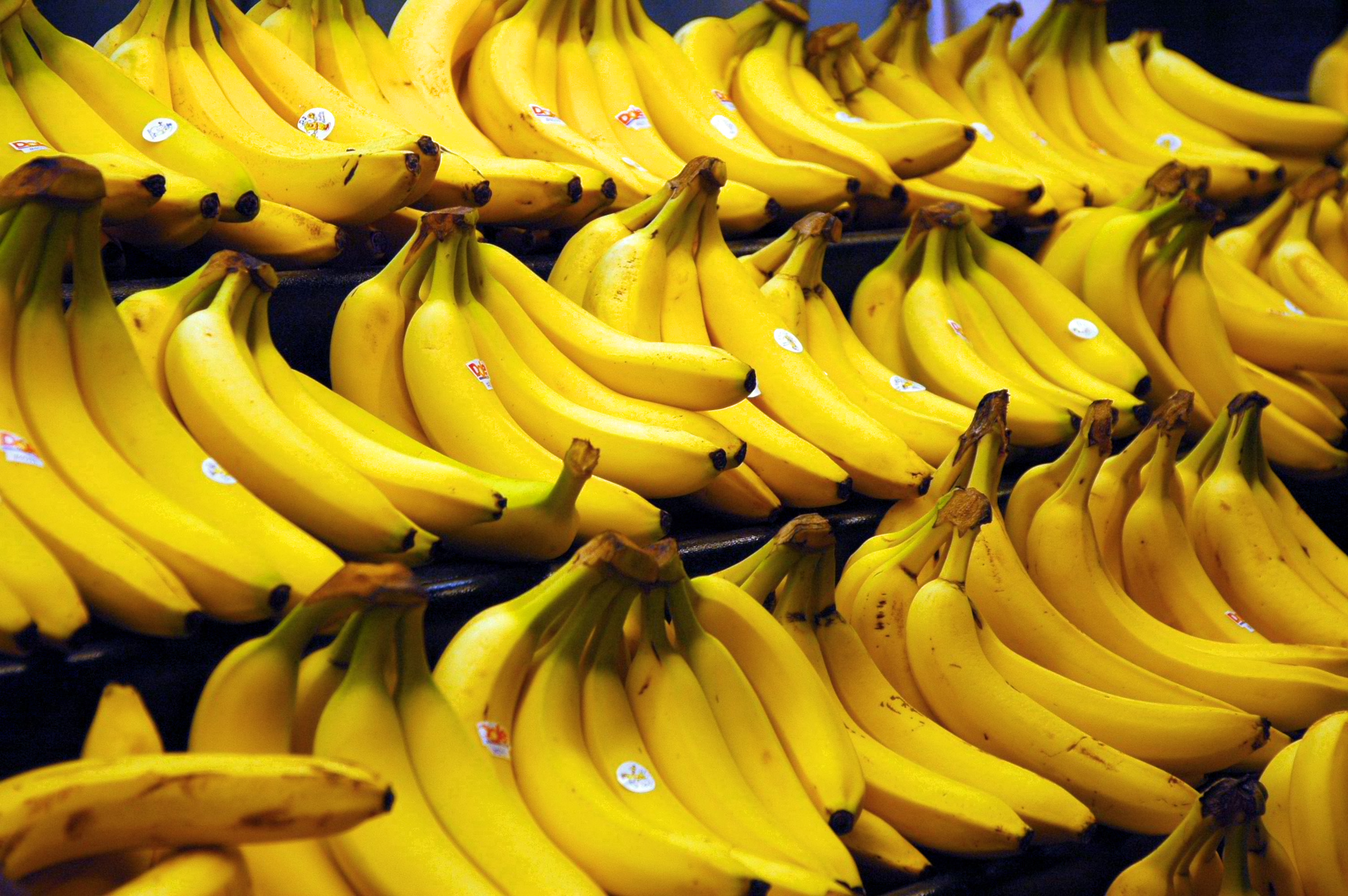
Dr. Huysmans: There are a lot of misconceptions. With my students, I always assign an article on the so-called “banana regulations,” a common idea in British media that the EU regulates the shape of bananas out of pure bureaucratic excess. It turns out that story was driven largely by corporations with a business interest in certain rules about which bananas qualify as grade one, and by member states pushing for those rules, not by the European Commission dreaming them up alone.
The Commission initiates legislative proposals, but they then go to the Parliament and the Council, where member states are represented, so member states have a real say in what happens. The EU is a bundle of different things: a single market with free flow of goods, freedom of movement of people, and a political arm on top of that, which is what makes it contentious. People feel it infringes on their sovereignty.
But I’d push back on treating sovereignty as zero-sum: a small state like Belgium or the Netherlands has very little influence in the world operating alone, so pooling sovereignty as a bloc can actually mean more real-world influence, not less.
The Confluence: There’s a concept called the “Brussels effect,” the idea that EU regulations become the de facto global standard because it’s easier for companies to comply everywhere than build different products for different markets. Is that a deliberate form of EU power, or more of a byproduct?
Dr. Huysmans: My hunch is that it started as more of a byproduct, and once it had a name, from Anu Bradford’s book on the subject, it became more potent in people’s imagination, and probably more deliberate too. If the EU sets a regulation, it can be cheaper for companies to comply worldwide with the EU standard rather than build separate products, though that’s not always the case, and it depends on the EU actually agreeing internally first.
A good example of that difficulty is NutriScore, a color-coded front-of-pack health label that originated in France and spread to the Netherlands and Germany. The Commission wanted it EU-wide, partly to avoid a confusing patchwork of labels. But in Italy, protected foods like Gorgonzola and Parma ham are an important part of both the economy and national identity, and because they’re fatty and salty, they score badly under the algorithm. Italy objected so strongly that it banned the use of NutriScore outright, and that has stalled any uniform EU-wide front-of-pack labeling for years.
Before the EU can project a Brussels effect outward, it first has to agree internally, and that’s not always easy.
The Confluence: Trade negotiations happen behind closed doors between technical experts and diplomats, but the effects land on ordinary workers and consumers who have no real way to weigh in. Can that kind of negotiation still protect the people it’s meant to protect?
Dr. Huysmans: I understand the appeal of transparency, and the worries people have about a democratic deficit in the EU: people are represented, but through longer, more indirect chains of accountability than in a national democracy. Unfortunately, full transparency during negotiations is difficult without hurting yourself, because you don’t want the other party to know exactly how far they can push you.
Negotiators need room for the kind of give-and-take we call issue linkage: protecting Parmesan cheese in a deal with a third country might mean giving that country lower tariffs on something they want to export in return. If everything is made visible in real time, it becomes easier to see who “got thrown under the bus” for whom, which can make compromise more difficult to reach, even if only seeing the final deal obscures some of that distributional politics.
That said, free trade is generally good for countries in aggregate, but it produces winners and losers, and I think economists and policymakers have historically thought too little about compensating the losers. There’s good research on the “China shock” showing that while trade with China lowered prices and benefited American consumers overall, some places were hit far harder than the aggregate numbers suggest. When a large factory closes, it isn’t just an economic loss for the people who worked there; it can unravel a whole community, as the businesses that depended on those wages close too.
The Confluence: A lot of populist movements blame globalist free traders for people’s economic troubles. Is that a fair diagnosis, and is there an institutional fix for the distributional problems free trade creates?
Dr. Huysmans: There’s a commitment problem with redistribution: a government might promise that gains will be redistributed later if people accept a trade deal now, but that promise isn’t always credible, and countries can end up feeling stuck with a deal whose costs were never actually offset, which is part of what has fed populist backlash, from Brexit to the renegotiation of NAFTA.
The most credible form of redistribution tends to be one that isn’t tied to any single trade deal but is built into the welfare state more broadly: unemployment benefits, affordable education, and support for retraining adults, not just an 18-year-old’s first degree.
It’s also worth separating globalization from technological change. Basic trade theory says that if Europe is rich in capital and poor in labor relative to China, free trade with China should benefit capital in Europe and hurt workers there, and there is something to that story. But when economists actually study the decline in blue-collar jobs in Europe, they tend to find it owes more to skill-biased technological change, automation rewarding engineers and technicians while making things harder for manual labor, than to globalization itself.
Globally, though, that same globalization has lifted hundreds of millions of people out of poverty in places like China and India.
The Confluence: If you had to leave readers with a single takeaway, what would it be?
Dr. Huysmans: When I talk to high schoolers, I ask who’s ordered a package from a different EU country, and what they ordered. People always have some very specific answer, shoes from Poland, trading cards from Germany, something they couldn’t find in Dutch stores. That’s the moment they realize they’re already benefiting from globalization without thinking of it that way.
The other thing I’d point to is food. Most Dutch people don’t even particularly like traditional Dutch cuisine, and I’d guess plenty of Brits feel the same about their own. Being able to eat sushi, curry, or ramen instead of only the traditional national dishes is a small, tangible, everyday benefit of an open, connected world, and it’s often a more relatable way into the subject than trade policy itself.