Cash Refuses to Die
Pakistan handles hundreds of millions of digital payments a quarter yet still runs on cash, and the article says going cashless risks privacy and leaves some people out.
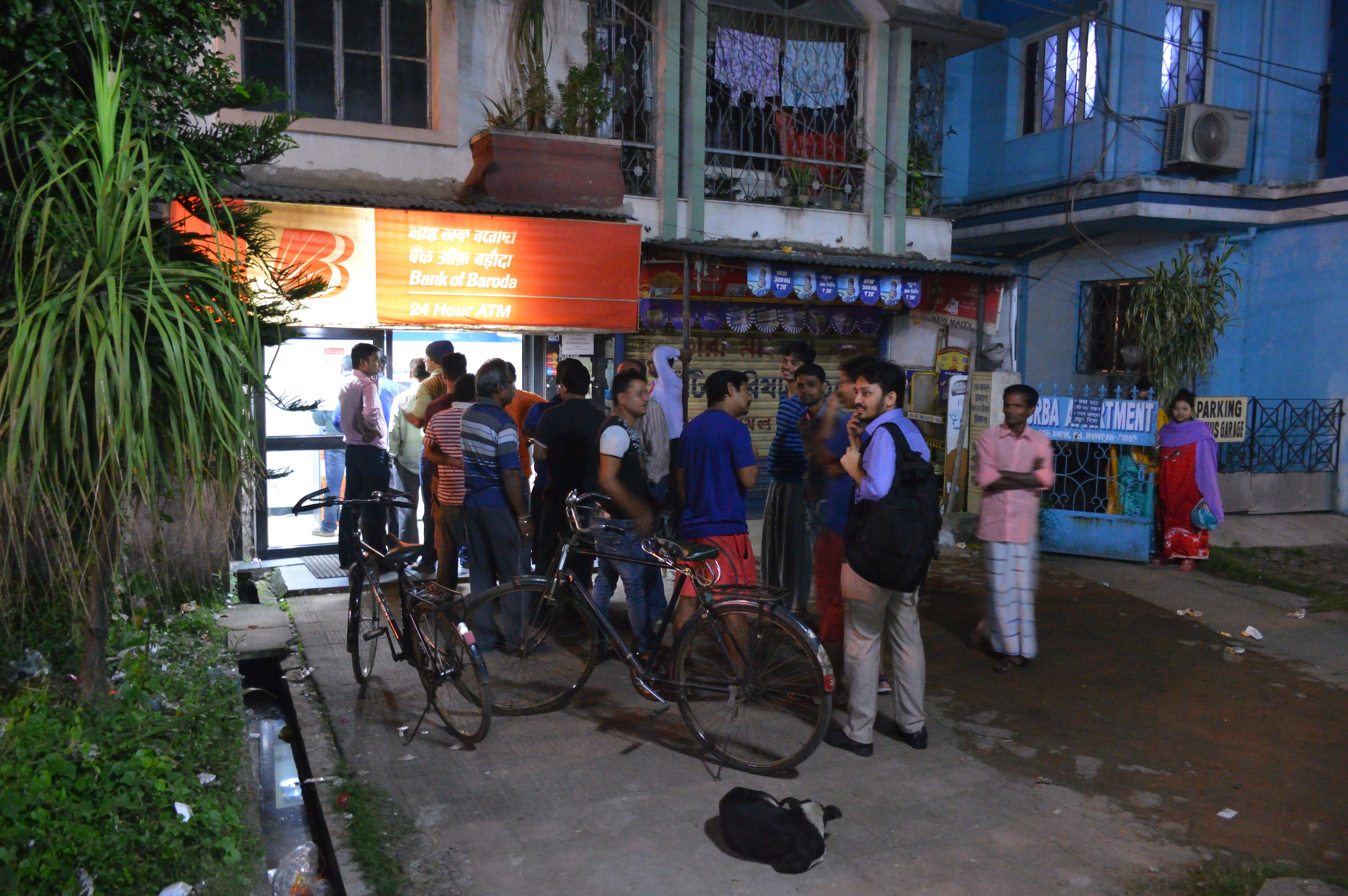

IN 2016, Sweden became the world’s most cashless society – with over 80 per cent of its population transacting digitally and a mere 8 per cent using cash – largely without disruption, its institutions trusted and its infrastructure reliable. That same year, India wiped out 86 per cent of its currency overnight, triggering a liquidity crisis – a sudden inability to get hold of money to buy and sell with – that cost 1.5 million jobs and left daily wage labourers, street vendors and small farmers, whose entire economic lives ran on cash, with no alternative payment infrastructure whatsoever.
These contrasting outcomes reveal that the question of whether we should fear a cashless society cannot be answered by theory alone. The word ‘fear’ implies genuine harm, but whether that harm materialises hinges on who is affected and the conditions at play during the transition.
This essay argues that while a cashless society has bona fide economic benefits – a larger tax base, reduced criminal activity, increased monetary policy flexibility – the current drive toward expanding state control and satisfying corporate data interests raises legitimate concerns about privacy, financial exclusion and systemic fragility that demand serious scrutiny before the world sleepwalks into irreversibility.
Privacy
The case for a cashless society rests on serious economic foundations. The economist Kenneth Rogoff, in his work on the costs of physical currency, argues that large-denomination notes – the $100 bill, the €500 note – predominantly serve criminal organisations and unregistered businesses in tax evasion rather than ordinary civilians.
If a petty criminal has to hide $100,000, the bill size is inconsequential. However, a large criminal organisation that must hide hundreds of millions of dollars requires large-denomination notes to keep the physical volume of cash manageable. Eliminating them would impose serious logistical strains on wholesale crime.
Beyond criminality, cashlessness affords central banks a powerful monetary policy tool. Physical cash allows citizens to escape negative interest rates – a policy under which savers are charged for holding money in a bank, intended to push them into spending it – by simply withdrawing their deposits, rendering the policy ineffective precisely when it is most needed.
These are not trivial arguments. Rogoff’s case is careful, empirically grounded, and largely focused on large-denomination notes rather than the elimination of all cash – a distinction his critics frequently overlook.
However, the economic case for a cashless society raises a more fundamental concern – one that dismantles the very idea of financial privacy. Cash is an anonymous, untraceable payment medium. Contrastingly, every digital transaction generates a data trail, stored by payment processors, banks and increasingly by governments themselves.
This concern is dismissed by exponents of cashlessness with the common refrain that those with nothing to hide have nothing to fear. The legal scholar Daniel Solove compellingly dismantles this argument: privacy is not merely the concealment of wrongdoing, but the preservation of autonomy and the prevention of dangerous power asymmetries between individuals and institutions.
The repercussions of ignoring this are already visible. China’s digital yuan – a central bank digital currency, money issued directly by the state in electronic form – shows how digital money can be designed to increase state visibility over transactions and, in principle, make payments more programmable and controllable than cash.
The issue, then, is not only surveillance, but the concentration of informational and institutional power that such systems can place in the hands of states and other intermediaries. If cash were to disappear entirely, access to citizens’ transactional data would give corporations and governments both economic and political leverage over individuals, especially where institutional safeguards are weak and data can be exploited for commercial or political ends.
Inclusion
Beyond privacy, cashlessness carries a promise it cannot universally keep – the promise of financial inclusion. A study conducted by the MIT economist Tavneet Suri with William Jack of Georgetown University found that M-Pesa, a mobile money service that lets Kenyans send and store money by text message, lifted an estimated 194,000 households out of poverty, especially empowering women by enabling 185,000 to move from farming into business, and increasing savings.
Its success owed to meeting the specific needs and conditions of its users rather than demanding they adapt to it: it used the existing informal economic structure and required only a basic feature phone.
Yet even the world’s most cashless society is not without its costs. Financial exclusion is a growing concern in Sweden, particularly among elderly, rural and migrant populations, according to the Sveriges Riksbank, the country’s central bank. Complications in opening bank accounts for migrants, wariness of digital systems among the elderly, and sparse payment infrastructure in rural areas mean that as cash machines vanish and merchants refuse cash, exclusion grows steadily among those least equipped to adapt.
The ideal environment that aided Sweden’s transition is conspicuously absent in much of the world. Pakistan makes the point precisely, and it makes it in a way that should trouble anyone who assumes the direction of travel is settled.
On the face of it, the country is a digital success story. The State Bank of Pakistan reported that in the first quarter of 2026, 92 per cent of retail payment transactions were made through digital channels, and Raast – the instant payment system the central bank launched in 2021, which moves money between accounts in seconds and free of charge – processed 742 million transactions worth 23.3 trillion rupees in that quarter alone. Digital merchants have quadrupled from 500,000 to two million under the government’s Cashless Pakistan Initiative.
Read carefully, however, those figures describe something narrower than they appear to. The 92 per cent is a share of transactions already passing through formal banking and payment channels; it says nothing about the cash economy sitting outside them. By value, the picture inverts: digital channels carried 68 trillion rupees that quarter, while bank branches handled 99.5 trillion rupees in over-the-counter business.
And the physical currency has not gone anywhere. Currency in circulation in Pakistan reached 11.94 trillion rupees in the 2026 financial year, up 94 per cent from 6.14 trillion in 2020. Cash withdrawals from machines more than doubled between 2020 and 2025, and the stock of 5,000-rupee notes rose from around 291 million pieces in 2019 to 701 million by 2026 – which is to say that Pakistan’s large-denomination note supply has more than doubled during the very years its digital payment system was being celebrated.
What this describes is not a transition but a cash-conversion cycle. As the economist Ammar H Khan has documented, salaries and remittances enter the financial system digitally, through Raast and mobile wallets, and are then immediately withdrawn and spent as physical currency; the ratio of deposits to withdrawals has collapsed from 15.7 to 8.9 per hundred transactions.
The reasons are structural rather than technological. Around 85 per cent of Pakistan’s labour force works informally, settling rent and wages in cash. Institutional distrust and tax evasion play a significant role in the property market, where cash transactions help avoid paper trails and reduce tax visibility.
Although rules introduced by the Federal Board of Revenue require certain immovable property transactions to be made through formal banking channels, under-valuation, bribery and the role of unregistered dealers show that formal rules alone have not displaced the incentives that keep cash central. The real resistance, Khan notes, sits not with the corner shopkeeper but with distributors, wholesalers and property dealers, who use cash to settle supply chains, avoid documentation and access informal credit at rates exceeding 80 per cent a year.
This suggests that cashlessness does not automatically eliminate wrongdoing; it may simply alter the channels through which it occurs. More broadly, cashlessness cannot legislate away the deeper problem of weak institutional trust.
Digital alternatives such as JazzCash, Easypaisa and NayaPay do exist and are used at scale, but they have not displaced cash as the medium in which Pakistani economic life is actually settled. Where digital payments create stronger documentation and greater tax visibility, they may even discourage adoption among those operating in highly informal settings – a system that makes you legible to the tax authority is not an obvious bargain if you have reason to fear it.
The presumption that digital equals inclusive is a projection of wealthy, connected and developed societies onto populations whose material and societal conditions are fundamentally different.
Fragility
Cashlessness carries one further concern, and perhaps the most underappreciated – systemic fragility. On 1 June 2018, a Visa network outage lasting ten hours, caused by a rare partial failure of a component in the company’s primary data centre, left millions across Europe unable to pay. Visa told the UK Treasury Select Committee that 5.2 million payments failed out of 51.2 million attempted, with 2.4 million of those in the United Kingdom and 1.7 million British cards affected.
A single piece of hardware, failing in a way its operators had not anticipated, removed the ability to buy things from an entire continent for most of a day.
In 2016, the Lazarus Group infiltrated Bangladesh’s central bank through fraudulent instructions issued via SWIFT, the international messaging network banks use to instruct one another to move money, in an attempt to steal $951 million. A staggering $101 million had been extracted before the transfers were flagged, proving that the infrastructure undergirding digital finance is only as strong as its weakest institutional link.
In a country like Pakistan, with load shedding that routinely cuts power and internet access, and poor coverage and bandwidth across large areas, the Visa outage is anything but hypothetical – it is a description of an ordinary week. Cash is the resilience mechanism that cashlessness would permanently decommission.
These concerns – privacy, inclusion and systemic fragility – are not separate objections. They are three facets of the same underlying problem: a transition being driven by institutional interests rather than democratic ones.
The Counter-Case
Admittedly, cash does enable serious harms. Large-denomination notes in particular fuel the underground economy, providing criminal organisations with an untraceable medium of exchange for which there is no better substitute in terms of liquidity – the ease with which something can be spent or exchanged – and universal acceptance. Cash also allows illicit funds to be integrated into the legitimate economy, nurturing money laundering.
In 2012, HSBC, one of the world’s largest and most well-known banks, admitted serious anti-money-laundering failures that allowed at least $881 million in drug proceeds to move through the American financial system, including money linked to Mexican and Colombian cartels. United States authorities imposed $1.256 billion in forfeiture and $665 million in civil penalties. United States Senate investigators also found that HSBC had exposed the American financial system to terrorist-financing risks by providing services to banks linked to such concerns in the Middle East and elsewhere.
The significant detail is that criminal organisations still found a way through, even though HSBC is a fully digital, regulated and internationally monitored institution. This demonstrates that, cashless or not, determined criminals will still find channels through which to operate. Cashlessness does not eliminate criminal finance – it merely redirects it.
Yet the existence of cash-enabled crime does not automatically justify the full elimination of cash. Rogoff’s case for specifically targeting large-denomination notes does carry merit – their elimination would pose genuine logistical challenges for criminal organisations, and Pakistan’s doubling stock of 5,000-rupee notes is a reminder of what those notes are for.
However, Rogoff himself concedes that the promise of cashlessness – disrupting criminal activity and giving central banks more leeway in interest-rate policy – can be achieved through an alternative method: raising the inflation target, removing the need for negative interest rates entirely, without touching cash.
If the most salient proponent of cashlessness accepts an alternative route to his monetary policy goals, the economic justification for full cash elimination narrows considerably. When coupled with Rogoff’s own caveat that he advocates only for phasing out large-denomination notes, the push for total cashlessness seems to wilfully ignore the looming concerns about privacy, inclusion and systemic fragility.
Before It Is Irreversible
The question of whether we should fear a cashless society is ultimately one of institutional power – who controls the infrastructure through which all economic life flows – and whether that control is democratically accountable. Sweden and India did not fear different things; they faced different conditions.
Under ideal conditions – trusted institutions, gradual transition, high digital literacy – cashlessness need not be catastrophic. Yet even in Sweden, the expected best-case scenario, cashlessness is leaving the elderly, migrants and rural populations behind. If exclusion emerges there, the consequences elsewhere are considerably graver.
When a government mistakes the elimination of cash for a substitute for the slow, difficult work of building institutional trust, what befalls is nothing short of a catastrophe, as India demonstrated.
Pakistan is currently running the gentler version of the same experiment, and its results are instructive. Give people a fast, free, well-built payment system and they will use it enthusiastically – 742 million times a quarter – and then withdraw the money and spend it in cash anyway, because the reasons they hold cash were never about the convenience of the alternative. They were about trust, informality and the entirely rational fear of being seen.
No payment technology addresses any of those. For most of the world, where institutional trust is fragile, digital infrastructure is sparse and informal economies sustain hundreds of millions, cashlessness is not a neutral technological evolution. It is a political choice. And political choices have consequences that fall heaviest on those least equipped to bear them, which is precisely why this one demands scrutiny before it becomes irreversible.