The Land Is Not the Problem
Africa has over sixty per cent of the world's unused farmland, and the article says what it lacks is infrastructure and patient investment.
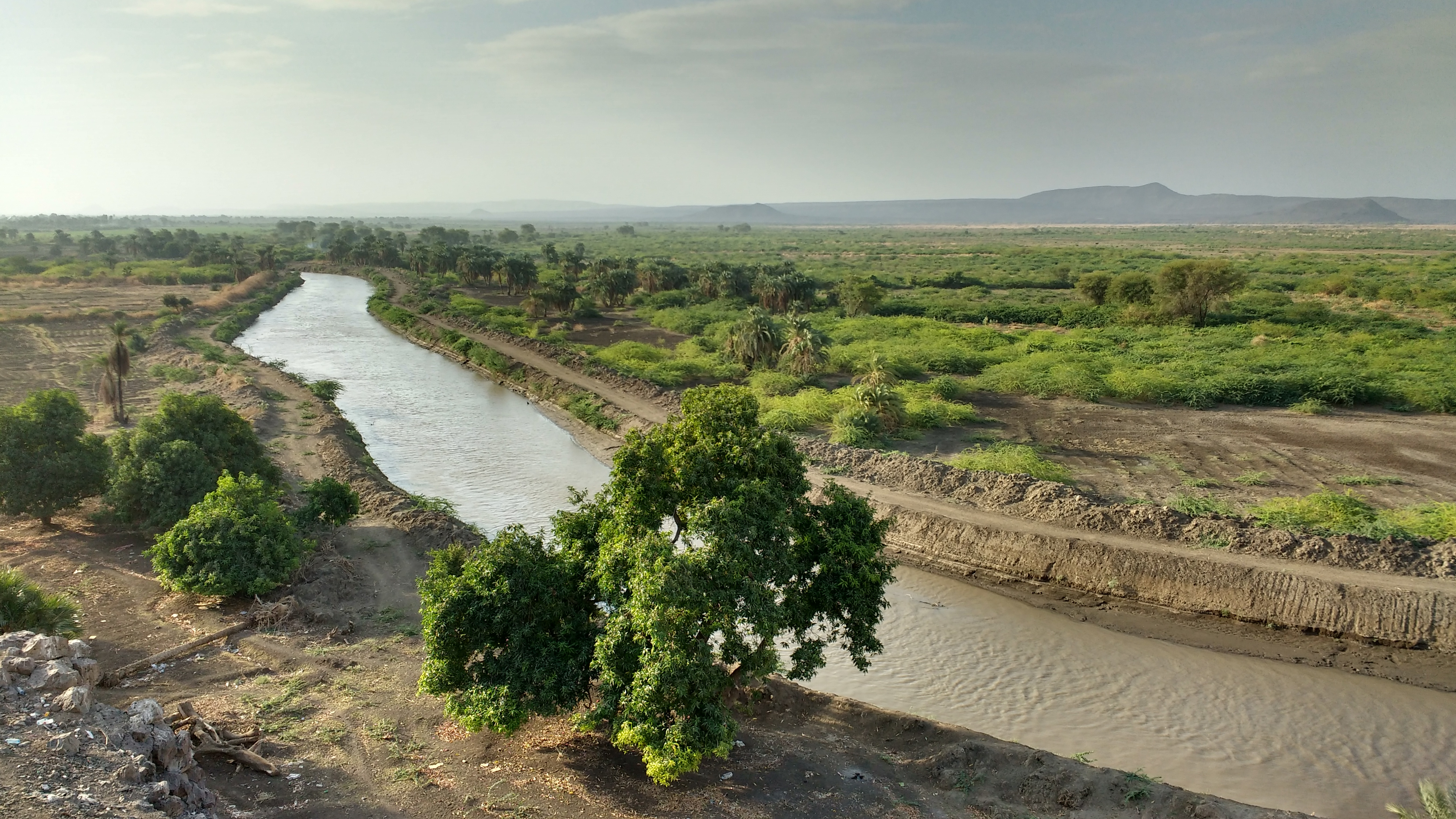

MUCH of the future of large-scale agricultural growth lies in the soil of Africa. The image that many readers outside the continent reach for is one of hunger, and it sits awkwardly beside the numbers. Africa holds more than sixty per cent of the world’s uncultivated arable land – land that could be farmed but is not. Sub-Saharan Africa has also recorded the fastest growth in agricultural production of any region in the world since 2000. Both things are true at once, and holding them together is the beginning of understanding the subject.
It is worth saying at the outset that “African agriculture” is not one industry. The continent contains fifty-four countries and about thirty million square kilometres, and its farming sectors have almost nothing in common with one another. Ethiopia’s highland wheat, Côte d’Ivoire’s cocoa, Kenya’s cut flowers, Egypt’s irrigated Nile delta and Nigeria’s cassava are different businesses with different problems, different policies and different results. The generalisations that follow are therefore offered as patterns that recur, not as a description of a single place.
What Is Actually Missing
Where farming has not grown as fast as the land would allow, the reasons are usually specific and fixable: too few all-weather roads between farms and buyers, too little irrigation, too little cold storage, and too few investors willing to price the sector accurately. None of these is a fact of geography. Each is the result of decisions about where public money went, and each can be reversed by different decisions.
Hunger, where it persists, is likewise specific. It is concentrated in places with identifiable causes: the war in Sudan, the conflict in the eastern Democratic Republic of the Congo, repeated drought in the Horn of Africa, and the currency and fuel costs that have pushed food prices up in Nigeria. These are political and economic emergencies in particular countries, not a background condition of a continent, and treating them as the latter makes it harder to see where the remedies belong.
Population growth complicates the picture in both directions. United Nations projections published a decade ago suggested that the populations of Tanzania, Angola and Zambia could grow roughly fivefold between 2015 and 2100; more recent revisions are lower, but the direction is not in doubt. A young and growing population is a labour force, and agriculture is the sector best placed to employ it. It is also a great many more people to feed, and if food production and rural employment do not grow at the same time, the result is more poverty rather than less.
The Import Bill, Read Properly
In 2019, sub-Saharan African countries spent about forty-three billion US dollars on food imports. That figure is usually quoted as evidence of a continent falling behind, and it is worth quoting more carefully. An analysis by researchers at the Brookings Institution and Michigan State University found that this bill has not been climbing: it has hovered around forty billion dollars a year since 2011, while the region’s economies and populations have grown considerably around it. Most sub-Saharan countries are net agricultural exporters. Four – Nigeria, Angola, the Democratic Republic of the Congo and Somalia – account for the bulk of the region’s deficit.
This matters for the argument. Money spent on imported food is money not spent employing domestic farmers, and there is a real opportunity cost in it. But the problem belongs to a handful of economies with particular difficulties – oil dependence, conflict, an overvalued currency – rather than to the region as a whole, and policy that treats it as general will be aimed at the wrong places. Meanwhile Côte d’Ivoire, Ghana and Kenya have been building agricultural export sectors that grew through the same period.
Rain, and the Absence of Irrigation
Climate change bears heavily on the sector, and it does so through a specific mechanism. Most crops across sub-Saharan Africa are rainfed – watered by rainfall alone rather than by irrigation networks – which means that a harvest depends on the rains arriving when they always have. In Tanzania, where the harvest cycle is built around the timing of the rains, a shortened rainy season means crops that fail before they mature. For a farming family, that is not an abstraction about yields: it is the difference between selling a surplus and skipping meals in the months before the next harvest.
Irrigation is the obvious insulation against this, and it is the investment that has most conspicuously not been made at scale. That brings us to money. Foreign investors have consistently priced African agricultural risk higher than the sector’s actual performance warrants, which raises the cost of capital for exactly the irrigation and storage projects that would make yields more predictable.
This is a version of a broader problem in development finance – the same inflated risk premium that Emeline Ang describes in the preceding article, applied to farmland rather than to power grids – and the remedy is much the same: instruments that let public institutions absorb the risk private investors will not price properly.
What African Governments Are Already Doing
It would be easy to write about all this as though the continent were waiting for someone else to act. It is not, and the most interesting developments in African agriculture over the past five years have been African-designed.
The African Continental Free Trade Area is the largest of them. It is not a charity or a non-governmental organisation but a trade agreement between governments, negotiated under the African Union, signed in 2018 and operational from January 2021, with almost every state on the continent a signatory. The United Nations Economic Commission for Africa reported that intra-African trade rose by about twenty per cent in 2022, its first substantial year.
Its Guided Trade Initiative, a pilot in which a small group of countries – Kenya, Rwanda, Cameroon, Egypt, Ghana, Mauritius, Tanzania and Tunisia – began actually trading under the agreement’s rules, has so far moved modest volumes and is better understood as a demonstration than as a commercial breakthrough. The World Bank estimates that full implementation could raise intra-African trade by around fifty-two per cent by 2035. For agriculture in particular, the significance is that a Kenyan or Ghanaian producer gains a continental market rather than only a national one, which changes what is worth investing in.
African heads of state have also written their own agricultural strategy. In May 2025, meeting in Johannesburg, they adopted the CAADP Kampala Declaration, the third continental agricultural framework after Maputo in 2003 and Malabo in 2014. It commits its signatories to mobilising a hundred billion dollars, raising agrifood output by forty-five per cent, tripling intra-African trade in farm goods and halving post-harvest losses by 2035.
The record of its predecessors is a caution rather than an encouragement: the Maputo pledge to spend a tenth of national budgets on agriculture was met by very few governments in the two decades that followed, and the Kampala targets will be judged by the same test. But the agenda is written in Africa, by the governments that must deliver it, and that is a different thing from a donor programme.
Ethiopia offers the clearest recent case of a government acting on its own terms. Working with its national agricultural research system, the International Center for Agricultural Research in the dry Areas and the African Development Bank’s technology transfer programme, Ethiopia expanded irrigated lowland wheat from around twenty thousand hectares in 2020 to more than five hundred thousand within two years, and declared itself self-sufficient in wheat.
Independent analysts have questioned how complete that self-sufficiency really is. What is not in dispute is that a low-income African government identified a crop, funded a research and irrigation push, and changed its national production profile inside three growing seasons.
Technology, and the Limits of the Green Revolution Analogy
Agricultural technology is spreading fast, and much of it is being built in Africa for African conditions rather than imported. Digitised farm management, mobile-phone market pricing that tells a smallholder what her crop is worth before she sells it, tractor-sharing platforms such as the Nigeria-based Hello Tractor, improved seed varieties bred by national research institutes, and better livestock breeding are all raising yields. Agricultural technology start-ups across Nigeria, Kenya and Ghana have been raising serious capital.
The comparison usually reached for is India’s Green Revolution, and it is instructive in both directions.
From the mid-1960s, high-yielding wheat and rice varieties, expanded irrigation and guaranteed prices turned India from a food importer into a food exporter and pulled tens of millions out of hunger. It also concentrated its gains among farmers who already had land and water, depleted the water table across Punjab, and left a legacy of debt and mistrust among those it passed over.
African agronomists have debated for years whether the model transfers at all to a continent of smallholders farming rainfed plots on far more varied soils. The lesson worth taking is not that Africa should repeat India’s programme, but that a yield revolution which ignores who owns the land and who gets the water buys its productivity at a price somebody pays later.
Conclusion
African agriculture has more room to grow than any farming sector in the world, and the constraints on it are neither natural nor permanent. They are roads that were not built, irrigation that was not financed, and risk that was priced by people who had not looked closely.
The governments and researchers who will do most of the work are already at it, in Addis Ababa and Nairobi and Abuja, and the useful question for outside investors and governments is not what should be given but what is being priced wrongly. On the evidence of the past twenty-five years – the fastest agricultural production growth of any region on earth – the answer is: most of it.