The Tax Collector on Horseback
A historian explains how war and the Church built European tax bureaucracies, and why who collects a tax affects whether people pay.

DR. Sasaki is an assistant professor of economic history in the economics department at the University of Tokyo. He earned his PhD in political science at the University of Washington, Seattle, specialising in comparative politics. His research has moved from the origins of nationalism to historical political economy: bureaucratisation, censorship, and state capacity.
The Confluence: Could you tell us about your background, and how you ended up studying the history of governments rather than present-day politics?
Dr. Sasaki: My PhD is actually in political science, from the University of Washington in Seattle, and my specialty is comparative politics, a field where, as the name suggests, the job is simply to compare.
Early on I was interested in nationalism, specifically why some ethnic groups, cultural groups sharing things like language, consolidate into nations, meaning politically self-conscious groups, while only some of those nations then go on to seek their own state. Today’s roughly 200 nation-states, by the United Nations’ count, all came from somewhere, and I wanted a systematic answer to where.
I focused on one attribute: language standardisation. To study it statistically I needed a proxy, so I used the first comprehensive vernacular dictionary produced by each ethnic group as a marker of when its language had standardised. My main finding was that the printing press was the best predictor: ethnic groups that printed books and pamphlets in their own language standardised, and survived as distinct groups, earlier than those that didn’t.
That kind of historical study is what we now call historical political economy, or HPE: applying the tools of political science and economics to history. It’s what I work on now, though I’ve moved on from nationalism to look more broadly at state capacity, meaning bureaucratisation, censorship, and related questions.
The Confluence: Comparative politics often ends up describing correlations between countries. How do you avoid mistaking a correlation for a cause?
Dr. Sasaki: We think causally by instinct, but plenty of things predict how people behave, like how they vote, without one causing the other. Using statistical software, it’s easy to find correlations that look compelling.
To argue that one variable is genuinely causal, you need a theory first: a plausible story, one that holds up before you’ve even looked at the data, for why an actor, a voter, say, behaves the way they do. You present that story, and only then bring in the data. Statistics and datasets are essentially tools for testing whether the story you’ve proposed holds up.
The big difference from the natural sciences is that it’s very hard to isolate causal factors cleanly. We’re never completely certain a causal story is correct; there’s always some residual doubt. What statistical methods really do is rule out other explanations, not eliminate uncertainty entirely.
The Confluence: You’ve written about state capacity. What actually makes a government strong, and why do some states have far more of it than others?
Dr. Sasaki: There’s no perfect answer, but here’s roughly how scholars think about it. A strong government is one that can enact the policies it intends to: if it wants to lower the voting age from 18 to 16 and get 16- and 17-year-olds actually voting, it can. That capacity to follow through, whether the intention is encouraging turnout or collecting taxes, is what we mean by state capacity.
So where does that capacity come from? History gives the clearest answer. Today’s rich, OECD (Organisation for Economic Co-operation and Development) states typically raise 20 to 40 percent of GDP in taxes; before the Industrial Revolution, a state doing well would struggle to reach 5 percent. The ability to raise taxes and the ability to grow the economy have gone hand in hand.
No one wants to pay taxes, so historically, states that raised them did so more or less by force. In political science there are two main stories for why European states in particular grew stronger between roughly 1400 and the end of the Second World War. One is war: fighting, and preparing to fight, requires money, and the search for more effective ways to raise it led states to build bureaucracies capable of overcoming local resistance.
The other, argued more recently, is religion, specifically the Catholic Church. After the separation of church and state that began with the Investiture Conflict of 1076, the Church built an organised, hierarchical structure, and secular states spent the next few centuries copying functions they found useful from it: third-party arbitration for conflicts, where an independent party settles a dispute between two others, became what we now call the court system. The Church shaped economic history as much as political history in this period.
The Confluence: Your research on the French intendancy system found a lot of nepotism behind what looked, on paper, like a modern bureaucracy. What does that gap between formal rules and informal practice tell us about how state capacity really works?
Dr. Sasaki: My starting point was a claim historians had made without much hard evidence: that the intendancy functioned like a modern bureaucracy. I wanted to test that. What I found was extensive nepotism: the same family was repeatedly appointed as intendant to the same province across centuries, which is the opposite of the rotation you’d expect from a modern bureaucratic post.
But the intendancy’s original purpose wasn’t to modernise government. It was to extend the monarchy’s reach across France, a country the crown in Paris genuinely struggled to see into, and to help administer the countryside. France’s tax collection was so ineffective that the state went bankrupt five times before the Revolution, including at the time of the Revolution itself.
We shouldn’t judge a pre-modern institution by today’s standards. Intendants had to be approved by the monarch, so what we’d call nepotism now was, at the time, sanctioned and unremarkable.
The Confluence: Does who collects a tax, and how they’re chosen, matter as much as the tax law itself?
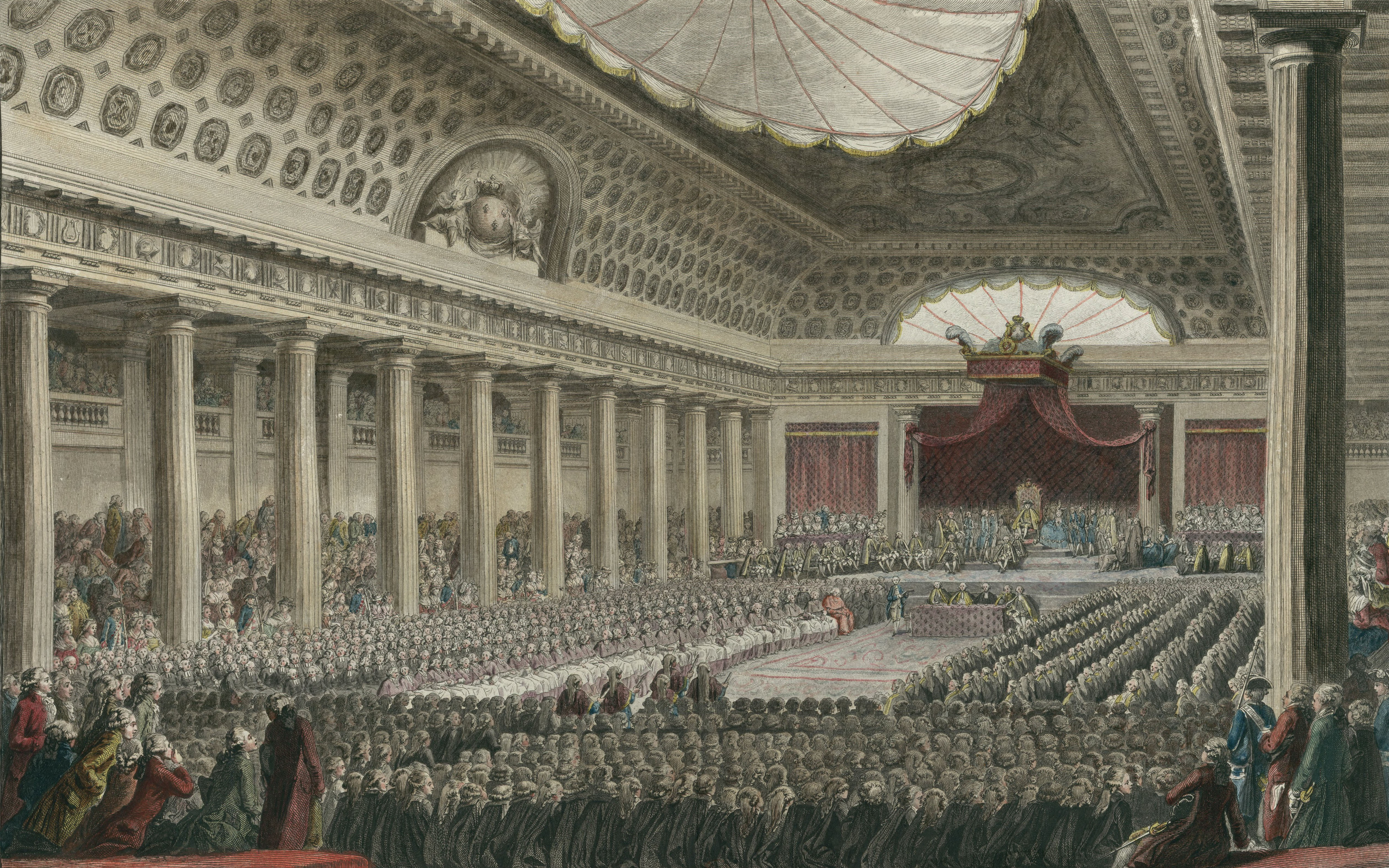
Dr. Sasaki: Imagine you’re a farmer near Toulouse, mostly concerned with making ends meet, paying your taxes in kind to the local authority. Now and then you see an official arrive from Paris on horseback. What do you think? Probably not much welcome: you don’t know him, and a visit like that usually means one thing. It’s seen with real suspicion, tied in people’s minds to more taxation or conscription. So the identity of the collector, not just the law on paper, shapes whether people comply.