What You Owe When It Costs You Nothing
A philosopher says the question to ask is whether your life would get worse if you gave away some surplus, and applies it to effective altruism and net zero.

GARRETT Cullity is a professor of philosophy at the Australian National University, where he directs the Centre for Moral, Social and Political Theory. His research spans moral and political philosophy, from theoretical questions about the nature of morality to applied ethics, including his book The Moral Demands of Affluence and his current work on the ethics of climate change.
The Confluence: What drew you to the moral demands of affluence specifically?
Dr. Cullity: I was trying to grapple with a pair of thoughts that strike most thoughtful people early in their lives. One is that it’s wrong, and not fair, that we live in a world with such disparity between the comfort many of us enjoy and the deprivation that still prevails elsewhere, and what that means for us as affluent individuals.
What’s striking is that when you explain that view to people who’ve actually come from poorer countries, they often find it baffling, the idea that someone with the capacity to live an enriching, fulfilling life should be preoccupied with minimizing what they spend on themselves. Reconciling those two thoughts was really what was central to my writing on it.
The Confluence: Is there an actual amount wealthy people or wealthy countries owe, or is it more abstract than that?
Dr. Cullity: There’s a question you should ask yourself, and it doesn’t give a totally sharp answer, but I think it’s the right question: would my life overall go worse in any significant way if I gave away some surplus to help people who have nothing?
If the answer is yes, it’s morally legitimate not to give it away. If the answer is no, there’s some amount you could give without missing it, and I think it’s difficult to make the case that you shouldn’t. It comes down to a basic picture of decency: if it really costs you nothing to help other people, what justification do you have for not doing it?
That gives you a question, not a monetary figure, and I think it’s actually implausible to specify one number and say it applies to everyone, because people have different capacities and different obligations to those around them. It makes sense for the answer to vary by person.
The Confluence: Does that obligation map onto something like effective altruism, giving in whatever way maximizes the good you do? Or does that demand too much?
Dr. Cullity: My issue with effective altruism is that it’s too individualistic. One general approach to morality treats it as: here’s me, here are the effects my action could have, holding everything else constant, and what morality requires is that I maximize the good I can do as an isolated individual. That’s act consequentialism, and it’s influential within effective altruism.
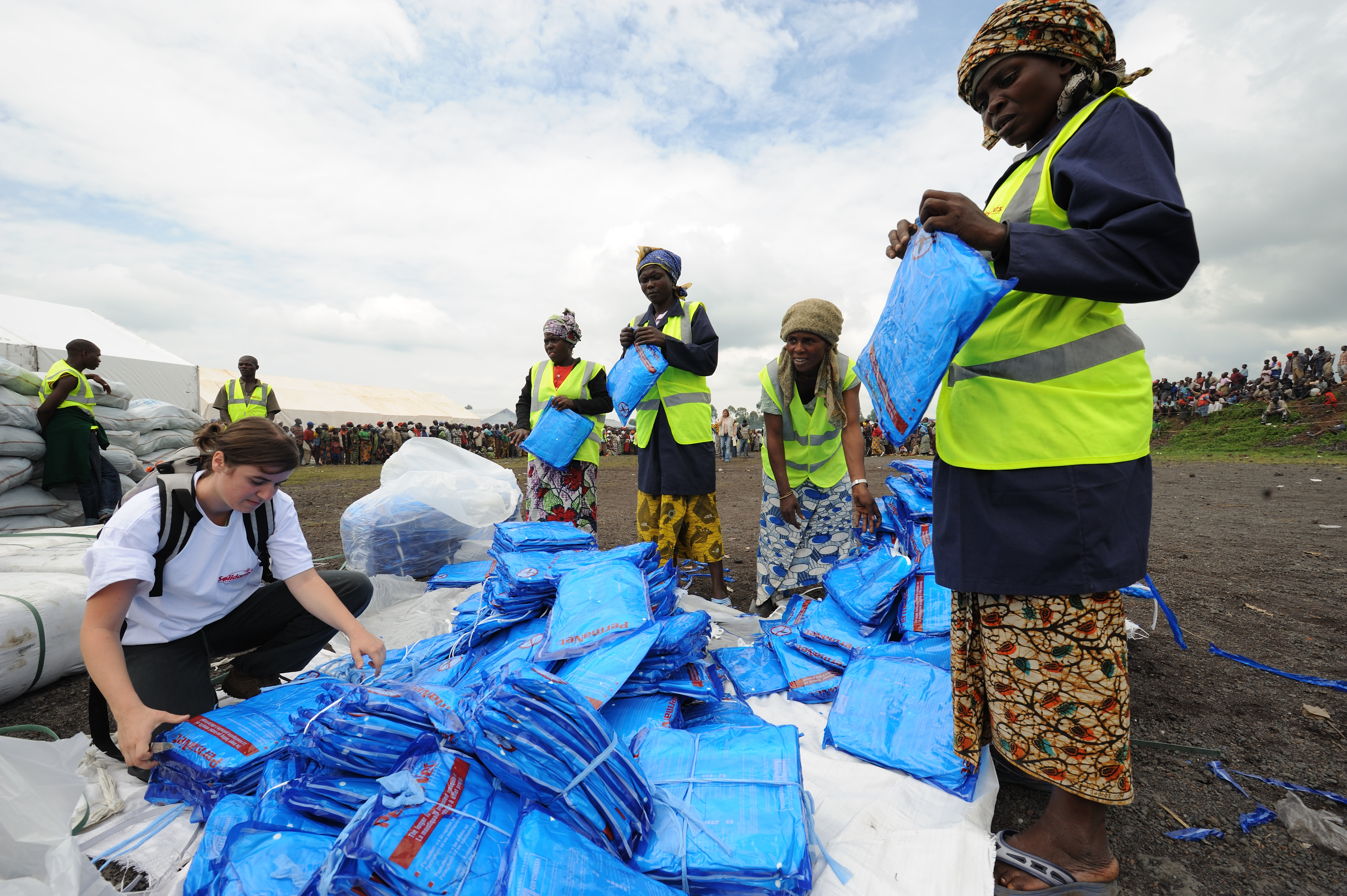
A different way of thinking about it is that what’s required of me is to join in as a participant in larger collective actions that make a positive difference, and that leads to a somewhat different picture. If everyone goes and buys mosquito bed nets because they’re the single most effective intervention, you get a lot of individually positive actions but a lack of funding for other worthwhile things.
What matters for an individual doing philanthropy isn’t just “is this doing good” in isolation, but whether it’s part of a suite of activities pursued by different people: some buying bed nets, others supporting vaccinations, others funding clean water. All of those together are valuable, even if one yields a slightly smaller benefit per dollar than another.
The Confluence: Does that same obligation extend to governments, in something like foreign aid, above and beyond what their own citizens strictly need?
Dr. Cullity: Yes, I think the simple answer is yes, because the moral obligations of governments derive from the moral obligations of the individuals they represent. If we as individuals have an obligation not to harm others, then a government that arranges for our country’s toxic waste to be exported somewhere it will hurt other people inherits that same obligation.
Where it gets more complicated is that governments are engaged in strategic interactions with each other, there are questions about policies being exploited, and governments also have obligations to represent and further the interests of their own citizens. So it’s a more complicated picture at the level of governments, but it still makes sense to talk about their moral obligations, because they represent us.
The Confluence: If someone doesn’t give when they’re able to, is that an active harm to the person they didn’t help, or is that too strong a word?
Dr. Cullity: I think it’s too strong, though that doesn’t mean it isn’t important. I think there’s an actual moral difference between harming someone and failing to help them. If I harm you, you have one kind of complaint against me. If I just don’t lift a finger to help you, that’s still bad, and I have to justify it, but it’s a different thing to justify.
Philosophers have struggled to give a fully compelling explanation of that distinction, which leads some to say it isn’t significant, but I find that hard to accept. There’s an indifference-type objection to someone who doesn’t help, and a malice-type objection to someone who harms, and those are different moral failings.
The Confluence: You’re working closely on net zero right now. When a country or company claims net zero, what should actually count as its emissions, and what should legitimately count as a removal or offset?
Dr. Cullity: What should count as emissions extends throughout the value chain of a country or company. Take a country like Australia: if it greens its own domestic industries while ramping up its coal industry, exports that coal to be burned in China and turned into consumer goods like solar panels and electric vehicles, then reimports those goods and claims to be net zero, that’s difficult to accept. The global problem hasn’t actually been ameliorated.
Both the emissions embedded in a country’s consumption and the emissions released by what it exports should count. The same logic applies to Norway, which is quite green domestically but funds a lot of that with income from a large oil industry whose emissions happen elsewhere.
On removals, there’s a real distinction between actually removing greenhouse gas from the atmosphere and paying someone else not to put it there in the first place. The second can set useful incentives, but it’s morally different: in the first case you’re removing a harm you’ve imposed, in the second you’re paying someone else not to do harm while still doing it yourself, and at best people end up no worse off than they otherwise would have been.
The Confluence: Some argue it’s pointless for a country to unilaterally cut emissions if others, like China, have no incentive to follow. Does that argument have merit?
Dr. Cullity: It has some validity. If one country’s emission reductions aren’t part of an overall global direction of travel, that can simply harm that country’s own population while the global problem keeps getting worse.
If you were a Pacific island nation deciding how to spend limited resources, it would arguably be irresponsible to spend them on emission reduction rather than adaptation to a worsened climate, given how negligible your own contribution to the problem is. A pessimistic view says that logic should eventually apply to countries like the UK or Australia too: that the problem is only getting worse and it’s a waste to keep cutting emissions rather than adapting.
I think it’s too early for that, because it amounts to giving up on solving the problem, and giving up is so costly that we need skilled statesmanship and international negotiation to keep pushing in a more constructive direction. There are some causes for optimism: financial incentives are already pushing renewable energy adoption, and consumer pressure on companies and governments is a real force too. It’s a wickedly hard collective action problem, but not one to abandon.
The Confluence: If you had to leave readers with a single takeaway, what would it be?
Dr. Cullity: We each need to be realistic in our expectations of what we can achieve by way of making the world better. But I think it’s part of living a good life to be able to say to yourself: I’ve actually, in my own way, in my life in the world, been a force for good rather than for bad.