Ethics Is Like Breathing
An economics professor with 45 years of teaching says economics cannot be free of values, because choosing a policy goal is an ethical decision.
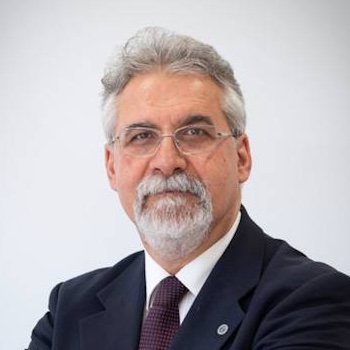
DR. João César das Neves has taught economics for 45 years at Universidade Católica Portuguesa, where he also teaches business ethics. His work bridges economics and ethics, and he writes on Portugal’s economic development.
The Confluence: How did you first come to bridge economics and ethics in your work, rather than treating them as separate fields?
Dr. das Neves: Ethics is something like breathing, essential to life and almost automatic in living. Everybody, since birth, makes continuous ethical judgements: “This is right!” “You should not do that!” So, there was no moment when I started doing ethics. But when I started doing economics, it was obvious to me that I was entering a strongly ethically charged field. It is impossible to discuss any economic problem without entering into valuations, debates, even fights. So, ethics and economics were united from the start.
Nevertheless, there was a moment, some 30 years ago, when the two fields were united in my career. I have been an economics teacher for 45 years now and never thought to be something else. But in the late 1990s, my school lacked a professor to teach business ethics. As one of my intellectual interests has always been philosophy, I had the basic training, even if informal, and after a strong investment, I was able to take care of that course. That is why, in the last decades, I have had this dual mission of teaching in both fields and formally connecting them.
The Confluence: For a reader who assumes economics is a purely technical, value-free discipline, where does that assumption break down?
Dr. das Neves: The assumption breaks down at the start. There are no “purely technical, value-free disciplines”, as all disciplines are human activities, and so are all value-laden. Some doctrines and ideologies have tried to create the myth of perfectly objective knowledge, with no personal involvement, but that obviously failed, just like the other parallel myth of apodictic knowledge, information we can be absolutely certain about.
Doing science, any science, involves the search for truth and a strong commitment, honesty, and seriousness in that process. All these are essential ethical attitudes. Of course, there are results which are more or less independent from value judgements, and in this sense, we can separate a “positive science” from a “normative science”. But this separation is always a question of degree, not a radical distinction. In particular, for a human and social science, where the object of study is human behaviour, the myth of value-free results is untenable.
The Confluence: Looking at Portugal’s economic development specifically, is there a moment where you think ethical or moral considerations clearly shaped the economic outcome, for better or worse?
Dr. das Neves: All economic development is immersed in ethical and moral considerations. For example, the first great episode of Portuguese development, which changed the whole world with the maritime discoveries of the 15th and 16th centuries, was motivated by the purpose to “enlarge the Faith and the Empire”. This is obviously something based on strong ethical considerations.
By the way, those have had their evaluation drastically changed as centuries went on, with the great heroes of the times being now considered unspeakable monsters. This is not an old question, because in Portugal it dominated economic development for a long time. Only recently was the country still debating whether our development should center on Europe or in former colonies in Africa and Brazil.
The Confluence: What would you say to someone who thinks bringing ethics into economic policy just means “being nice” rather than doing rigorous analysis?
Dr. das Neves: The main ethical requirement for an economic researcher is “doing rigorous analysis”. Without it, “niceness” can be very dangerous and even evil. This means ethics is not only in the definitions of the targets of policy, being nice or not, but also in the means used to achieve them.
Policy always requires an initial purpose, the determination of the problems to be solved. This element is ideologically justified and stems from the ethical attitude of the practitioners. If the aim of the policy is to help the poor or promote the rich, that would imply very different courses of action. But once the objective is defined, every policy, either good or bad from some ethical point of view, needs correct knowledge of the economic situation and of the functioning of the economic mechanisms.
Thus, providing rigorous analysis is also an ethical requirement. A good purpose may be turned into a very bad result because of ignorance. This is the philosophical distinction between moral virtue, which determines the right purpose of action, and the intellectual virtue of prudence, which informs the right way to achieve that purpose. A good person is not only somebody who wants to do good, but someone who actually does it.
The Confluence: If you could get a general reader to understand one thing about the relationship between economics and ethics, what would it be?
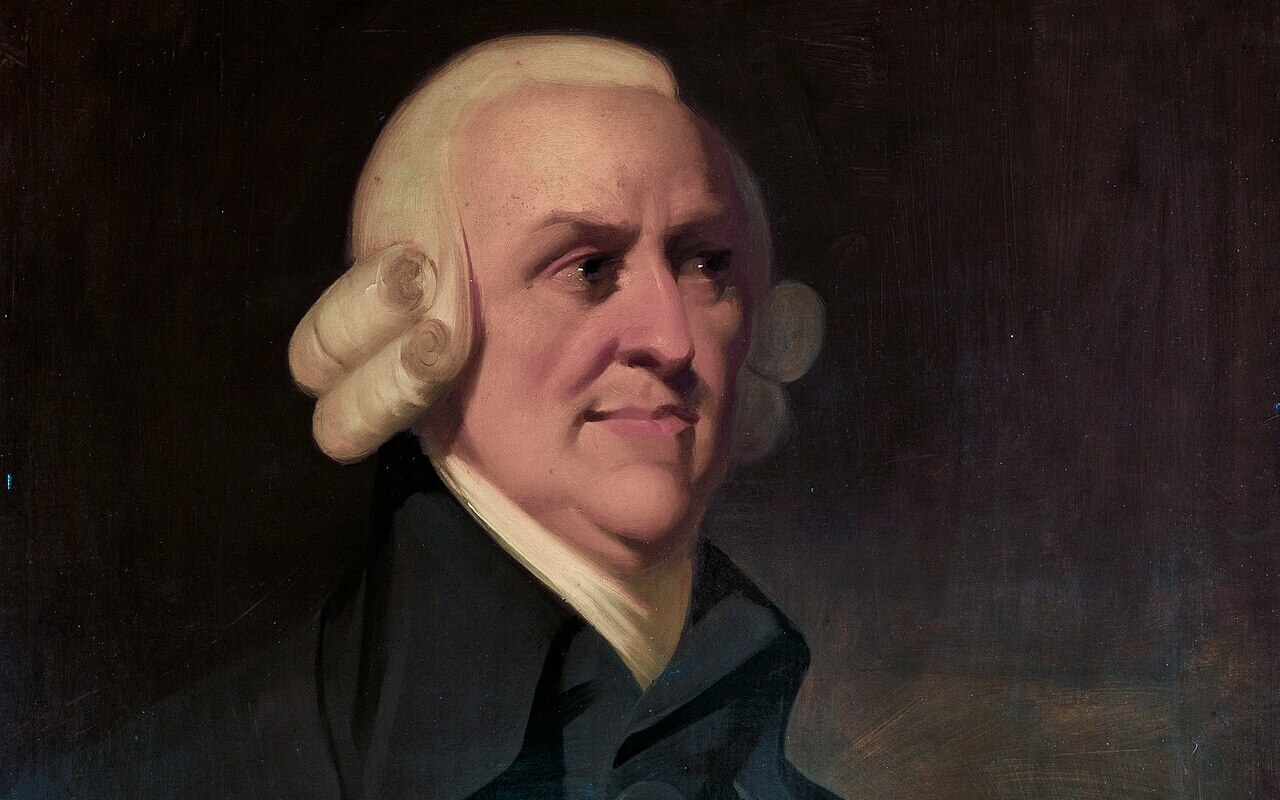
Dr. das Neves: Use all the scientific instruments at your disposal, but never forget to be a good person. Ever since there was interest in economic topics, and this means ever since there were human societies, economics was always seen as a part of ethics. That was how Adam Smith, a professor of morals and the founder of economic science, saw it, along with all his predecessors and many of his disciples.
Only in the mid to late nineteenth century did the project of having a “value free” economic science, like mathematical physics, appear. And some of the defenders of that path, like the positivist John Stuart Mill, assumed the limitations of the approach, by saying “A person is not likely to be a good economist who is nothing else”.
There are no doubts about the great gains of the neoclassical model and other mathematical contributions. But even these are ethically charged and cannot, only by themselves, generate an economic answer. So use all the scientific instruments at your disposal, but never forget to be a good person.