Crypto’s Missing Floor
A Cypriot economist looks at why bitcoin lacks the floor that lets gold hold its value, and at what Cyprus learned after its banks failed in 2013.

DEMETRIS Koursaros is an associate professor of economics in the Department of Finance, Accounting and Management Science at the Cyprus University of Technology in Limassol. A macroeconomist, he studies monetary policy, central banking, liquidity and puzzles in the labour market, and he is now researching how ordinary investors actually behave in cryptocurrency markets. He also lived through one of the eurozone's most dramatic financial crises, when Cyprus's banking system collapsed in 2013.
We asked him whether crypto can ever be a safe haven like gold, what cheap money really does after a recession, and what his country's crash still teaches.
The Confluence: Could you introduce yourself to our readers, and tell us how you came to work on what you work on?
Mr Koursaros: I am an associate professor at the Cyprus University of Technology, and I am an economist: basically a macroeconomist, working mostly on monetary economics, labour economics and finance. I always liked research. It has always fascinated me, even if AI is now changing the whole thing. That is how I got to this point.
I collaborate a lot with colleagues in finance, because I sit in what is effectively a finance department, but my own expertise is macroeconomics, monetary policy, central banks, money and liquidity problems in economies [shortages of cash or easily sold assets], and labour market puzzles.
The Confluence: What pulled a monetary economist into finance and digital assets?
Mr Koursaros: In economics, everything is related. Back in the day, macroeconomists and finance people considered themselves different from one another. After the financial crisis of 2007, people realised that those things interconnect. To understand the whole economy, and the interest rate a central bank sets, you need to understand the financial markets as well. So inevitably we mix them all together. It is hard to understand sometimes, but it is necessary in order to see what is going on.
Back in the day, money was currency and bank deposits. Now it is all these different and weird products that most of us do not even understand: how they function, why they are valued the way they are, what is going to happen in the long run. Nobody really knows, to be honest. We have some way to go to understand it, and judging by the way their prices go up, our theories are not ideal for explaining what is going on.
The Confluence: Does crypto actually behave like a safe-haven asset, something investors move into when the rest of the market falls, the way they traditionally have with gold? Or is that a myth?
Mr Koursaros: We have a working paper, with my PhD student, trying to understand whether there is a relationship like that between crypto assets and the stock market. The paper is not out yet, but here is what we find. Some people hold only crypto, some hold only stocks, and some are mixed investors who hold both. Their behaviour differs between the two.
We use eToro data, a trading platform's records of what individual investors actually do. We find that when people have unrealised profits in crypto, gains on paper they have not yet cashed in, they tend to sell. In stocks they behave differently: if a stock goes up, they may hold it for the long run, because it is a firm, it creates wealth, it grows, and it could become Nvidia or something.
With crypto they behave as if there is no money-making mechanism behind it. It is not a firm that can grow. It is a speculative game, and in a speculative game you do not expect to hold something for the long run. Most of the time you sell on the first spike, because you are afraid it is going to go down again, that it is going to revert to the mean.
There is mixed evidence overall. In some papers we do see movement towards crypto assets when stocks do not do well. In this paper we find different results. In general the crypto market is strange at the moment. It has all the characteristics of a bubble, but it does not burst. Maybe it will, maybe it never will.
The Confluence: Gold has no money-making mechanism behind it either, and it holds its value. Why can't crypto do the same?
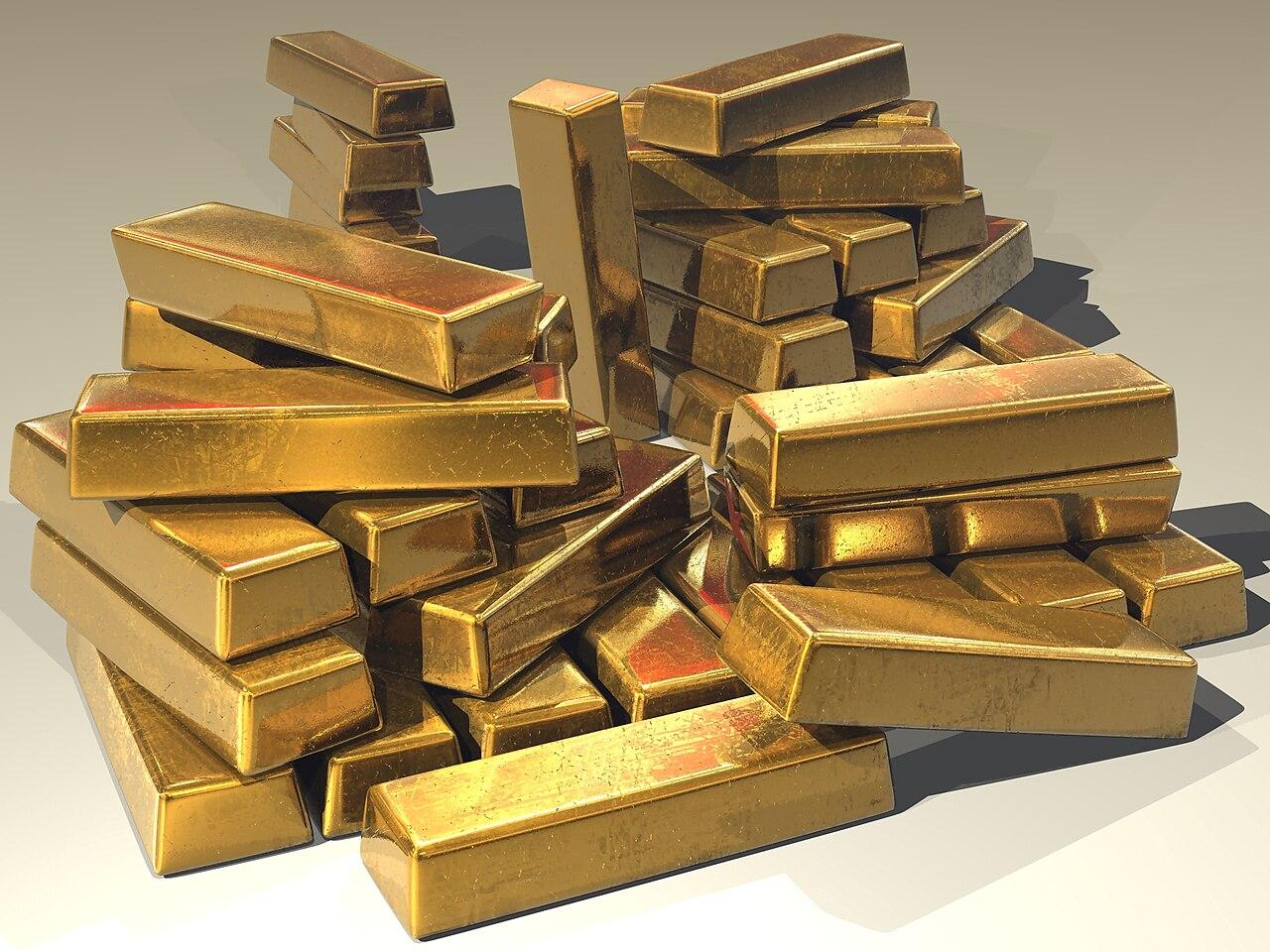
Mr Koursaros: Can you have an asset that people simply hold out of tradition? The answer is yes: gold. Suppose an alien comes to Earth and sees a man holding gold, and you tell him, my God, that man is rich. He asks why, and you say, because he has gold. What is the alien going to think? That gold must be really important to you. And it is the worst metal ever. It is very heavy for how soft it is; you can bite it and leave a mark. Then he asks why it is important to you, and the answer is that there is not enough of it. It sounds really stupid. But for some reason people used gold as coins, and we hold gold because we got used to it.
The good thing about gold is that its price can never go to zero. There is a limit to how far its valuation can fall, because you can always use it as jewellery. If nobody else wants to buy your gold, it is still pretty.
Why people buy it when the economy goes down is another matter: it is not even useful. It is psychological. Could crypto behave like that, and last forever even with no fundamentals [the earnings or uses that give an asset value] behind it? It could. The only problem is that crypto does not have that floor. If nobody wants to buy it, there is nothing underpinning its value. You cannot make jewellery out of it. You cannot do anything with it.
The Confluence: If more people started treating crypto as money, what would that do to a central bank's ability to control inflation?
Mr Koursaros: Crypto can never be used as a currency as it is now, because nothing with a volatile price can be used as a currency. Think about what we do with currency: we buy things. If I want to buy something from you, and I hold a crypto asset with a very volatile price, I will never hand it over if I think it is going to appreciate. I will just hold it.
For a transaction to happen, the coincidence has to be bigger [than barter's 'double coincidence of wants']: not only do I have to want to buy from you, I also have to believe that the crypto I am giving you is going to fall in value while you believe it is going to rise. That is why you do not sell a house to buy a coffee. The good thing about dollars and euros is that their value is not volatile. With crypto, the value is so volatile that it cannot be used for trading. It is not convenient.
The Confluence: Stablecoins are designed to fix exactly that. Why don't they solve the problem?
Mr Koursaros: There are stablecoins, cryptocurrencies pegged to hold a steady value, usually against the US dollar, and they are supposed to do that. But do you know who complains first when Bitcoin stabilises? The holders of Bitcoin. They do not want the asset to be stable, and a stable asset is precisely the one that could be used as a currency. So what does that tell you? They are not buying it to purchase goods and services. They buy it because they speculate: they want to sell when the price rises, and it moves like that because it is volatile.
This is what people in finance missed. People did not want a safe asset to invest in, or diversified portfolios to reduce risk. A very big portion of people wanted something really, really risky, just for the chance of landing in the good tail of the distribution [the rare, extreme winning outcomes]: to get rich off a few dollars. People in finance were shocked by that, but the demand is there, whether you like it or not.
What is the benefit of a Bitcoin? You will say you can buy goods and services with it, and that with a dollar the banks, Mastercard and Visa take a cut of your transactions. But with Bitcoin you pay for the transaction through mining, the computing work that processes it. There is a cost. It is hidden, but it is there.
So that is not why you are buying it. You buy it because you think it is going to appreciate, and then you sell, and then you buy again. It is called a coin, it is called a currency, but it is anything but a currency. And if it became one, the people who hold it would no longer want to hold it.
The Confluence: Your paper "To Create or to Redistribute? That Is the Question" asks what happens to capital after a crisis. What does the evidence actually show?
Mr Koursaros: We are working on this again with a colleague of mine at a central bank, testing the same idea with other data. What we say is this. In a recession, what a central bank would ideally want is for people to create new firms and employ people, because that is how you move out of a recession.
In a recession interest rates are lower, because the central bank lowers them; more people have lost their jobs, so labour is cheap; and capital is unused, so capital is cheap too. The old logic was that you lower the interest rate, you draw people into productive loans, they build a house or start a firm, they take on workers, and you come out of the recession faster.
What we suspect, and what we find, is that this is not what happens. With cheap money I could either create my own business and employ other people, or acquire existing assets from other people cheaply. People with access to credit do the second thing: they redistribute existing assets. We have graphs in the paper showing funds that were created during the recession specifically to buy assets from banks.
If you do not put your money into creating a new business in a recession, it is not only fear. It is that you gain more by finding good deals out there, and there are good deals. So the new money is helping some people acquire wealth, rather than doing what would be ideal from the central bank's point of view.
They have every right to do that. When you are in distress, someone will come and buy your company cheaply. It is not illegal. But it is not what the central bank wants, so we suggested some ways for a central bank to change the incentives: to discourage redistribution a little and encourage the creation of new businesses that can increase employment.
The Confluence: Cyprus went through a severe banking crisis in 2013, ending in a €10 billion international bailout under which large depositors in its two biggest banks lost much of their savings. How does that experience still shape the way you think about financial stability and risk?
Mr Koursaros: The banking crisis was a big shock. Before the crisis those organisations were opaque: you could not see what was going on, or how they were giving loans. Only when the banks failed, and people tried to see what had been happening, did it become easier to work out the deal.
I am not trying to insult Cyprus here. I am trying to draw a lesson. The problem with Cyprus was that the business we were in was very risky. At some point, okay, I will say it: we were money laundering. We had firms here from all over the world, taxed very cheaply in Cyprus.
Now consider what is wrong with that model. Germany makes cars, because people love BMWs. I love BMWs; I have never owned one, but I like them. I go to bed liking them and I wake up still liking them. Cyprus goes to bed, and somebody changes the regulation. They have a meeting at the ECB [the European Central Bank] or at the European Commission and they change the way Cyprus may tax foreign firms. Everything was fine when you went to bed. You wake up and you do not have a business model. In one night. That is how risky what Cyprus was doing was. So when the banking crisis happened and a lot of that business vanished, it created havoc in the financial system.
How did it happen? It happened after the Greek bond haircut [the 2012 deal forcing Greece's private lenders to write off over half their debt], when people started realising that the banks in Cyprus, which held a lot of Greek bonds, were weak. Then the biggest problem was the non-performing loans, loans borrowers had stopped repaying. Nobody was talking about them at that point. They were piling up, but you could not see them on the banks' balance sheets. They were hidden.
Once the banks lost capital, those loans became a major issue, and you get the biggest problem in a banking crisis: a stalemate. Banks are really important institutions, and that is the problem. When banks lend, there is growth, and when there is growth, people prosper and pay their bills. But when people do not repay their loans, the banks face capital constraints and cannot lend more. So liquidity drains out of the economy. People start losing their jobs, and firms face lower demand.
The people who were not repaying were waiting for the banks to lend so they could get their businesses going again, and the banks were waiting for those people to pay so they could make more loans. It is a stalemate, and nobody does anything.
Then you come to the difficult decision: who to help. The average Joe, who lost his job and cannot pay the bank? Or the bank, which is supposed to be full of sharks who perhaps created the crisis, and which is starving for capital? Do you know what the answer is? The bank.
It sounds bad, because we all think of a fight in a schoolyard: whose fault is it, who threw the first punch, he has to pay. It does not work like that here. Even if it was the banks' fault, even if they were helping firms and other entities avoid tax, it does not matter. The way to resolve the crisis is to help the bank. For the average Joe, for the voters, that is difficult to understand and difficult to support, and I understand why.
The Confluence: Looking back at everything we have covered, what is the one point you would underline?
Mr Koursaros: Finance is complicated, and it is going to get even more complicated. There are going to be even stranger products and instruments. You have crypto now. If AI becomes the superintelligence everybody is warning us about, I bet it is going to transact through cryptocurrencies. Cryptocurrencies might be the currency of AI. It could easily work around people, or bribe people, with crypto. We are going to see a lot of strange things.
What needs to be done is close monitoring, close monitoring, and a backup plan for a soft landing. Crises are going to come, even worse than what we have experienced before, because things are getting much stranger. We write papers about cryptocurrencies, and in my department we are all financial economists, and still we cannot understand why demand for those products is so high. We understand the fundamentals. We do not understand the demand.
So I am very interested and scared at the same time to see what the financial system, and the labour market, will look like in five or ten years' time. At some point I am glad I am getting old. The world is changing so fast, and maybe I am getting too old to want to cope with it. But for you younger people, it could be more exciting. That is how you could approach this new world: as something exciting.