A Demand-Side Disguise
Canada, India, and Britain all cut the cost of borrowing to make homes more affordable, yet the article shows why cheap money cannot fix a shortage of homes.


IMAGINE a first-time buyer who has spent years watching mortgage rates rise, waiting for interest rates to drop and for a fighting chance at owning somewhere to live. Now imagine that the moment arrives. Interest rates fall, dramatically even, and yet the buyer is still priced out, still competing for the same scarce homes, still stuck.
This is not a hypothetical. Across Canada, India and the United Kingdom, central banks spent 2024 and 2025 cutting interest rates, and housing affordability was one of the hopes riding on those cuts. In each case the relief has been partial, uneven or altogether absent.
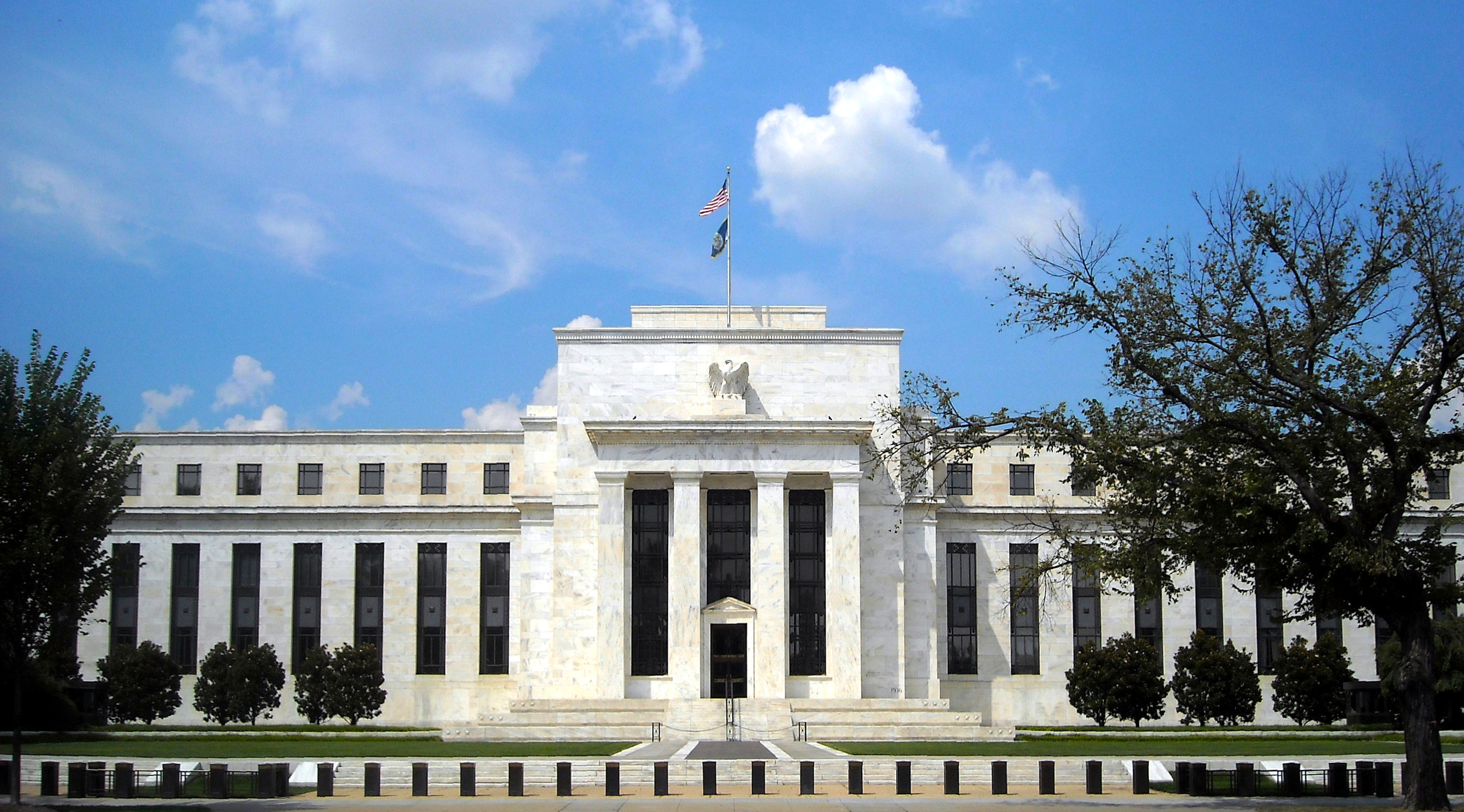
The reason is a mismatch. A shortage of affordable homes is a supply-side problem: a problem with how much of something exists. Monetary policy, the setting of interest rates by a central bank, is a demand-side tool: it changes how much buyers can pay, not how many houses there are. Rate cuts have become a default answer to a crisis they were never designed to solve.
The Logic That Rarely Gets Questioned
The reasoning behind using rate cuts to ease affordability is intuitive enough that it is hardly ever challenged. When a central bank lowers its policy rate, the interest rate at which it lends to commercial banks and which sets the floor for what everyone else pays, borrowing costs fall in tandem. Banks offer cheaper mortgages, monthly payments shrink, and buyers who were previously priced out can, in theory, qualify for loans they could not get before. On the textbook account this enlarges both the pool of eligible buyers and their purchasing power.
Cutting rates is also faster, simpler and less controversial than the alternatives, which makes it politically convenient. So when housing becomes unaffordable, the tool that governments and central banks can move quickly is the one that gets reached for, even when it is not the one the problem demands.
Canada: Cheaper Money, Falling Prices
The clearest evidence that lower interest rates do not by themselves fix the problem comes from Canada. Between June 2024 and October 2025 the Bank of Canada cut its policy rate by 275 basis points, or 2.75 percentage points, from a peak of 5 per cent to 2.25 per cent: one of the fastest easing cycles among advanced economies. On the textbook account this should have drawn buyers back into the market and, at the very least, stabilised prices.
Instead the market kept struggling. In September 2026, according to the Canadian Real Estate Association (CREA), the national benchmark price, which tracks the price of a typical home rather than the average of whatever happened to sell that month, was 3.4 per cent lower than a year earlier, and home sales were down 7.7 per cent. Cheaper borrowing did not produce a healthier market; values kept slipping even as monthly payments became more manageable.
The explanation lies largely outside interest rates. Uncertainty over United States tariffs weighed on the whole Canadian economy; when Reuters polled economists in December 2025, BMO Capital Markets' chief economist Douglas Porter described trade uncertainty as a dark cloud still hanging over the economy. That uncertainty made prospective buyers cautious however cheap credit became. A lower mortgage rate means little to someone not confident enough in their job to commit to a loan lasting decades.
Sales did pick up at points during the cycle, which suggests cheap borrowing helped the most rate-sensitive corner of the market, but that is a partial effect, not the turnaround rate cuts were meant to deliver.
The Bank of Canada has now stopped cutting. It held its rate at 2.25 per cent on 2 September 2026, where it has sat for almost a year, and warned that the risks of higher inflation had grown, with oil prices high and new tariffs taking effect on both sides of the border. Whatever boost cheap money gave the housing market has run its course, and the underlying affordability problem is still there.
India: Better Ratios, Fewer Buyers
India tells a more complicated story: affordability genuinely improved, and demand did not follow.
Between February and December 2025 the Reserve Bank of India (RBI) cut its main policy rate, the repo rate, by a total of 125 basis points, from 6.5 per cent to 5.25 per cent. By the middle of the year, the property consultancy Knight Frank's affordability index, which measures the share of a typical household's income swallowed by mortgage repayments, had reached its best level since the pandemic.
In Mumbai the ratio fell to 48 per cent in the first half of 2025, dropping below 50 per cent for the first time in the index's history. To see how far that is from comfortable, the figure stood at 93 per cent in 2010; even after the improvement, almost half of a typical Mumbai household's income would go on the mortgage.
And buyers did not come. According to the property consultancy Anarock, housing sales across India's seven largest cities fell by 14 per cent in 2025, to about 396,000 homes, even as the average price per square foot rose by 8 per cent. Analysts pointed to prices that had already outrun anything rate cuts could offset. Rate cuts shrank the affordability gap, but shrinking a gap is not the same as closing it.
The window for cheap money has also proved short. On 7 October 2026, with consumer price inflation rising to 4.8 per cent in August on the back of food and fuel prices, the RBI raised the repo rate by 25 basis points to 5.5 per cent and signalled a shift towards tightening. Some of the borrowing relief Indian buyers were counting on is already being taken back, while the homes they wanted are no cheaper.
Britain: Help That Runs Out of Road
The United Kingdom shows a third variation on the same failure: rate cuts that genuinely helped, but could never reach the root of the problem.
The Bank of England cut four times in 2025, bringing Bank Rate down from 4.75 per cent to 3.75 per cent, and most mortgage lenders passed the savings on. On paper this is the mechanism working as intended. But the speed with which it ran out of room says more than the cuts themselves.
At the start of 2026 mortgage analysts still expected one or two further cuts. Instead, inflation rose to 3.1 per cent in August, and when the Bank held Bank Rate at 3.75 per cent on 17 September 2026, three of the nine members of its Monetary Policy Committee voted to raise it.
That ceiling matters, because it reveals what the cuts were really doing: buying time, not fixing supply. Lower borrowing costs made monthly payments more manageable, but they added no homes to a market that remains structurally undersupplied.
Once the cutting stops, whatever affordability gains were achieved are frozen in place; if rates start rising again, they begin to unwind. And if the number of homes has not grown in the meantime, the shortage that made housing unaffordable in the first place is still fully intact, only temporarily disguised by cheaper credit.
What Would Actually Work
What Canada, India and the United Kingdom have in common is more revealing than what separates them. In none of the three did housing supply expand meaningfully alongside the rate cuts, and that single fact explains all three outcomes.
When a central bank lowers rates it increases what buyers can afford to bid. If the number of available homes stays the same, that extra purchasing power does not create more homeowners; it pushes prices up, or keeps them high, quietly cancelling out the gain the cut was supposed to deliver.
Where confidence is weak, as in Canada, buyers do not bid at all. Where prices have already run ahead, as in India, improved ratios do not bring buyers back. And where the cuts simply stop, as in Britain, there is no structural change to hold the improvement in place. Monetary policy can shift who can theoretically afford a home. It cannot build one.
The solutions that would work are less politically convenient and more structurally sound. The first is zoning reform: changing the rules that govern what may be built where, so that denser housing is allowed in high-demand cities. That attacks the supply shortage that monetary policy cannot touch.
The second is more market-based: construction incentives, such as tax credits or subsidies for developers who build starter homes rather than luxury flats, expanding the part of the market where affordability pressure is worst. The third is support for first-time buyers, paired with rate cuts rather than replacing them, so that lower borrowing costs turn into actual home ownership instead of higher bids for the same limited stock. None of these is a quick fix. They are simply what works on a problem whose cause is supply.
Central banks will keep cutting rates whenever the economy calls for it, and households will keep hoping each cut brings a home within reach. But Canada, India and the United Kingdom point to the same uncomfortable conclusion: rate cuts can soften a housing crisis, but they cannot end one.
Affordability is a supply problem wearing a demand-side disguise, and until zoning, construction and land-use policy catch up with the scale of the shortage, every rate cut will deliver the same partial, temporary relief: a lower monthly payment on a home that is still too scarce and too expensive.