The Bank Called Partner
A Jamaican economist discusses why speedy courts deter robberies more than murders, and why many Jamaicans prefer an informal savings club to a bank.

JEVON Henry is an assistant lecturer in economics at The University of the West Indies, Mona, in Kingston, and is completing his PhD there. He grew up in rural Jamaica and still lives on the island. He came to economics almost by accident, through the cost of an engineering degree.
His work applies behavioural economics to Caribbean problems: whether faster courts deter crime, why so many Jamaicans keep their savings outside the banks, and how a small island copes with shocks it cannot control, from oil prices to hurricanes. We asked him what textbook economics gets wrong about places like Jamaica.
The Confluence: Could you introduce yourself to our readers: your background, what you work on, and how you came into the field?
Mr Henry: I am from the Caribbean island of Jamaica, which is where I was born, where I grew up and where I still live. I am from rural Jamaica, and I went to a very strong and prominent high school, Manning's School, one of the oldest schools in the English-speaking Caribbean, and that exposed me to much of the world of people and ideas.
My early ambition was to become an engineer. I liked applied maths, I liked problem solving, and engineering seemed like a good fit. I took a lot of the subjects that would have pointed me down that path. But reality eventually hits, and the reality is that engineering degree programmes are a lot more expensive than the alternatives. Coming from a low-income background, that was not an immediately feasible option for me.
So I started to ask myself: what else would satisfy my interest in applied maths, problem solving and analytical thinking, but fall within the programmes subsidised by Caribbean governments? Economics became a good answer.
So it is a little bit funny that my venture into economics was due to a budget constraint on my part. And once you enter an economics class, one of the first topics you learn about is choice under constraints.
It turned out to be a very good area for me. Later my work moved more specifically into behavioural economics, which brings psychology into economics, especially around decision-making under risk, and examines the situations in which the assumption of fully rational decision-making does not hold.
A lot of economics rests on the foundation that if you do X, then Y may happen, and we try to hold a lot of things constant. So when economists make arguments, you will hear someone say: this is what we expect to happen, ceteris paribus, holding all else constant. Rather than holding the human things constant, my work tries to unpack them. What are those human elements, those sources of irrationality, that should really shape the way we think about economics?
I think that is very relevant to the Caribbean context in which I work, because the truth is that a lot of what we learn is modelled on advanced economies, where certain relationships have been tested empirically over time and hold true. When you go to the Caribbean, and to developing countries more broadly, you realise that some of these relationships do not hold, some of the institutional framework is lacking, and people may behave in particular ways, especially when combined with higher levels of informality in the economy: work and trade that happens outside the formal, registered, taxed system. These behavioural and social factors are very important to the way we think about economics.
In my own work I also keep my applications of economics fairly broad, and I do a lot of interdisciplinary work, because Caribbean problems are not easy to label neatly as economics problems. They tend to be mixed up with law, culture, education and governance. So in the context of small economies that are very vulnerable to global shocks, which is what characterises the Caribbean, I deliberately keep this open, interdisciplinary framework as the lens for much of my work.
The Confluence: Your recent co-authored work asks whether the efficiency of Jamaica's courts changes how people decide whether to commit a crime. Does a faster, more reliable court system actually deter crime, or is that logic too simple?
Mr Henry: The factors that contribute to crime are many, and it is hard to take a social phenomenon like crime and reduce it to a single factor. But based on the work my co-authors and I have done, we definitely find that courts, and the efficiency of courts, play some role in how people make decisions about crime and whether or not to commit particular crimes.
And we find that it is not uniform. That is one of the beautiful things about that work: we did not just use a single proxy [a measurable stand-in], or a single crime, or an overall measure of crime. We looked at court performance measures against different types of crime. Court performance seems to have a bigger effect on crimes such as theft and robbery, and a smaller effect on crimes such as murders and shootings.
So one of the things we realise is that for some crimes, rational choice theory may be stronger than for others: the idea that an offender weighs what they stand to gain against the chance of being caught and the punishment that follows. If someone chooses to rob out of what they consider necessity, because they need money or food, then that decision becomes more of a calculation: the perceived benefits of the proceeds of the crime, against the likelihood of being caught and the severity of the punishment.
If they think it is likely they will be caught and punished, then it may not be worth the risk. But there are definitely crimes that are much less subject to these rational elements. If someone is committing very serious crimes such as murder, for other reasons, then it may be much less about a rational weighing, and that whole idea may not hold.
That all refers to the relationship between good court performance and crime: whether or not we expect cases to be tried, when they are tried, and whether we expect reliable outcomes from them. There are clearly many other factors that contribute to crime, but at least we can say that there is some relationship there.
The Confluence: Many of our readers live in countries where institutions mostly work. Why does the health of a country's financial institutions, its banks and its credit system, decide whether an economy grows or stays stuck?
Mr Henry: Generally, we think of banks and financial institutions as intermediaries, or matchmakers. On one side you have people with surplus funds: people who have some savings and deposit them in banks. On the other side you have people and businesses who have ideas but not the financing for them. Financial institutions work by channelling that surplus to the people who can invest it and carry out these wonderful ideas. In doing so they create jobs and economic growth, and everybody is happy. That is the basic idea.
But that assumes a lot. It assumes, first, that people are willing to put money into the financial system. In some places it sounds obvious: people are paid into banks, they have savings, investment and current accounts, they keep their surplus in the bank, and the bank uses that money to make loans. And banks are fairly good at this if they have good systems for assessing credit, and a good credit-scoring system to decide who is likely to repay. And it works.
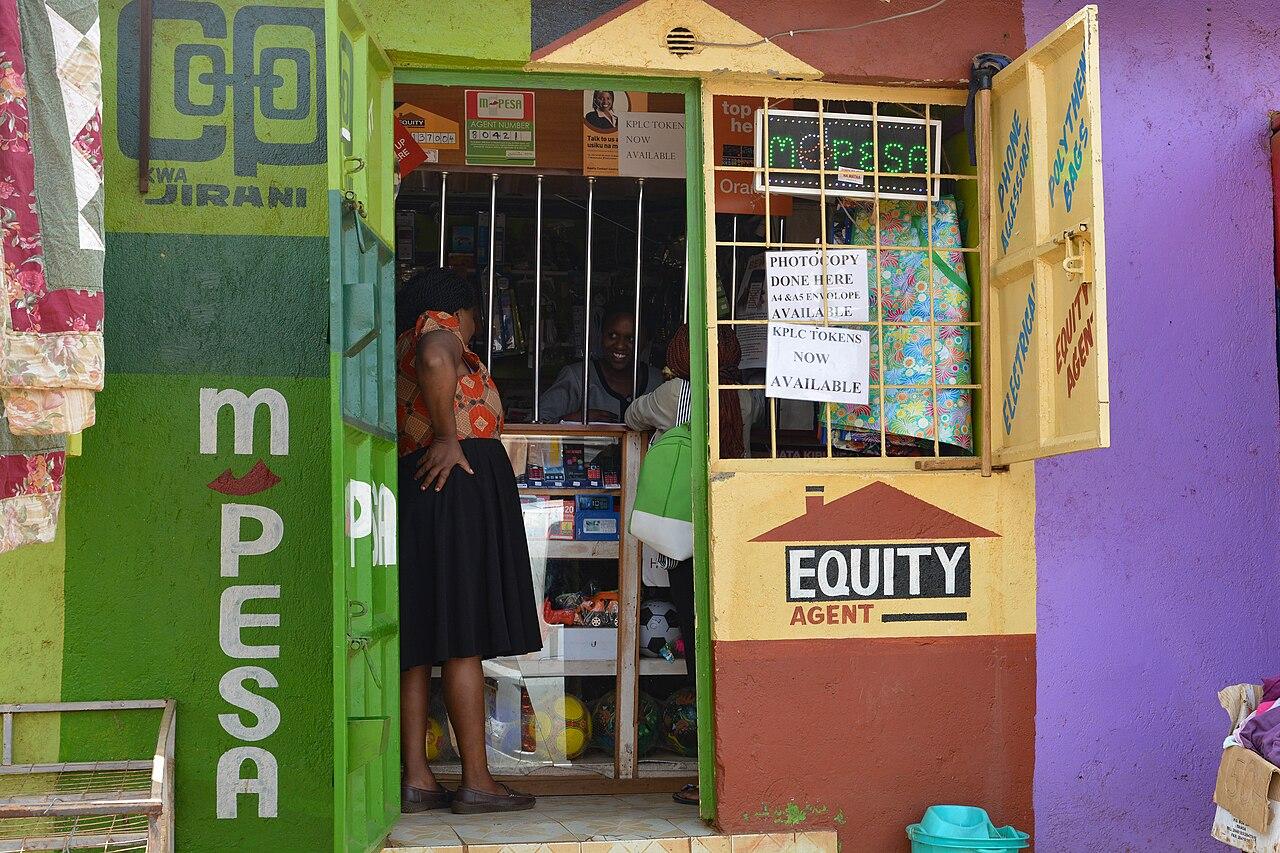
The truth is that many of those systems do not work very well in some developing countries. The idea that people will save in a bank does not necessarily hold in countries where a lot of people work informally. They are not paid through the bank, so they have to make an active decision to put money in, rather than it being automatic that the money goes into the bank and they take out what they need. Someone who works on a construction site, or is an informal vendor, or runs a small shop in a very small community, does a lot of cash transactions. Their money does not necessarily flow through the formal financial system at all.
That also assumes they meet the requirements: the paperwork, the identification, proof of address. If a large share of the population does not put savings into the banking system, then you do not have the money that would be turned into loanable funds for people and businesses. In Jamaica, the Bank of Jamaica's most recent survey puts the share of adults without a bank account at about 23 per cent. You might say that is not bad, because it means more than three-quarters do. But of those who do, another significant share is what we call dormant: they have a bank account, but they have not used it actively in the past year.
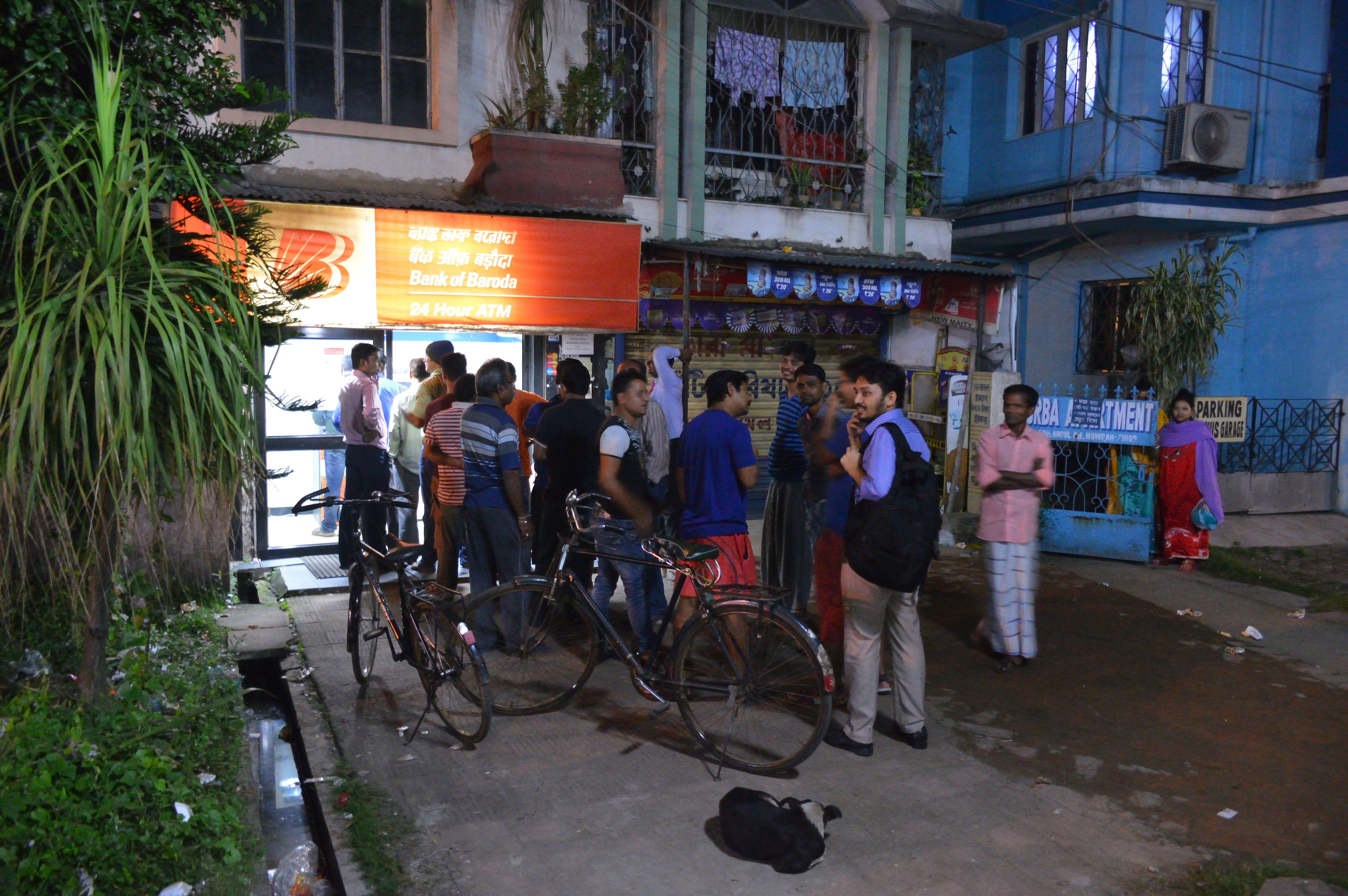
Then you have people who do get their pay into a bank account, but all many of them do is go to the ATM on payday and withdraw all their money. On any payday in Jamaica you will see long lines at the ATMs. So some people are not using financial institutions to smooth out their finances over time; they are just using them for the money to go in and come out. No surplus savings are being kept in the banking system.
On the other side, banks have to be good at deciding which of the people applying for this limited pool of depositors' money are good people to lend to: whose use of the funds will generate enough profit to repay the loan, so that the system functions. That depends heavily on good credit-scoring systems. Credit-scoring systems in the Caribbean are still being developed. Jamaica has one, but there are still many gaps.
For example, the system does not require financial institutions to report to the credit bureau, the register that lenders check to see how a borrower has handled debt before. So sometimes a lender records that a person borrowed money, and later, when that person has repaid, no entry is made to say the loan was fully repaid. When that person goes to another lender and it checks the credit bureau, it looks as if a loan is still outstanding. We have those kinds of imperfections in the credit reporting system.
And then you think about what banks lend money for. Many financial institutions in Jamaica lend for consumption rather than investment, so there are a lot of personal loans in the sector. That is not to say personal loans are not necessary and useful, but if you are thinking about generating employment and building infrastructure, you will want to know how many business loans are being made. So the use of loans matters a great deal as well. All of those questions really challenge the way financial systems work in developing countries.
The Confluence: Caribbean economies are small and very open to the rest of the world, which leaves them little room to manoeuvre. How does that shape the tax-and-spending, monetary and trade policy a country like Jamaica can actually pursue?
Mr Henry: You are right that small open economies are vulnerable to shocks. It affects you more when you are not an oil-producing country. It affects you more if you depend on very few sectors. And it is worse if you are in a location that makes you highly vulnerable to natural disasters such as hurricanes and floods, and droughts at other times.
Caribbean islands like Jamaica have many of these factors, which really affect the sustainability of their economies. So whatever fiscal, monetary and trade policy these countries pursue, it always seems that so much is out of their control, with so many outside variables that can affect policy. That is a question policymakers in my part of the world really have to grapple with.
The Bank of Jamaica, our central bank, sets a policy interest rate, the rate that shapes what banks charge and pay everyone else, based on what it judges will keep inflation within a target. The target range for inflation in Jamaica is between 4 per cent and 6 per cent, and our central bank's main focus in monetary policy is to keep inflation within that range.
But the truth is that a lot of what Jamaicans consume is imported, including fuel and much of the food. So external events put a lot of pressure on prices. When there are oil shocks, or wars, or global supply-chain disruptions, and many prices are being driven from outside, that limits how far we can control inflation.
For that reason, as well as targeting inflation, Jamaica makes some subtle adjustments when it comes to the exchange rate. That is not to say we have a fixed exchange rate. Ours is a managed float: the rate is set by the market, but if it moves too abruptly, the central bank uses its tools to buy and sell foreign currency from its reserves to stabilise it, or at least slow how fast it is moving. That helps, because the exchange rate is really important for an import-dependent country.
If you look at Jamaica's history, you hear about IMF policies that targeted devaluation of the currency, on the grounds that it was too strong. The argument is that if you lower the value of your currency, your exports become cheaper, people buy more of them, and that boosts your economy. The problem is that if you depend heavily on imported inputs for the things you produce for export, then when your currency is worth less you have to find more money to buy the foreign exchange for those inputs. Your exports still carry that cost. So it does not work as easily as we think.
What small countries can do is try to be very credible. I think Jamaica has tried to build a central bank that is more independent of political interference, and to set a real target the public can follow, such as the inflation target of 4 to 6 per cent, with a consumer price index published every month that tells us what inflation is.
Jamaica has also worked hard to bring down public debt. It had public debt well over 100 per cent of GDP, and just before Hurricane Melissa, which was a major shock in October last year, the debt-to-GDP ratio was about 62 per cent. That was a remarkable reduction, achieved through a lot of fiscal discipline. So while it is very difficult, small open economies can pursue a mix of policies, and if that is combined with credibility, so that people believe in the work of the central bank, then you can get results.
The Confluence: What is the biggest misconception about how developing economies catch up with richer ones? Is it about attracting investment, about building institutions, or about something most people miss entirely?
Mr Henry: I do not know that I have a very specific answer to that question, probably because there is no very specific answer. I remember that when I was an undergraduate, everybody was turning to microfinance, lending very small sums to poor borrowers, and saying that it was one way poor countries could lift themselves out of poverty. Microfinance has spread, and it has had mixed results, but poverty definitely persists in developing countries.
So the common misconception is probably that there is a single thing you ought to do, and if you do it, it will work. Or that if you follow exactly the path of today's developed countries, it will get you there, because this is what they did. In early macroeconomics you learn about the stages of growth [W. W. Rostow's five-stage theory], the path that developed countries went through. But conditions have changed. Starting points have changed. So it is difficult to say: follow the blueprint of a developed country and you will be developed too.
Some people say the answer lies in investment. Some say it lies in institutions. Some say it lies in having a proper national development plan. And the truth is that all of these may be parts of the puzzle. Investment absolutely matters. But investment works when there are institutions that support it. You need institutions that protect property rights, that make sure contracts are properly enforced, and that leave little room for political discretion to change the rules on a whim. So investment matters, but you also need an institutional framework to go with it. Investment, institutions, a solid plan: all of those play a role.
And you have to be forward-thinking. A few years ago Jamaica took out a catastrophe bond, an insurance arrangement in which investors pay out if a disaster of a defined size happens. It was parametric in the way it was set up: if a hurricane of a particular intensity passed within particular geographic areas, this is how much the payout would be.
To some people at the time it seemed a unique and interesting instrument, but the question was whether it would ever be useful. Then, when a hurricane on the scale of Hurricane Melissa struck in October last year, you realise it was. The parameters were met, and it triggered a complete and full payout. So a lot of these things have to be tailored to the realities of the country you are working in.
The Confluence: If a reader remembers just one thing from this conversation, what should it be?
Mr Henry: What I would hope people take away is that different economies adapt differently, build resilience differently and function differently. And functioning differently does not necessarily make them better or worse off. Things are very contextual. Culture matters, and it influences people's behaviour and decision-making.
The example I would give goes back to one of my core areas of study, financial inclusion. You would say that whenever a sizeable share of an adult population does not use formal financial institutions, that is a bad thing. You would go on to say that it means they are not resilient and not managing their money well. But in Jamaica we have a large share of people who do not use financial institutions, and we also have a lot of informal financial arrangements.
We have what Jamaicans call partner, and economists call a rotating savings and credit association: a self-contained, informal group of people who pool their money in a rotating pattern, generally in rural communities and typically with women heavily involved. At each cycle, say every week, one person receives the whole pool; then it is collected again and the next person in a set order receives it, and then it starts over. This is often a form of resilience that draws on the collective strength and trust of people who share something, and who probably share similar struggles in their communities.
And someone with a bank account is not necessarily more financially resilient than someone in one of these informal schemes. Someone may have a bank account, so on a survey you would tick the box: yes, this person has a bank account. But functionally, they may not really be using it. They may be paid at the end of the week, go to the ATM, withdraw all of it, spend in cash, and repeat that week after week. So they are not really building resilience.
Someone in a rotating savings and credit association may be able to time their payout to match when they need to prepare their field for planting, or buy back-to-school supplies for their children. And there is flexibility: if one person in the scheme has an emergency, they can negotiate with someone else and say, your turn was supposed to be this week and mine next week, but can we swap? It is a very close-knit, relationship-based arrangement.
So what I wanted to say is that the absence of the forms of stability we expect from formal systems does not automatically mean less resilience, or that these people are unsophisticated. They are probably running very sophisticated financial arrangements. It is informal, but there is probably a reason they do it. It probably works better for them. It probably has fewer requirements. It is probably more flexible. It probably lets them deal in smaller sums. It may suit people who feel that banks are really for the rich, or who do not want to fill in paperwork that demands a higher level of literacy and financial literacy.
So these could be rational decisions, and also a vital source of financial resilience. I would want people to think about it that way: that often, when we do not see the things we expect, other mechanisms have emerged that are also helping.