Where Is the Leisure?
Microcredit failed the very poor, and the unpaid care work of Kenyan women holds back the whole economy, according to a Nairobi economist.

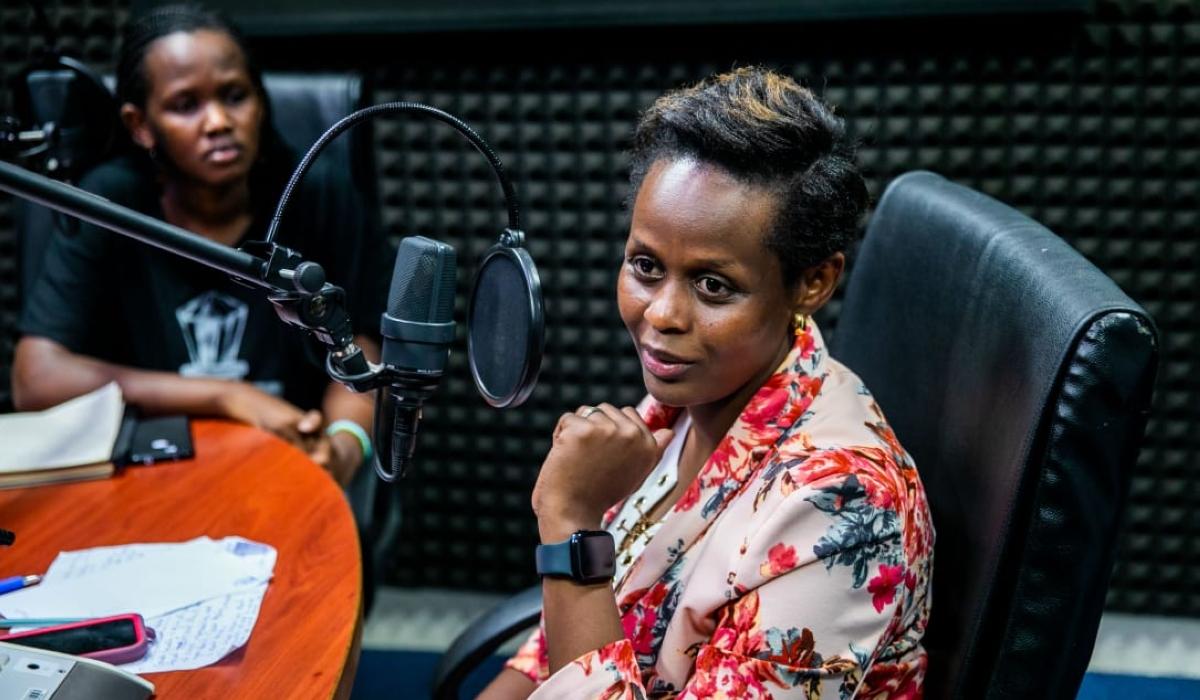
JOY Kiiru is a Senior Lecturer in the Department of Economics at the University of Nairobi. A development economist, she has spent two decades asking why some anti-poverty ideas work and others do not: first microcredit, the small loans once hailed as a cure for poverty, and then the unpaid work of caring for children, fetching water and cooking that rarely shows up in any economic statistic.
Her research measuring that unpaid work in Kenya helped shape the country's draft national care policy, and she has worked on women's economic empowerment programmes with the Gates Foundation. We asked her what the poorest households taught her about lending, how you count work nobody pays for, and why equality is an economic question rather than a charitable one.
The Confluence: Could you introduce yourself to our readers: what you work on, and how you came into the field?
Dr. Kiiru: Besides teaching economics, both economic theory and applied economics, I do research in development economics. My main areas are financial inclusion [access to useful, affordable financial services] and social inclusion, particularly gender. I am also interested in youth employment. All these things are really connected, but generally my research is in development economics: poverty reduction, and things like that.
The Confluence: You started out working on financial inclusion and rural development. How did that lead you to unpaid care work and gender?
Dr. Kiiru: I think they are connected. We start by asking ourselves: where did the issue of financial inclusion come from? It is all about reducing poverty. It is all about improving human well-being, about making people better off. And if you think about that, there are different interventions that have been tried.
In the beginning, it was microcredit: very small loans to poor borrowers who could not get credit from a bank. There was a lot of excitement in the early 2000s, around 2003 to 2005, and more still after the Nobel Peace Prize went to Muhammad Yunus, who is known as the father of microfinance. People were behaving as if we had found the magic bullet to fight poverty. Just give people credit. They can invest, they can do business, they can increase their incomes, and voilà, no more poverty. That was the attitude then.
At that time I was writing my PhD thesis, and I thought: in my country poverty is still an issue. Poverty rates in Kenya were pretty high then. They have come down since, but at that point they were pretty high. And I got interested in this excitement. Why is everyone saying we have found the magic bullet? So I went to collect data back in the village. And what you find is that microfinance was, and still is, a market-driven innovation. Some of the poor are too poor to benefit from it.
Because when it comes to chronic poverty, long-term poverty rather than a bad patch, you are talking about basic things like food being a problem. You are talking about education and health being an issue. So when you start telling somebody whose child is at home sick, or people who slept hungry last night, that you want to give them a loan, there is no time to read the small print. Actually, it does not make sense to do that. This little bit of credit stands between you and probably your next meal, or between you and somebody who is in hospital. So the tendency is: take the money now and think about whatever happens next, because the money is critical.
So for people who are already in chronic poverty, microcredit and microfinance are not the answer, and that is what my research is all about. The point is that it is not a bad intervention. For some people it works. But people below the poverty line, or just at it, may not benefit from microcredit. For those, we need other interventions that are able to improve their productivity without the burden of debt, because if we insist on microcredit for such people, they will be caught up in a debt spiral.
And at that time the regulations were not very clear. It is a market-driven intervention. It is not free money. So you take a loan, you cannot pay, and they would even repossess your household items. That was the practice then.
But now, with more research, the conversation has moved to financial inclusion. And financial inclusion is not just about microcredit or microfinance. It is about the usage of financial services, access to them, their quality, their suitability, their affordability. And of course you cannot have effective financial inclusion without financial literacy. And it is all about regulation.
There were some three years in Kenya when Parliament decided to cap the price of credit [from 2016 to 2019] below the actual cost of capital, below what it costs a bank to raise the money in the first place. Their argument was that the banks were profiteering from people's desperation for finance. So they said you cannot charge interest rates above this level. Unfortunately, that level was below the actual cost of capital. And because you cannot lend at a loss, and banks are there to do business, within those three years demand for credit became huge and there was no credit to be had.
So we saw predatory lenders sprouting up, lending money at very high interest rates, because people needed credit and there was none. And like I said, when people are in chronic need, it does not make sense to them to overthink how they are going to pay, because it is a matter of life and death. Then the government realised that we had actually created a problem. We said no, no, no, we made a mistake; we are looking for other ways to ensure that there is competitive access to credit.
So financial inclusion is really about all of this: not just giving credit, but ensuring that it is quality credit, affordable, and most importantly that there is regulation to cushion the very poor. One of the key features of microcredit was that it shifted the cost of lending onto the borrower. If you wanted credit, you had to find people to form a group with, because the loan would not be given to an individual but to the group. So it was up to you to police each other, to enforce repayment and to do the screening.
That is really the work of the lender, but it was all being shifted to the borrowers. Now the government says that there is an extent to which you cannot repossess livelihood assets [the tools or animals people earn a living with] from people if they do not repay. In that way, it shifts some of the responsibility back to the lender, the way it is supposed to be.
The Confluence: Your time-use research found that women in Kenya spend about five times more time on unpaid care and domestic work than men. How do you measure something as invisible as unpaid work, and how did that number end up shaping national policy?
Dr. Kiiru: If you ask a lot of rural women, or marginalised women, whether they work, they say no. And you could be in an urban area and still be marginalised: in terms of education, in terms of work opportunities, or other kinds of economic marginalisation. I blame macroeconomics for that.
If you look at the traditional macroeconomic model, households optimise their well-being by choosing between work and leisure. If you work more, you get a wage and an income; if you want to rest a little, you have to weigh that income against taking some time for yourself. That is the traditional model, and a lot of people and a lot of governments around the world, not just in Kenya, use such models when they discuss work. It is about the wage. And because there are only two options, either you are working and earning a wage or you are having leisure, a lot of people think you only work if you earn a wage.
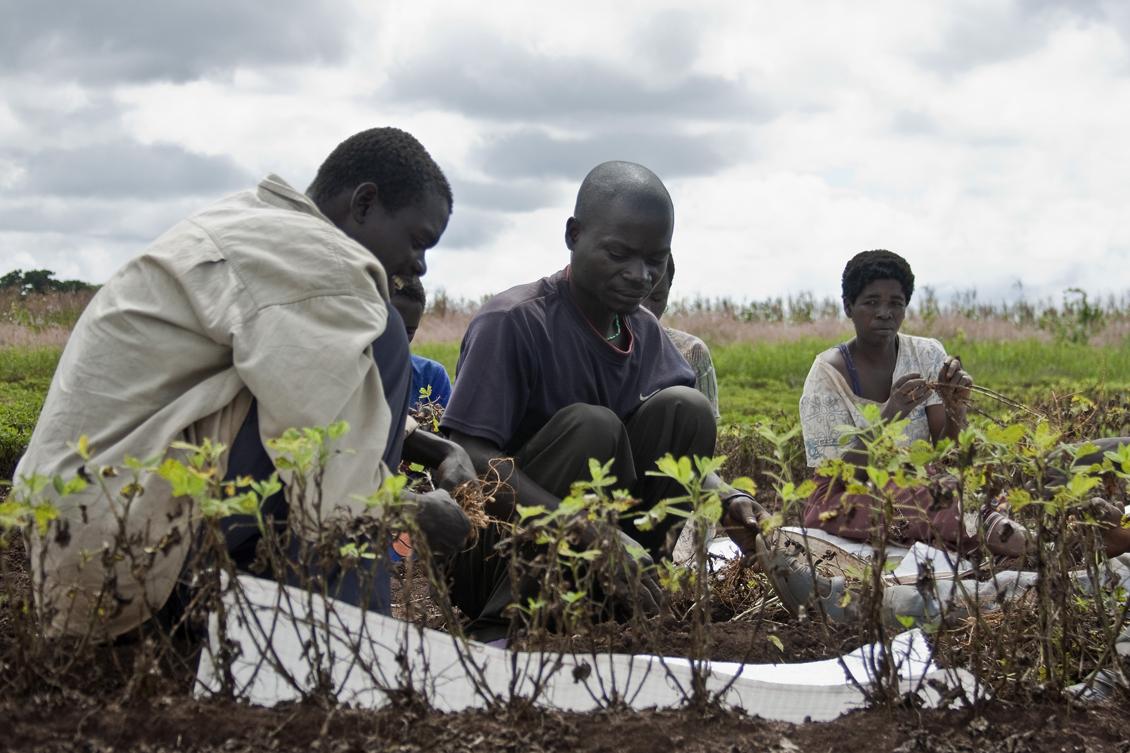
But a lot of women till the land, fetch the water, collect the firewood. And at one point you ask: where is the leisure in toiling on the family land? Where is the leisure in taking care of children? Where is the leisure in fetching firewood, fetching water? Where is the leisure in doing laundry? It is all work. So let us give it a name. It is work, but it is unpaid.
And so we are saying this has to come into the mainstream discussion. Some years ago we used to say that poverty has a woman's face. We can modify the terminology a little, but still, more women than men are marginalised. If we are talking about equality, it is because equality matters for economic growth, and for sustainable and inclusive growth, which are fundamental to human well-being. We are not saying equality for its own sake. It is equality for the greater good of human well-being.
And to talk about equality, you have to talk about unpaid care work. Number one, you have to recognise that it is there: that women are working but are not getting the value of that work. And because they are time poor, they have no time even to engage in economic activity. We are talking about women's economic empowerment for the greater good of society, not because we pity women, but because we want an inclusive, thriving society.
There is a lot of evidence that money going to women has a bigger impact on household health and on children's education. Not that money going to men has no impact, but the greater impacts are felt when women have the income. In other words, human capital, the skills and health that a society's people carry, is greater with women's economic empowerment. Therefore, if unpaid care and domestic work is holding women back, it is holding the whole society back. That is the whole argument. So recognise it, and redistribute it.
And that is where the challenge is, because most of this is a social norm. Kenya is highly patriarchal: there are roles for men and roles for women, especially in the social setting. When I was doing that research, I did some work on social norms. I know in the UK your culture and norms may be different. But even today there are men who say they are only doing their own laundry until they find a girlfriend. Then, if they find a girlfriend who is in college, she will go to their place at the weekend, clean for them, maybe cook for them and do their laundry, because according to them it is a woman's job.
So because of our social norms, we are saying: let us redistribute, let us try to circumvent these norms, let us discuss them and shift them. Culture is dynamic, so it changes slowly, but starting the journey matters. Demystifying it, so that it is okay for a man to carry a baby on his back. Where I come from, when men carry babies on their backs, they become a laughing stock to the whole community: that is how women do it, you cannot do that. So we say it is okay for a man to carry the baby on his back, it is okay for a man to fetch water, it is even okay for a man to cook. Norms are changing, but slowly.
Then the other part is adding policies for childcare, because childcare is one of the biggest constraints. The effects are being seen in urban areas, especially in the informal settlements [unplanned, poorly serviced neighbourhoods], because women have to go out to work and their incomes are so small. There is a mushrooming of very informal and unregulated childcare facilities that can even endanger the child, and sometimes hinder child development. This is a real problem affecting our society. So let childcare be a national discussion, a national issue.
Kenya has made some strides. The county governments, Kenya's devolved local administrations, have taken up early childhood education as part of their programming, and they have put up a lot of classes. Last year we did an experiment, and one of the counties even lowered the childcare entry age from four years to three. We saw a lot of impact in terms of freeing women's time, and women going out to work and earning incomes. So it is a whole discussion: how can we have an inclusive society that respects women? And again, the empowerment is not because we pity women, but because there are economic benefits for the whole society, and for everyone's health and well-being.
The Confluence: Kenya now has a draft national care policy, partly because of your research. What would it actually change in a typical household, and what is holding it back from becoming law?
Dr. Kiiru: Kenya now has a draft national policy. It is supposed to enable government to set aside money, to formalise finances to take care of unpaid care and domestic work, and most specifically to deal with childcare.
When we were doing the research, we did a lot of experiments, and a lot of county governments picked it up by simply providing a childcare facility near the main market centres. Because if you know the Kenyan economy, 87 per cent of it is now informal. Only 13 per cent of Kenyans work in the formal sector. So in this country, markets are a huge economic hub. And more women work in the informal sector, so a lot of women earn their livelihood in the market centres. It made a lot of sense to put childcare centres near markets. And because childcare is very expensive, we are saying the government can shoulder that burden.
The last time I followed up on it, the policy was supposed to be in cabinet for it to become law. So it is still going through the process, and sooner or later we are hoping for a cabinet decision.
The point is that with that kind of progress, we can ask counties and national government to set aside money for at least childcare, and to start thinking about other policies. For example, how can we deal with access to water? If people fetch water and think it is normal, that it is their work, then there is no data: no data on how much time it takes, on where that water comes from, on its safety. With enough data, you start to see planning: how to reduce the cost of access to clean water, how to reduce the cost of access to energy. Firewood is depleting the forest, yet women fetch firewood and think it is normal, it is their work; they do not complain, and there is no data. We are saying these things matter.
And it is not only about environmental degradation. We are on the equator. The sun, in a manner of speaking, never sets: we have twelve hours of daylight and twelve hours of night all year round. In other words, it is possible to run our homes, or at least to access clean energy, through solar.
Looking at it from that perspective, you start jogging your mind. This is the cost of fetching water the traditional way. This is the cost of fetching firewood the traditional way. How can you harness renewable energy? And by doing so, you find that women's time is freed.
I was in a discussion recently where people were saying laundry takes a lot of time. Paying someone to come to your home at the weekend to wash clothes was becoming a real thing, because as people get busy there is no time for laundry. Now women are opening laundry businesses: they collect the clothes from people's homes, but this time they do not wash them by hand. They have a washing machine somewhere. They wash the clothes and return them.
So we are seeing these things come up because of all these discussions, and because people are looking at the opportunity cost [what you give up by spending your time that way] of doing these things the traditional way, as unpaid care and domestic work. And guess what? These opportunities are also attracting men into the laundry business, and into the energy sector, because it is becoming more organised and there are opportunities to earn an income. So even the social norms are shifting in the process. But the key thing is that it is all about women's economic empowerment for inclusive human well-being and social development.
The Confluence: You have worked with the Gates Foundation on women's economic empowerment programmes in Kenya. What does economic empowerment mean beyond giving someone money or a job?
Dr. Kiiru: Women's economic empowerment is not about giving money to women. It is about looking at the different interventions that enable women to participate in markets and earn an income.
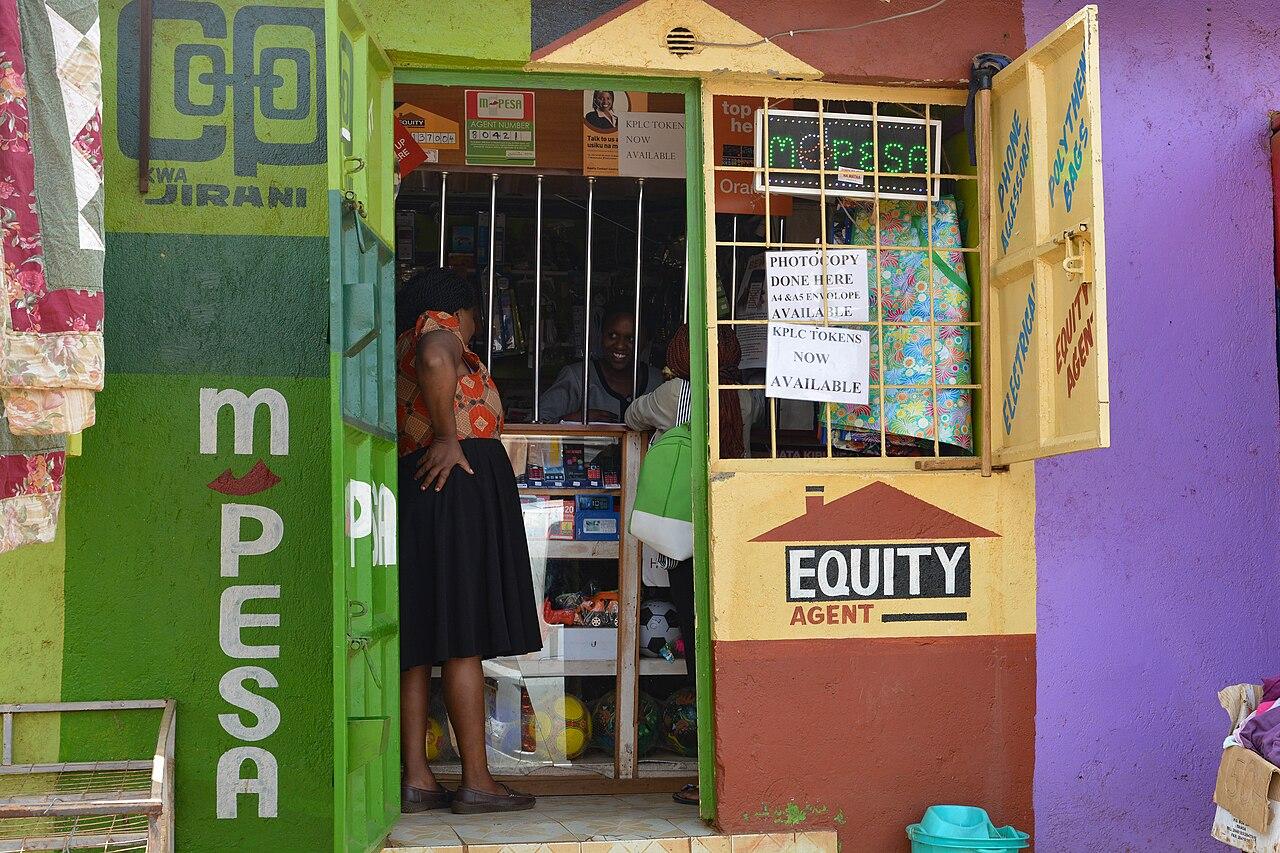
There is a role for financial inclusion: for women being able to access the whole array of financial services I mentioned at the beginning, with the quality and all of that. But also for women being digitally included, because digital platforms are becoming extremely important in reducing the cost of doing business and reaching larger markets for women's businesses.
So women's economic empowerment means looking at the different interventions that help women participate in markets: digital inclusion, access to finance, being market participants, the environment where women are selling and its safety, and of course childcare as a cross-cutting issue. Social norms are also important, because some norms really hold women back.
So we look at how norms can be circumvented, maybe through mobile or digital means, or how they can be shifted. Shifting takes a long time, but circumventing a norm takes less. For example, where a woman is not able to hold an income openly, she can keep her money on her phone, keep quiet about it, and use it for the well-being of the household. That is basically what women's economic empowerment is about.
The Confluence: If you had to leave readers with a single takeaway, what would it be?
Dr. Kiiru: What people have to take from all of this is that changing livelihoods is not a one-time thing, where you do it now and get it right. It is about doing different things, learning, doing things differently, adopting technology. It is a learning process, in which you try to get better and evolve.
And most importantly, so that we do not over-frustrate ourselves: poverty is a relative concept. That is why there are lines below which you cannot allow poverty to go, like chronic poverty and food poverty. So changing people's lives is not a one-time thing; it is a learning curve. We come up with different interventions, we improve on them, we evolve with time, we try again while improving our systems. And eventually we get where we want to go. Since poverty is relative, humanity keeps getting better with time. So there is always work to do.