Learning to Change
Education technology changes every few years and schools are slow to adapt, so the author concludes that the best systems are the ones that know what to keep.
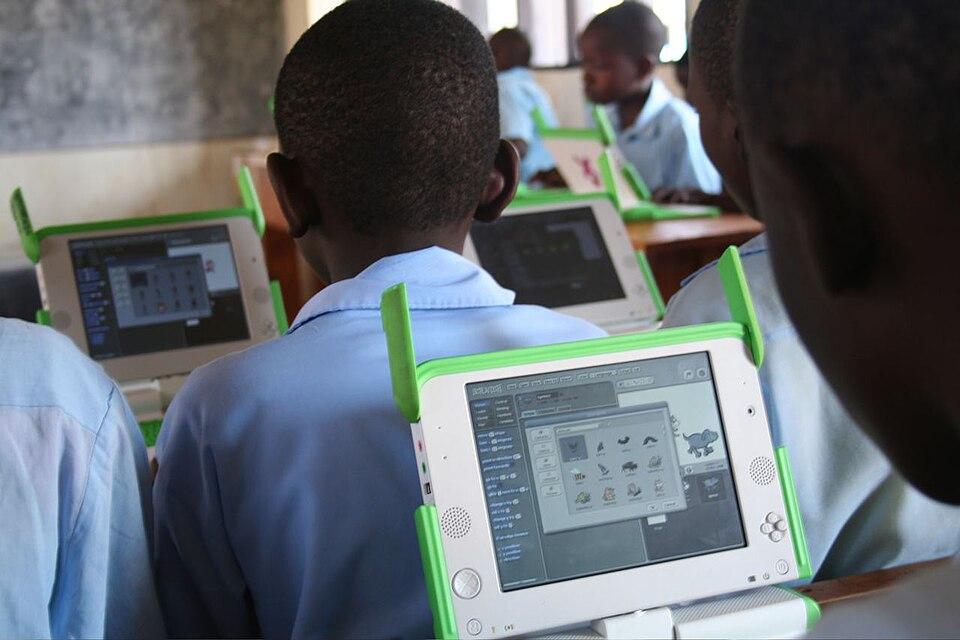

FOR most of human history, one of the main problems of education was access to knowledge. Books were difficult to obtain, information travelled slowly, and what a student could learn depended heavily on what was available in their school, library or community. That has changed. Today, a student with a smartphone can reach an almost unlimited amount of information in seconds. Online courses can reach millions of people, and artificial intelligence can explain a concept, summarise an article or help solve a problem almost instantly.
Yet the institution responsible for teaching that student still looks surprisingly similar to the one that existed decades ago. That leaves education systems with a challenge they will increasingly have to meet: adapting to the speed at which knowledge and society are changing. The answer is not simply to put more technology into classrooms. The more important question is what schools should actually be doing in a world where information is no longer difficult to find.
When Information Is No Longer Scarce
The internet changed something fundamental about education. A student no longer needs to be physically close to a particular teacher, university or library to reach knowledge. Massive open online courses, free university-style courses taught over the internet with no cap on enrolment, grew from almost nothing in 2012 to at least 220 million learners by 2021, a count that excludes China altogether.
Artificial intelligence has pushed this even further. But there is an important difference between having access to information and actually learning from it. An AI tool can produce an answer in seconds; that does not mean the student understands the answer. A search engine can provide thousands of explanations of a concept, but it cannot tell a student which one is reliable or how it connects to everything else they have learned.
In some ways, this makes education more important, not less. When information is difficult to obtain, schools can focus mainly on delivering it. When information is everywhere, students need to learn how to evaluate it, question it and use it.
This is where technology creates a challenge for traditional education. If schools continue to measure learning mainly through the ability to remember information, they may be testing something that technology can now supply almost instantly. Technology is not making education unnecessary. It is forcing education to reconsider what it is actually trying to achieve.
Technology Is Not a Shortcut
It is easy to assume that newer technology means better education. The evidence is much less clear. UNESCO's 2023 Global Education Monitoring Report found little robust evidence of digital technology's added value in education. Technology can have positive effects, but those effects depend heavily on how it is introduced and used, and the report stresses that it should support human interaction rather than replace it.
One example comes from Peru. More than one million laptops were distributed to students, but learning did not improve. The problem was not necessarily the laptops themselves: they had been handed out without being built into the way teaching and learning worked around them.
That distinction, between digitising education and changing it, matters. A school can give every student a laptop and still teach in exactly the same way. It can put textbooks online without changing how students use them, or introduce AI without changing what students are expected to learn. Technology alone does not create reform.
There is also a basic problem of speed. UNESCO reckons that education technology products change every thirty-six months on average, while education systems often take years to change curricula, train teachers and introduce new policies. Technology moves quickly; schools do not. Education probably does not need to move at the same pace, but it does need to become better at deciding when change is necessary.
The Changing Role of the Teacher
This leads to perhaps the most important part of the discussion: teachers. If students can use digital tools to find information, receive explanations and even generate written work, a teacher's role is bound to change. It would be easy to see this as a threat to teachers. I think the opposite is closer to the truth.
The more information students have, the more valuable it becomes to have someone who can provide context, challenge their reasoning and check whether they really understand something. A teacher can recognise confusion, ask the right question and adapt to a particular student in a way that a general-purpose tool cannot always manage.
Teachers themselves, though, need to adapt. The OECD's Teaching and Learning International Survey (TALIS), which questions teachers and school leaders every few years, collected answers in 2024 from more than 189,000 lower-secondary teachers in 55 countries and territories.
On average across OECD countries, around a third of teachers said they had used AI in their work, with national figures ranging from 14% in France to roughly three-quarters in Singapore and the United Arab Emirates. Of those who use it, about two-thirds use AI to learn about or summarise a topic and 64% to generate lesson plans or activities. At the same time, about seven in ten teachers believe AI makes it easier for students to pass off someone else's work as their own.
There is also a clear training gap. Across the OECD, 38% of teachers had AI as part of their professional learning; in Singapore the figure was 76%. Spain sits almost exactly on the OECD average: 35% of Spanish teachers reported using AI in their work, and 75% of those who had not used it said they lacked the knowledge and skills to teach with it.
The question, then, is not whether teachers should use AI, since many already do. It is whether schools will give them the training and the freedom to use it well.
Four Countries, Four Approaches
Comparing education systems makes the picture more complicated, because there is no obvious formula for adapting successfully. The usual yardstick is PISA, a test of fifteen-year-olds sat in the same form in dozens of countries, whose latest results were published in September 2026.
Singapore is probably the clearest example of a country deliberately preparing its education system for technological change. In PISA 2025 it scored 563 in mathematics, 535 in reading and 560 in science: top of the table in reading and second only to a group of Chinese provinces in the other two.
But Singapore has not simply tried to preserve the system that produced those results. It has kept investing in educational technology and has written AI literacy into the digital skills its students are taught, including how to spot false or misleading information produced by AI. Its approach suggests that adapting to change can be something a government plans for deliberately.
Estonia takes a different route. It also performs strongly, scoring 508 in mathematics, 499 in reading and 527 in science in PISA 2025, the best mathematics result in Europe. Its distinctive feature is not just its digital development but the freedom it gives schools: Estonian teachers have among the greatest freedom of any system to shape the school curriculum and take part in running their schools. That matters because adaptation does not always have to come from the top.
At the same time, Estonia's reading score fell by twelve points between 2022 and 2025, and 65% of its students are in schools where head teachers say a shortage of teachers hinders teaching, against an OECD average of 39%. Even a highly digital and relatively autonomous system cannot assume that what worked yesterday will work for ever.
That becomes even clearer with Finland. Finland was once one of the world's most admired education systems, built on teacher autonomy, trust and relatively little external control. Yet between 2012 and 2025 its PISA scores fell by around fifty points in mathematics and reading and by about forty in science, to 469, 474 and 504.
Finland still performs above the OECD average in all three, but the decline is difficult to ignore. A system can be successful and still need to change; autonomy and trust may have contributed to Finland's success, but preserving them alone does not guarantee that the system will keep performing as society changes.
Then there is South Korea, which combines very strong results (522 in mathematics in PISA 2025, against an OECD average of 463) with an ambitious push towards digital and personalised learning. In March 2025 it introduced AI-powered digital textbooks in mathematics, English and computing; within one semester, lawmakers stripped them of official textbook status and made them optional supplementary material, and the share of schools using them roughly halved.
Korea raises a different question. Technology makes it possible to measure, personalise and optimise learning more than ever before, but a system can become very good at producing high test scores without becoming better at developing curiosity, independence or judgement.
The four countries therefore offer very different lessons. Singapore shows what can happen when adaptation is planned carefully. Estonia shows the value of giving schools and teachers room to respond. Finland shows that even a successful system cannot simply stand still. South Korea shows that moving fast with technology can backfire. Spain, whose PISA 2025 scores of 457 in mathematics and 451 in reading were its lowest ever, has the most to learn from all four. None of them provides a complete answer.
The Real Challenge Is Institutional
This is why the debate about technology in education is ultimately about much more than technology. Teachers, curriculum, infrastructure, school leadership and educational culture all matter, and a new digital tool cannot transform an education system if everything around it stays the same.
There is also a question of equality. Students in wealthier countries and communities generally have far better access to reliable internet and digital tools than those in poorer areas. If technology becomes more important without that gap being closed, it could make existing inequalities worse.
So instead of asking only what technology schools should introduce, education systems should start with more basic questions: what problem they are trying to solve, whether a new tool will actually improve learning, whether teachers are prepared to use it, whether every student can benefit from it, and, perhaps most importantly, what should remain human. Those questions are less exciting than announcing a new AI platform, but they are probably more important.
Why the Economy Ultimately Matters
Governments should care about education for reasons beyond test scores. Education is an investment in human capital, the stock of skills and knowledge a person carries into the labour market, which economists treat much as they treat machinery or infrastructure.
Research published by the World Bank puts the average global private return to an extra year of schooling at around 10% in higher earnings, although the return varies a good deal between countries, levels of education and individuals. A better-educated workforce can be more productive, adapt more easily to new technologies and contribute to innovation. Ideally, education prepares people not only for the jobs that exist today but for an economy that may look very different in future. That makes adaptability itself an economic skill.
It is also why simply spending more on technology is not necessarily the answer. A school can invest heavily in devices and software without developing the human skills needed to use them well. The most valuable investment may sometimes be the least visible: training teachers, improving institutions and teaching students how to think when the answers are no longer difficult to find.
The internet did not make schools obsolete, and AI will not make teachers obsolete. What technology has done is expose a problem that was already there: education systems were designed for a world that is now changing faster than they were built to change.
That does not mean abandoning everything about traditional education. Teachers, discussion, collaboration, discipline and sustained attention are not outdated simply because technology exists; in a world full of information, some of them may become more valuable. But their purpose may have to change.
The strongest education system of the future may not be the one with the most devices or the most advanced AI, but the one that recognises when its assumptions are going out of date. The challenge is not to move as fast as technology. It is to know when change is needed, what needs to change, and what should not change at all.