What AI Doesn't Destroy
AI is wiping out some job tasks and leaving others alone, and the ones left standing are becoming more valuable.

KLAUS Prettner is an economist at WU Vienna University of Economics and Business, working on automation and digitalization, macroeconomics, and demographic economics. His research examines how automation and artificial intelligence reshape the economic models used for analysing production and income distribution. Dr. Prettner also runs a Youtube channel explaining macroeconomics at https://www.youtube.com/c/KlausPrettner .
The Confluence: Could you give us an overview of what you research?
Dr. Prettner: With co-authors, we’ve looked at how demographic change drives automation, whether labor shortages speed up technological progress, and at how automation changes the standard economic models we’ve traditionally used to describe production and the distribution of income. We can show that a technology able to fully automate certain tasks or occupations can change the role capital traditionally plays in an economy, leading to a decline in the share of income going to workers and a rise in the share going to capital owners. We’ve also looked at how that could be mitigated through policy, taxation, subsidies, education, and so on.
The Confluence: What kinds of jobs is automation most likely to replace, and what are the first and second-order economic effects of that?
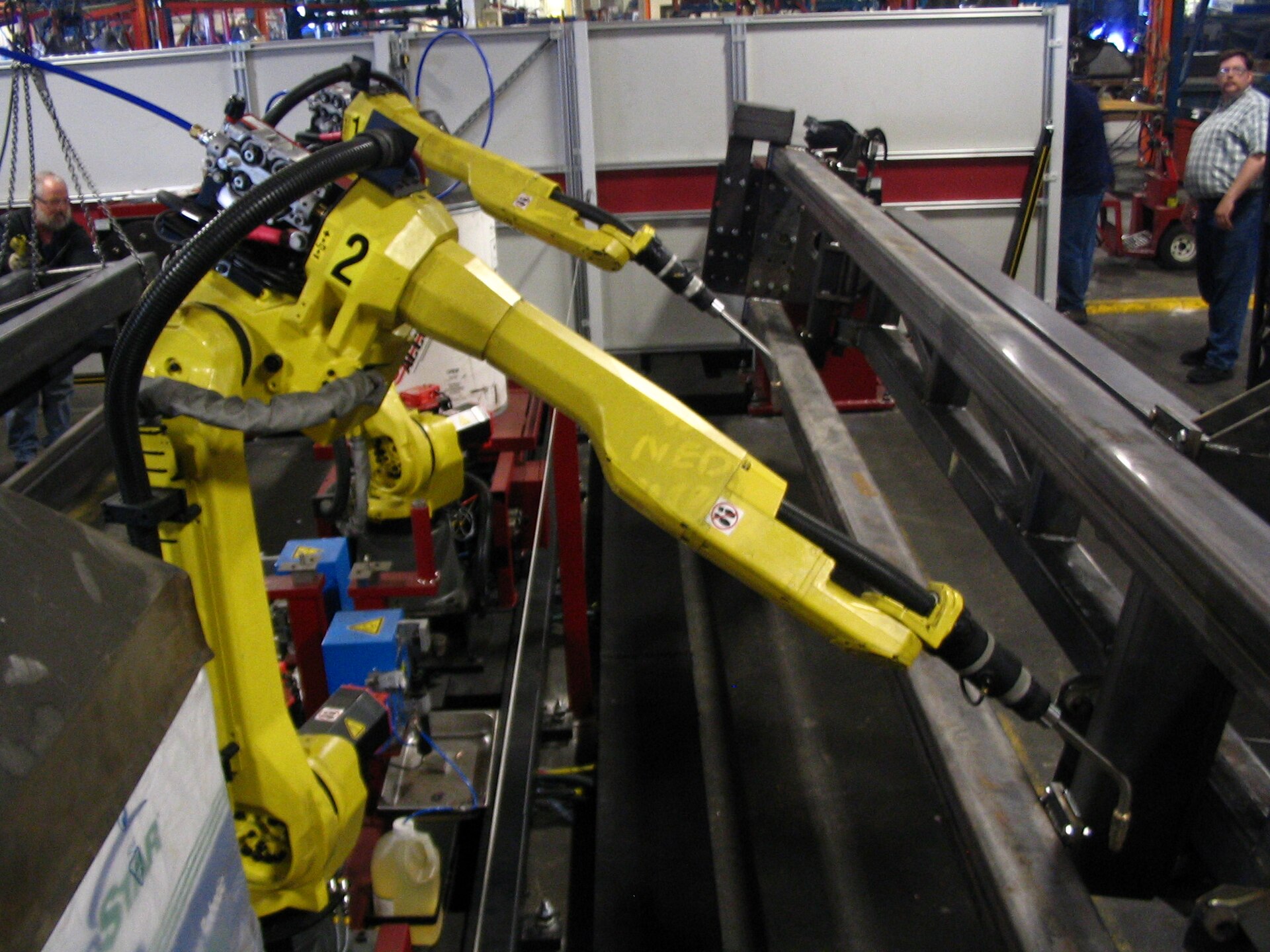
Dr. Prettner: The most important thing to keep in mind is that automation usually doesn’t erase an entire occupation, it automates tasks within it. That transforms a job rather than eliminating it: some tasks become far less important, while the ones that can’t yet be automated, the bottleneck tasks, become much more in demand. But occupations that are especially concentrated in automatable tasks do suffer from low employment growth and stagnant or even declining wages.
In the past that meant factory workers on assembly lines, where routine manual tasks could be fully automated by industrial robots. AI is different, it automates non-routine cognitive tasks, which is a completely different part of the workforce. Some tasks we thought were safe just a few years ago, coding and software engineering, for instance, are now much more automatable.
We can already see this in entry-level jobs, in law firms, for example, where searching for precedent and drafting first replies is exactly what AI does well, so demand for those junior roles is falling. That creates a real pipeline problem: you still need experienced senior workers later, but there are fewer entry-level roles to train people into that experience.
The Confluence: How is AI actually different from earlier waves of automation, like industrial robots?
Dr. Prettner: At a very abstract level they’re similar: both put downward pressure on the labor share, the share of income going to workers rather than capital, and research has confirmed that’s true of AI too. But at a more granular level they differ quite a bit. Industrial robots automated routine manual tasks, and that raised the skill premium, low-skilled workers were mainly affected, high-skilled workers benefited.
AI automates non-routine cognitive tasks, the kind high-skilled workers do, so there’s evidence it can actually compress the wage distribution and reduce wages for some high-skilled workers, while more manual, non-college-educated work like plumbing or electrical work stays in high demand. That compression is something we didn’t see with earlier automation.
The second difference is speed of diffusion. When ChatGPT launched in 2022, it took only weeks to reach millions of users, almost anyone with internet access could use it immediately. Electricity, by comparison, is often called a similarly general-purpose technology, but it took decades to fully diffuse through the economy. AI has happened far faster.
The Confluence: How much of a security threat do you think AI poses, compared with previous technology, and is that mainly because it’s more accessible, or because it’s more capable?
Dr. Prettner: It’s a combination of both. AI can suddenly make things feasible for an average educated person that used to require real expertise, hacking into a system, for instance, becomes much easier with AI’s help, so malevolent actions become feasible for a much larger part of the population.
There’s also growing concern about AI helping generate biological weapons: the knowledge of how to do it was previously the bottleneck, and AI can supply that knowledge, meaning you may not need the huge, specialized government labs that used to be required.
There’s also the military dimension. A few years ago the consensus was that there should always be a human in the loop for military decisions, but in real conflicts, that’s a disadvantage: your drones can be jammed, your decision-making is slower. That makes delegating decisions to AI attractive, and that capability extends to terrorists and rogue actors too, so I expect automated warfare to grow in importance.
The Confluence: Is a “robot tax” a sensible policy response?
Dr. Prettner: A robot tax runs into two or three problems: practically and legally, it’s very hard to define what a robot even is, especially once we’re talking about software agents rather than physical machines. It also risks simply slowing down adoption of technology that could genuinely raise productivity, without actually protecting the workers it’s meant to help.
I think the more promising route is taxing the income and capital gains that flow to the owners of automating capital more effectively, alongside stronger education and retraining systems, rather than trying to tax the machine itself.
The Confluence: What about universal basic income as a response?
Dr. Prettner: If you actually run the numbers, it gets very expensive very quickly if it’s meant to be a genuine living income for everyone, not a token payment. I think targeted approaches, an AI-dividend fund that channels some of the gains from automation to affected workers specifically, or stronger social insurance for displaced workers, are more fiscally realistic than a universal payment to everyone regardless of need.
The Confluence: Any advice for someone about to graduate into a labor market being reshaped by AI this quickly?
Dr. Prettner: Learn to work with it, not around it. The people who will do well are the ones who use AI to handle the automatable parts of a task and focus their own effort on the bottleneck tasks, the judgment calls, the parts that still require a human. Trying to compete directly with AI on the tasks it’s already good at is a losing strategy; positioning yourself around what it still can’t do is the more durable one.