Numbers Are Not Reality
Quantitative finance cannot forecast the future, the author claims, and the fall of Long-Term Capital Management shows that models are only as good as their assumptions.
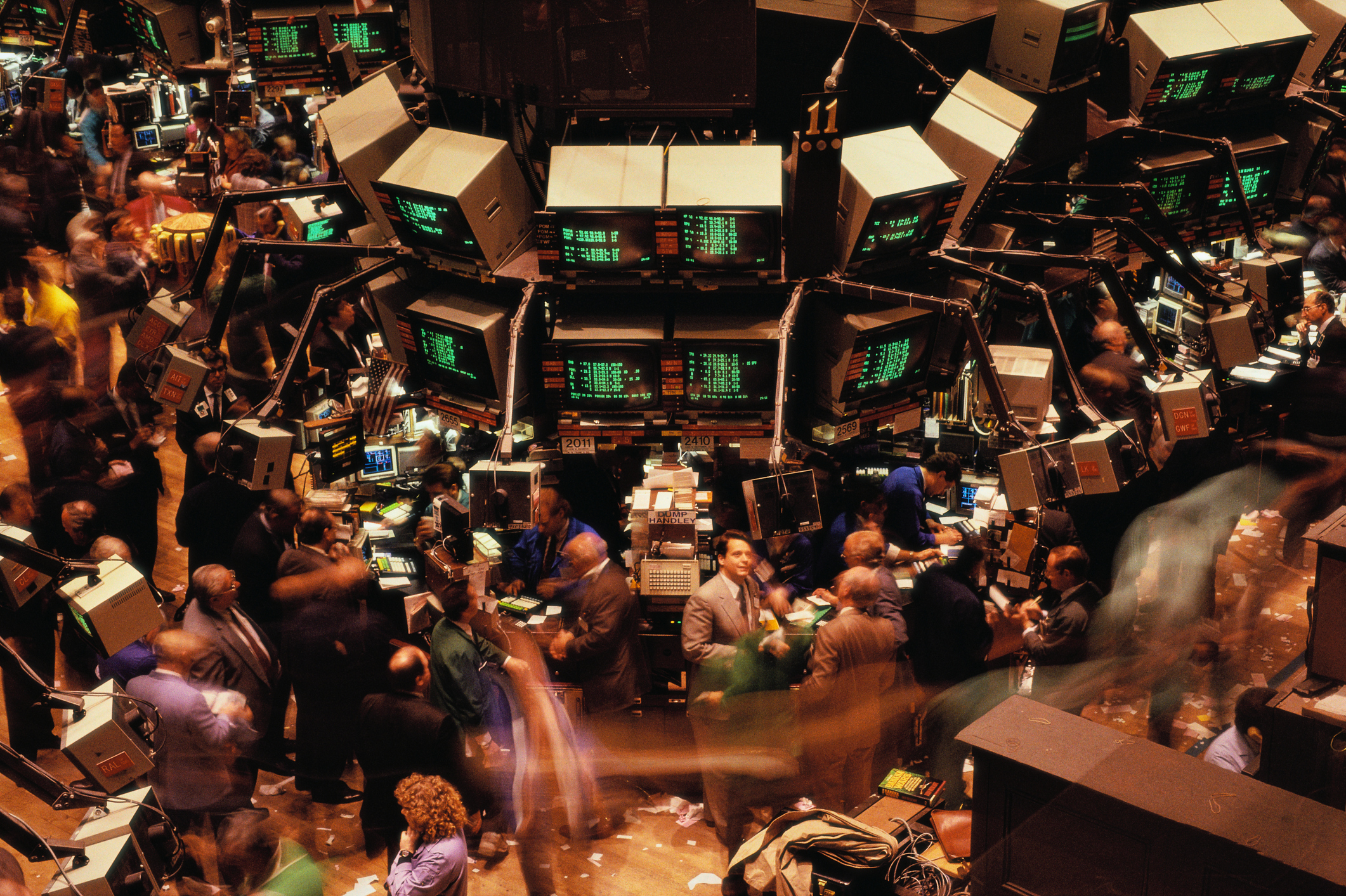

EVERY day, vast sums of money move through financial markets because people are constantly making decisions about the future. Should a company invest now or wait? Should a bank approve a loan? How much risk is too much for an investor? What happens to a portfolio if interest rates suddenly rise or a market crashes?
These are not questions with definite answers, and this is where quantitative finance, or “quant finance”, comes in. Quantitative finance uses mathematics, statistics, economics, programming and data to understand financial problems and make better decisions under uncertainty.
The people who work with these methods are often called quants. Their job is not to predict the future perfectly, because nobody has yet found a way around that rather inconvenient human limitation. Instead, they build models that estimate probabilities, measure risk and test what could happen under different conditions.
A Simple Example: Ten Thousand Euros
Suppose you have €10,000 and want to invest it. You could put everything into one company because you think it will perform well. But if that company loses 30% of its value, you are left with €7,000, and nothing stood between you and a single piece of bad news. A quantitative approach asks a better question: how could you divide your money between different assets so that you still have opportunities for growth without taking unnecessary risk?
Split the same €10,000 evenly across ten companies in different industries and countries, and the same 30% fall in one of them costs you €300 rather than €3,000. That is the intuition behind diversification, spreading money around so that no single outcome can sink you, and a great deal of the mathematics of the field began as an attempt to make that intuition precise.
The idea becomes far more complicated when the sums involved run to millions or billions of euros. A large investment fund might hold hundreds of different assets across several countries and currencies. Its managers need to understand not only how each investment behaves, but also how they behave together: whether they tend to fall at the same moment, which statisticians measure as correlation. That is where mathematics becomes useful.
Where the Mathematics Comes In
One of the most famous examples is the Black – Scholes model, published in 1973 by Fischer Black and Myron Scholes, alongside a closely related paper by Robert Merton in the same year. It gave financial professionals a mathematical way to estimate the value of options: contracts that give the holder the right, but not the obligation, to buy or sell an underlying asset such as a share at an agreed price.
Instead of relying only on intuition, traders could weigh factors such as the current price of the asset, the time remaining on the contract, interest rates and expected volatility, meaning how sharply a price tends to swing up and down.
The model became a cornerstone of modern finance. Scholes and Merton received the 1997 Nobel Memorial Prize in Economic Sciences, awarded, in the Royal Swedish Academy of Sciences' words, “for a new method to determine the value of derivatives”, the family of contracts to which options belong. Black had died in 1995, and the prize is not awarded posthumously.
Pricing Is Not the Whole Job
But quantitative finance is not simply about finding the “right” price for something. One of its biggest roles is understanding risk. Imagine a pension fund responsible for paying an income to thousands of people decades into the future. Its managers cannot simply chase the highest possible return. They have to consider inflation, interest rates, market crashes and the possibility that certain investments perform badly for years. Mathematical models help them compare different portfolios and estimate how much damage different scenarios might cause.
Banks face similar problems. When a bank lends money, it is taking a risk that the loan will not be repaid, which is called a default. Banks use historical data and statistical models to estimate the probability of default and to decide how much risk they are willing to accept.
The technology behind all of this has changed dramatically. Modern computers can process enormous datasets and run financial simulations almost instantly, so an analyst can write code that tests thousands of possible market scenarios rather than working through each one by hand. Machine learning can also be used to search very large datasets.
When the Model Is Wrong
This is where quantitative finance becomes more interesting than simply “using computers to predict stocks”. Models can fail. One of the clearest examples is Long-Term Capital Management, or LTCM, a hedge fund founded in 1994 by the former Salomon Brothers trader John Meriwether. Its partners included highly respected economists, among them Scholes and Merton themselves, and it relied heavily on mathematical models.
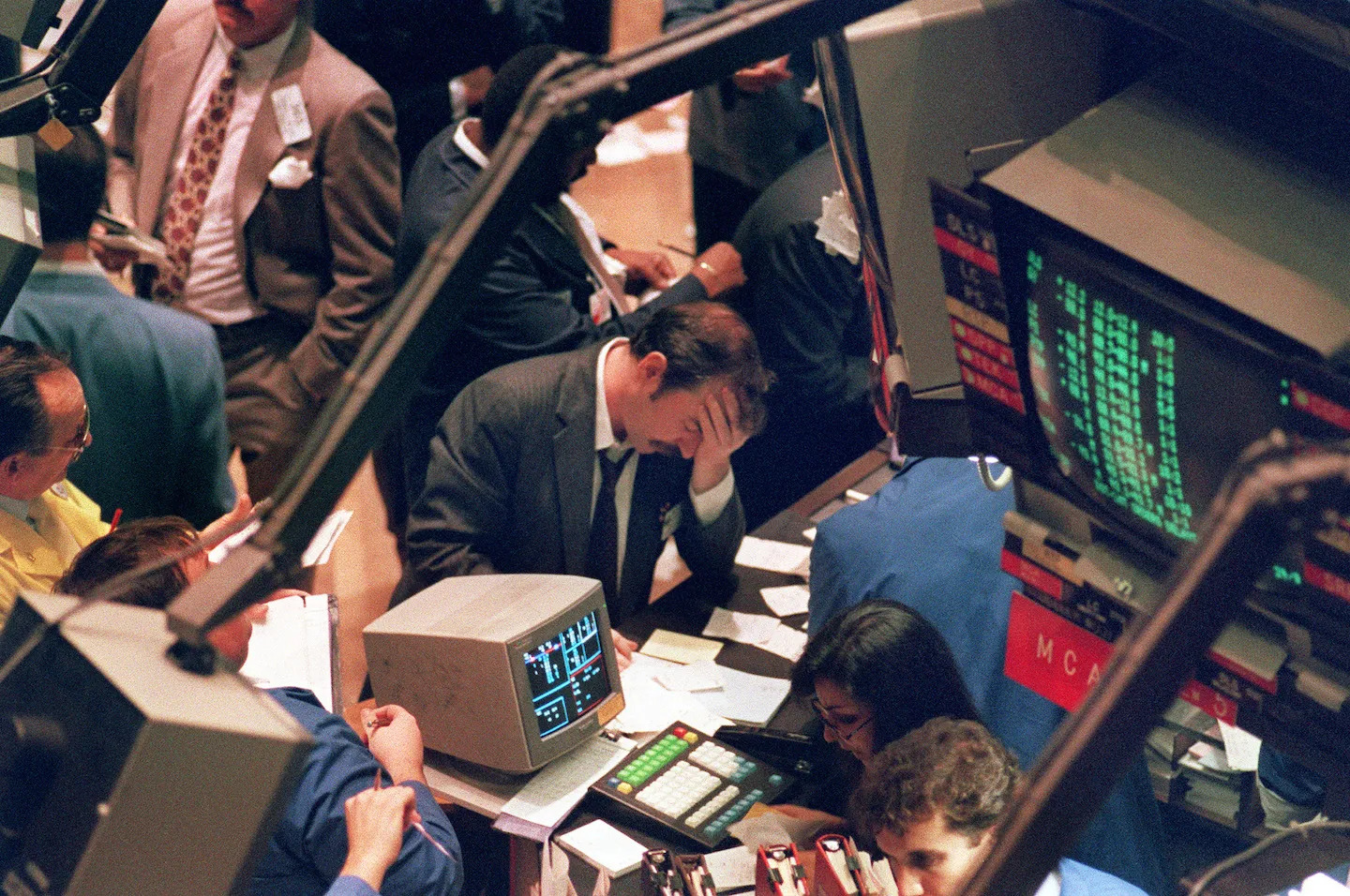
At first the strategy produced impressive returns. But in the financial turmoil of 1998, after Russia defaulted on its government debt, markets moved in ways the firm's models had not adequately anticipated. The fund lost 44% of its value in August 1998 alone. In September, fourteen banks and brokerage firms put in $3.6 billion to take the fund over and wind it down in an orderly way. The rescue was organised at the Federal Reserve Bank of New York, but the money came from those private firms rather than from taxpayers.
The lesson was important: a model can be mathematically sophisticated, built by the very people who invented the mathematics, and still be wrong about reality. Financial markets do not behave like controlled laboratory experiments. Historical patterns can disappear. Correlations can suddenly change, so that investments which never used to fall together start falling together, usually at the worst possible moment. Events that seem extremely unlikely can happen.
That is why quants also use stress testing: deliberately putting a portfolio through an imagined disaster on paper to see what would survive it. Instead of asking only what is likely to happen, they ask what would happen under extreme conditions, such as a 30% fall in the stock market, a rapid rise in interest rates, or several markets crashing at once. The goal is not to predict the next crisis perfectly. It is to avoid being completely unprepared when one arrives.
Speed Is Not the Same as Intelligence
This is also why quantitative finance has become so closely connected to computer science and artificial intelligence. Financial institutions can now process enormous amounts of market and economic data and build algorithms that react to new information in fractions of a second, far faster than any human trader.
Yet speed is not the same as intelligence. An algorithm may find a pattern that worked for years and assume it will keep working. Then the market changes, and the pattern disappears. The computer can calculate perfectly and still make a terrible decision, because the assumptions behind the calculation were wrong. This is one of the most valuable ideas in quantitative finance: numbers are powerful, but they are not reality.
That is exactly why learning about quantitative finance can be useful even if you have no intention of becoming a trader or a mathematician. It teaches you how to think about uncertainty. When you hear that an investment has a “high expected return”, meaning the average gain if the same bet were made many times, you learn to ask what risks come with it. When someone claims that an event has only a 1% probability, you learn to ask where that number came from. When you see a graph showing a strong relationship between two variables, you learn to question whether one actually causes the other.
Those habits are useful far beyond finance: in judging economic news, understanding statistics, weighing business decisions, or simply making better choices with your own money.
The modern world is increasingly built on data, algorithms and probability, and quantitative finance is one of the clearest examples of those tools being used to make real decisions with real consequences. You do not need to become a quant to benefit from its central habit of mind: do not ask only what could happen, but how likely it is, what evidence supports that belief, and what happens if you are wrong. The future cannot be predicted with certainty. With the right combination of mathematics, data and critical thinking, though, we can at least make better decisions about it.