From Oil Rigs to Climate Tech
An engineer who once built offshore drilling rigs now runs a platform that connects Korean and Southeast Asian green-tech firms, and explains why the partnership works.
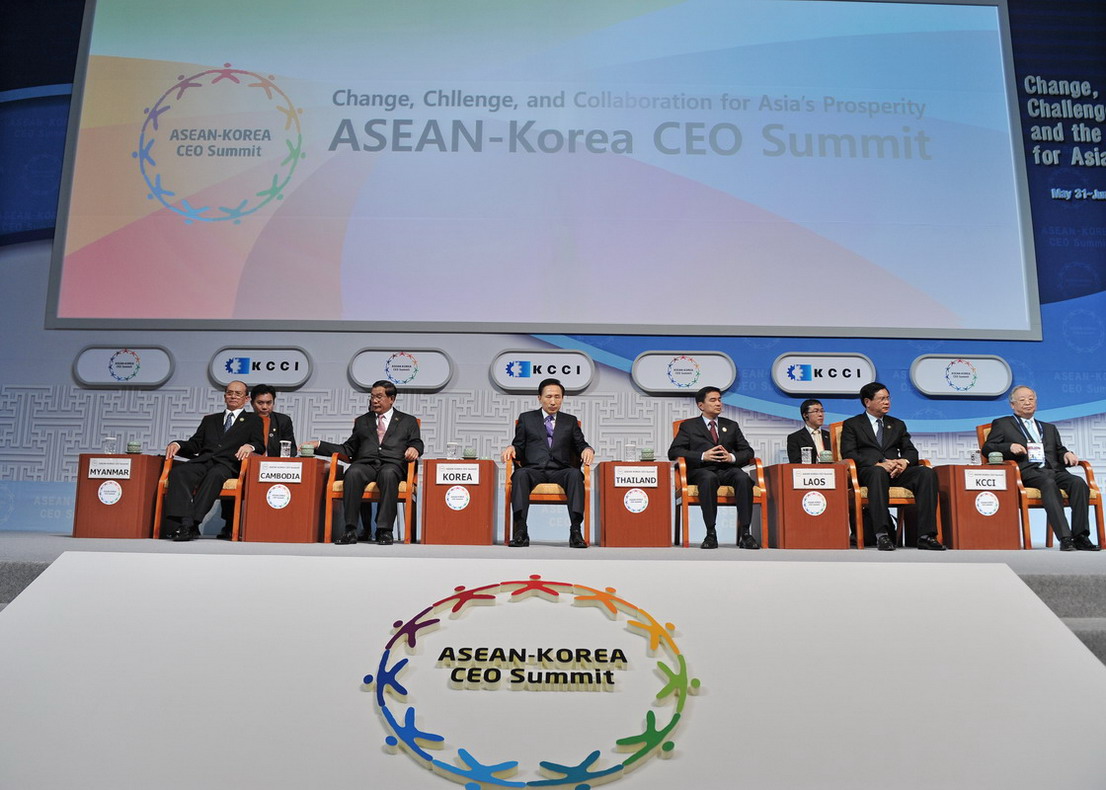

HOGUN Min began his career in South Korea’s shipbuilding and oil and gas industry, building offshore drilling facilities, before the Deepwater Horizon disaster prompted a shift into clean energy. He later moved into wind energy and climate-tech venture building, and now works on AKI GTP, an ASEAN–Korea cooperation platform for green technology, as a platform developer, venture capital connector, event organizer, and industry expert.
The Confluence: What first drew you into this field – green technology, climate, or economics?
Min: My first interest was big projects. I started my career in the shipbuilding industry: our company used to manufacture one of the biggest facilities on the sea, oil and gas drilling vessels that can drill down to five kilometres under the sea, with all the oil processing, gas storage, and facilities that float on the sea and work as a huge energy factory. That was the beginning of my career. I was interested in developing that project and business, but because of the environmental problems this caused across the world, I decided to go for clean energy.
The Confluence: Did you see the side effects of oil drilling firsthand?
Min: Yes. The biggest event was the Deepwater Horizon explosion – a huge platform explosion on the sea, and a human disaster that could have been prevented. The oil and gas companies’ greed meant they delayed the decision to shut the facility down instead of sending out the engineers and directors who could have corrected it. It ended up exploding and leaving an oil leak under the sea for hundreds of days: a serious, severe impact on the environment. That is when people really started to perceive the side effects of fossil fuels, and it is what let me join the wind energy division, and then move into climate-tech venture building.
The Confluence: Just a quick explanation for our readers: what does sustainable technology investment mean, in plain terms?
Min: It means the technology has to really advance the current system: make it more innovative, more efficient, and improved. Eventually it helps the environment, and it advances the economy better. That is the definition for me.
The Confluence: How would you describe AKI GTP to one of our readers, and what is it trying to achieve?
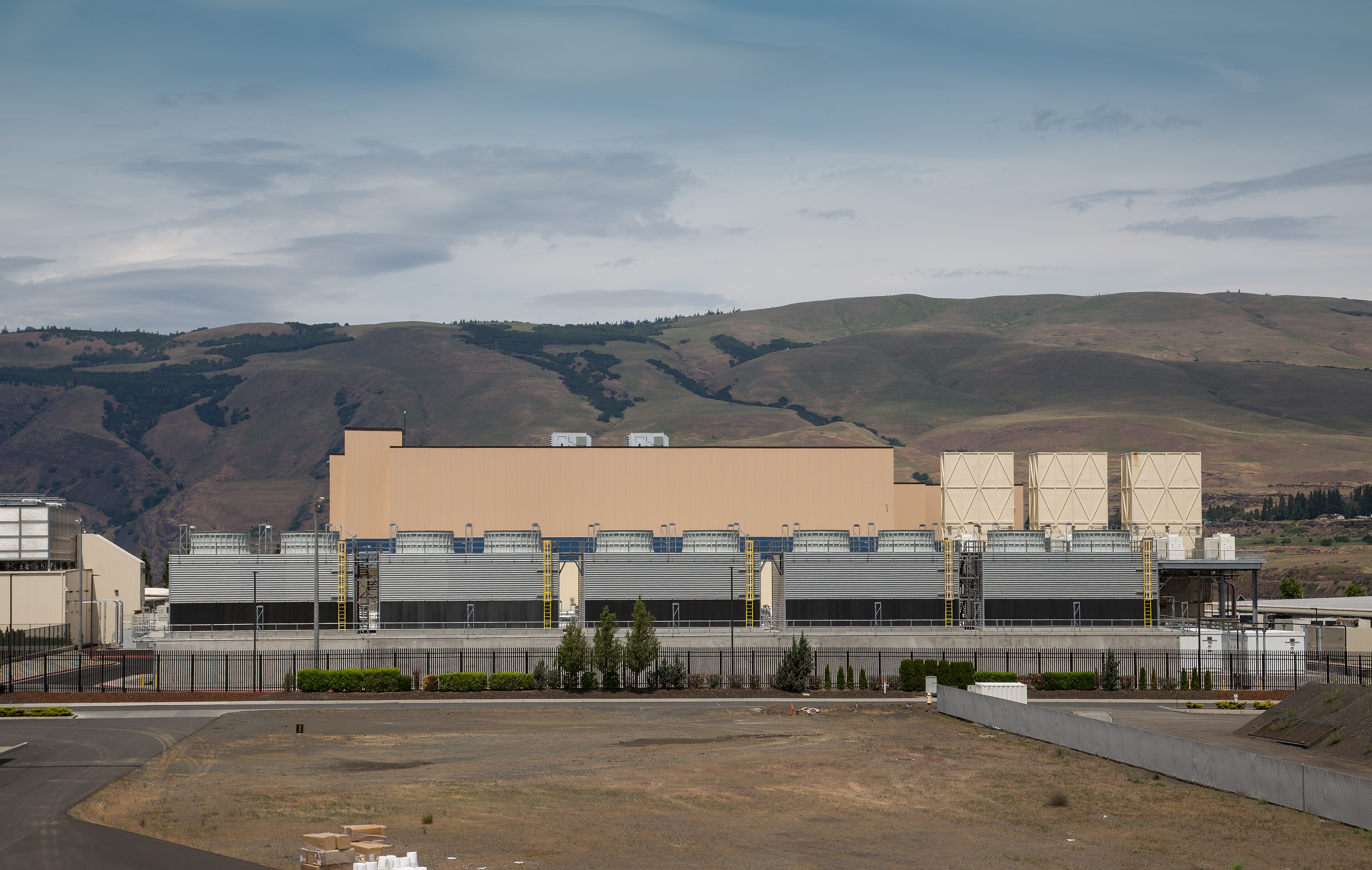
Min: I have two goals. First, I want to deliver a better perception to ASEAN decision-makers, especially government officials and international organization partners, about technological advancement: technology developed from labs and academic institutions, and newly commercialized technology, is actually improving our conventional industry systems faster than before, and I want them to accept and explore it more. Second, I’d like to bring AI, semiconductor, and data centre technologies into the climate technology space. Climate technology cannot be a standalone thing apart from these new technologies, because in order to develop and train new AI models we need data centres, which require a huge amount of semiconductors, electricity, and water. So these are very important industries that need to adopt more climate technologies too – it goes hand in hand.
The Confluence: How would you describe your own role in achieving these goals?
Min: I don’t like to restrict my role to one specific thing, because this platform is unique: it is integrating innovation in ASEAN for the first time. So to make that happen, I have to wear a lot of hats. I can be a platform developer, an innovative venture capital connector, an event organizer, or an industry expert who provides insight. I have to identify all of these things and fill them myself, or with my team, or with my partners. I am trying to be the orchestrator as well as the performer at the same time.
The Confluence: Why is cooperation between ASEAN and Korea specifically so important, rather than each side acting separately?
Min: Because all of our industry and economy are interrelated. Our economy and industry have a huge supply chain across Vietnam, Malaysia, Indonesia, and Thailand: there are huge supply chain providers connected to Korean industry, and lots of subsidiary manufacturing companies already in Southeast Asia, with a huge amount of import and export as well as cultural exchange and cultural influence. And since our culture and ASEAN culture are closer than with the West, we have a bit more in common. That is a good reason for cooperation.
The Confluence: Why did you choose to start with waste management rather than other equally important climate issues, like energy or carbon trading markets?
Min: There are a lot of sectors we could cover to improve the environment, but waste management is the most obvious, high-impact problem, and not many people are willing to work on it. It is what I’d call 3D: dirty, dangerous, and difficult. There is a lot of room to improve, and Korea has one of the most advanced waste management systems in the world, so it made sense to start where we already had something concrete to offer.
The Confluence: There is huge diversity in GDP per capita and living standards between ASEAN countries – Singapore and Cambodia are both ASEAN on paper, but very different economies. How do you build something that works for both?
Min: We take a different, tiered approach for different countries. For the waste management assessment and best-practice reports, we approach every country roughly the same way, because we need to establish the status quo in each country using the same methodology. But when it comes to developing the actual project pipeline, we focus more on developing countries.
All ASEAN members agreed not to develop the project pipeline in three countries – Singapore, Malaysia, and Brunei – because they are already treated as advanced countries with a higher GDP per capita that can fund themselves. Vietnam, on the other hand, was excluded not because of the people but because of political structure: before starting a project, Vietnam requires a presidential-level permit for international organization projects, and that takes time. We initiated this project proposal two years before, and we still have not achieved the permit. So we ended up developing the project pipeline in only seven of the ten ASEAN countries.
The Confluence: Is politics a common constraint you run into on projects like this, compared to something like a lack of funding?
Min: I would say political barriers happen in every single project – not only international organization projects, but commercial projects and even personal projects. It is very difficult to say whether political barriers or funding is the bigger issue; it is case by case.
But on the bureaucratic side specifically: most projects require certain criteria, like the number of people benefited or the number of tons of carbon reduced, and that is not easy to prove. There are so many different methodologies for measuring this – the UN’s Clean Development Mechanism, the Gold Standard, the voluntary carbon market – and consulting firms that help measure all of it. Companies do not always know which framework the UN approves, or which one ASEAN approves, and that becomes a cost. Innovative companies capable of doing the business do not want to go into international organization projects because of these conditions and the required cost.
The Confluence: You have also mentioned public officers themselves as a barrier – what is driving their caution?
Min: One thing I am sure of is that individual perception and effort matters. Public officers and people in international organizations have to have an open mind and think broader. At the beginning, they are excited to talk about new technology and vision, and willing to help people, but many of these public officers are not interested in the technology at all – they are only interested in how to report it to their department, and how to avoid responsibility if something goes wrong.
That is the principal-agent problem: the person carrying out a decision has different incentives than the people the decision is meant to serve, so they focus on staying safe rather than being innovative. But there are some people who are really curious about what is new in the market, who say “I know this is difficult to adopt, but I am interested, let me think about how we can do it” – and that person is willing to do more. So one of the biggest problems is that, at the individual level, public officers are very risk-averse. If each person’s individual openness became a little better, it would actually make a difference.
The Confluence: What do you think the scale of AKI GTP’s impact is right now, and do you think this model is replicable elsewhere?
Min: I do not think the current impact scale is high, honestly – I would say it is about five out of ten. I wish it could be ten out of ten. It has improved the perception of many people who participate in the project.
But what I see as more positive is that this is a very replicable project: if universities or research institutes adopt this model everywhere with the same innovative spirit, and the impact accumulates project by project, even if each one only scores five out of ten, the aggregated impact is going to be much higher. It is not just ASEAN public officers either – it is businessmen, normal citizens, and students too. All of them get a small perception change that, later, makes for real innovation and real improvement. So it is an indirect impact, but across a variety of people, and it depends on people: there has to be someone who really cares and is willing to push it. If that person loses motivation, the project instantly stops.
The Confluence: If you had to leave readers with a single takeaway, what would it be?
Min: I want them to experience things with balance. If someone is excited about AI, for example, they should look at the AI technologies and advancements – there is so much material and information available. But they also have to think about the context: how much electricity and water a huge data centre requires, and how much it impacts the people around it.
You can go deeper: what is the environmental assessment mechanism for deploying a data centre into a specific town or region, how is the consensus for that reached, and who is actually excluded from that decision-making process. I think that is the important thing to understand about how the climate industry is going right now.