Who Pays for Intelligence?
The electricity use hidden behind every seemingly weightless AI query traces back to the data centres that carry the cost.
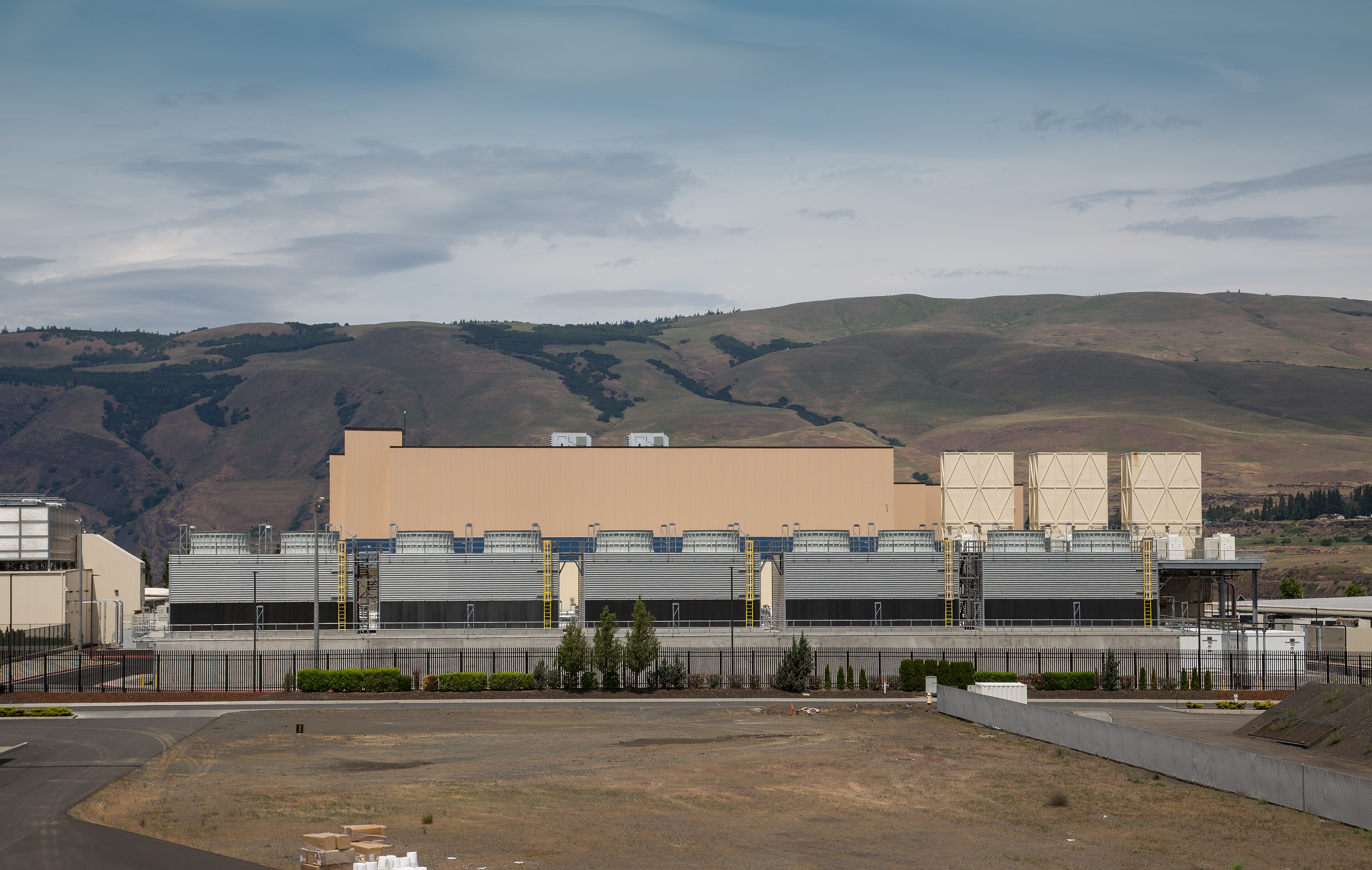

EVERY question put to an artificial intelligence chatbot begins with an illusion. A sentence is typed, an answer appears, and the exchange seems almost weightless. Yet somewhere, rows of specialised chips are drawing electricity, cooling systems are carrying away heat, and transmission lines are delivering power to a building that may consume as much electricity as a small city. The cloud, it turns out, is firmly attached to the ground.
In 2025, global electricity demand from data centres rose by 17%, compared with 3% growth in electricity use overall. The International Energy Agency expects data-centre electricity consumption to double by 2030, while consumption by facilities focused on AI is poised to triple. Five large technology companies spent more than $400 billion on capital investment in 2025, and the agency expects that figure to rise by a further 75% in 2026. The AI race is rapidly becoming an infrastructure race.
This has produced a familiar argument. Technology companies point to investment, productivity and national competitiveness. Critics point to emissions, water use and household electricity bills. Both sides tend to ask the same question: does AI use too much energy? But this is the wrong question. The more important issue is not simply how much electricity AI consumes, but who is required to pay for the system that supplies it – and who bears the risk if the promised boom fails to arrive.
A Grid Built for Another Economy
For much of the past two decades, electricity demand in advanced economies was flat or declining. Efficiency gains offset population and economic growth, allowing utilities to plan around a relatively stable future. AI has disrupted that assumption. According to the International Energy Agency, data centres could account for nearly half of the growth in American electricity demand between now and 2030. Large hyperscale facilities – single sites built to serve millions of users at once – can require hundreds of megawatts, roughly the output of a small power station, and proposed campuses increasingly approach the power demand of heavy industry.
The difficulty is not just the quantity of electricity involved. It is the speed and concentration of the demand. A million electric cars spread across a country do not place the same strain on the grid as an equivalently large load appearing at one connection point. New power stations, substations and transmission lines can take years to approve and build, while a data-centre developer may want a connection within months. Transformers and gas turbines are already subject to supply-chain bottlenecks. The digital economy moves at software speed; the electricity system still moves at the speed of planning inquiries, steel and concrete.
Electricity networks also have an unusual business model. Utilities invest in infrastructure upfront, then recover the cost over decades through customer bills. If a new data centre requires a transmission upgrade, the company may pay a connection charge. Yet its demand can also raise wholesale power prices – the prices generators charge one another, which eventually work their way into everybody’s bill – and trigger wider investment across the system. If projected demand does not materialise, the wires and generating capacity remain, and somebody must still repay the cost.
Virginia demonstrates the problem. The state is home to the world’s largest concentration of data centres. A study by Virginia’s Joint Legislative Audit and Review Commission found that existing rates generally allocate current costs appropriately to data-centre customers. Even so, the huge increase in demand would require infrastructure that otherwise would not be built, and could raise a typical Dominion Energy household’s monthly generation and transmission costs by an estimated $14 to $37, in real terms, by 2040. The same study warned of stranded assets – power stations and cables that have been paid for but are no longer needed – if forecast demand failed to appear or large facilities closed.
This distinction matters. A data centre can pay its present bill in full while still imposing future costs on everyone else. The debate is therefore not about whether technology companies are stealing electricity. It is about whether the risks created by their expansion are being priced accurately.
Growth, But for Whom?
The case for welcoming data centres is substantial. They enable cloud computing and AI services used across the economy. They bring construction work, business activity and tax revenue, while reliable access to computing power may become as important to national competitiveness as access to ports or oil once was. The International Energy Agency also finds that proven uses of AI could reduce energy costs in energy-intensive industries by between three and ten percentage points.
In Virginia alone, the sector is estimated to support around 74,000 jobs and $9.1 billion of state GDP – though roughly 59,000 of those jobs are construction jobs and only about 15,000 are longer-term operational roles, a split worth keeping in mind when a state weighs the benefit against the risk.
Yet the distribution of benefit and risk is uneven across time and across people. Construction jobs, tax revenue and corporate profit arrive quickly. The infrastructure costs, and the risk that demand fails to materialise, arrive later and land on ordinary electricity customers rather than on the companies that built the demand in the first place.
Two governments have begun to test different answers. Ireland’s energy regulator, whose figures show data centres rising from 5% of national electricity demand in 2015 to 22% in 2024 and a projected 31% by 2034, now requires new large connections to match their maximum import demand with their own generation or storage, with an additional-renewables condition attached. Australia’s energy market body has advised that data centres should bring clean, firm energy of their own, be flexible in how much they draw at peak times, and pay their fair share of network costs, rather than simply plugging in and letting the wider system absorb the consequences.
Neither approach blocks data centres outright, and neither hands them an unconditional welcome. Both attempt something narrower and more useful: making sure that a company benefiting from cheap, fast access to the grid also bears a proportionate share of the risk that its own demand creates. That, more than any debate about kilowatt-hours, is the argument this moment actually calls for.