The Climate Crisis Isn't a Science Problem. It's a Political One.
Decades-old scientific agreement on climate change has been held back by a lack of political will, and the piece looks at why.

WE know how to stop climate change. The technology needed to slow and reverse it is readily available. According to Mark Z. Jacobson’s No Miracles Needed, electric vehicles, wind, water, and solar systems are all technically implementable right now. One example of this is the UK: the government has instituted a phase-out of new petrol and diesel cars, and by 2050, a vast majority of working vehicles on the road will be electric.
Jacobson also suggests that different countries should take advantage of their own geographical features to install different renewable energy systems, maximising effectiveness through international collaboration rather than relying on a single energy source. Countries adopting this approach could implement renewable energy production at low cost. The conclusion is clear: technological progress has not been the bottleneck to solving climate change; rather, the issue is a political and economic one.
The scale of the problem, however, is stark. Since 2015, the average global temperature has consistently approached – and in individual years breached – the 1.5°C warming threshold set as a target at the 2015 Paris Agreement. The numbers tell a similar story at the global level: atmospheric carbon dioxide concentrations stood at roughly 355 parts per million when the United Nations Framework Convention on Climate Change was signed in 1992. Today they exceed 420 ppm, and global CO₂ emissions are around 60 per cent higher than in 1990.
Over thirty years of international negotiation, the architecture of cooperation has expanded dramatically; yet, the physical trajectory of the climate system has continued to deteriorate.
The Psychology of Inaction
Yet the political and psychological barriers remain formidable. Society has not fully accepted the crisis, and therefore the issue is increasingly critical. Human psychology compounds the problem: people naturally resist change, prefer comfort, and underestimate the likelihood of negative future events such as future climate impacts. Psychological distance worsens this: people worry less about problems that feel removed from their daily lives, and climate change, slow-moving and global, is precisely that kind of problem. This leads to a lack of motivation for action; many people still question the salience of climate change itself, especially if they are privileged enough to avoid the most direct impacts of climate change.
However, the individualisation of responsibility reframes this entirely. For decades, the focus has been on personal choices – recycling, reducing meat consumption, switching energy suppliers. These matter, but they do not touch the systems that produce the vast majority of emissions. The uncomfortable truth is that the costs of cutting emissions fall on specific people immediately – higher energy bills, job losses in fossil fuel industries, political controversy – while the benefits are shared across the whole world over decades. It is rational, if shortsighted, for each actor to hope that someone else goes first.
Politics makes this worse. Elections happen every few years, but climate change unfolds over generations. Politicians are rewarded for solving problems quickly and visibly, and climate change is neither quick nor simple. It is easier – and politically safer – to defend the status quo than to acknowledge the scale of what needs to change. Psychologists call this cognitive dissonance: the gap between what we know and what we are willing to act on. Many governments have begun moving towards cleaner energy, but the pace of that shift remains well short of what the science demands.
Who Has the Power to Act?
The power to act on climate change is unevenly distributed. Governments, the private sector, and international bodies like the IPCC – the Intergovernmental Panel on Climate Change, which tracks emissions data and advises on policy – can move the needle in ways that individual citizens simply cannot. The numbers make this clear: transport and manufacturing alone account for the vast majority of global emissions. Every flight, every freight truck, every factory running on fossil fuels adds to a total that no amount of individual recycling can meaningfully offset. Businesses have the financial power to invest in renewable energy and cleaner production methods. Governments have the regulatory power to compel them to do so. The question is whether they will use it.
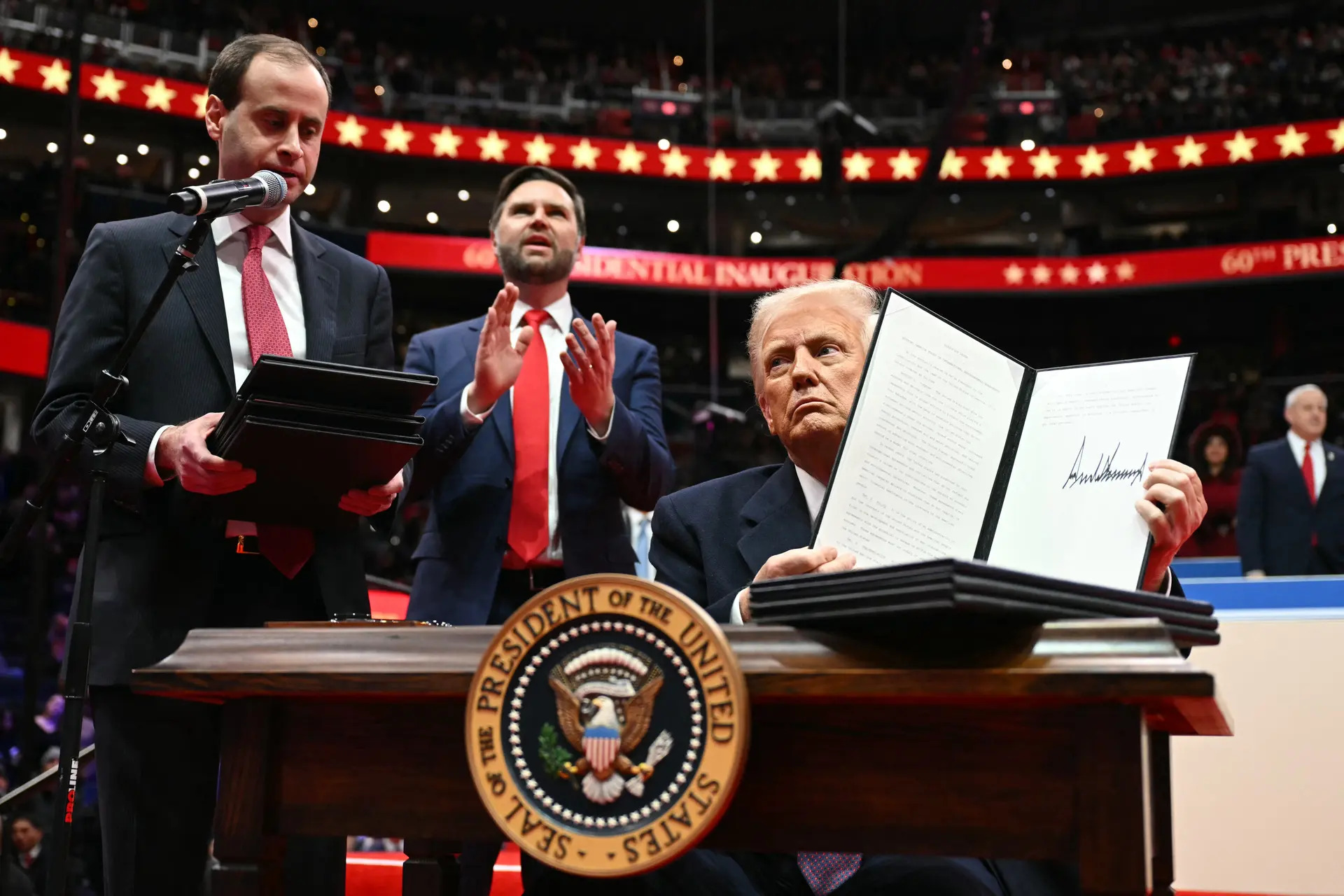
Political actors may be fundamentally opposed to any action: for example, Donald Trump has repeatedly rejected climate policy and moved to cut funding on climate issues because, in his own words, he does not believe in it. This has affected a range of climate action, from removing scientists’ work, to instructing energy companies to drill more fossil fuels, to leaving the Paris Agreement, reversing the climate-related regulations it set and allowing the US to boost domestic oil and gas production.
The US is the second largest emitter of greenhouse gases, with an average carbon footprint of 14 to 17.6 tonnes of carbon dioxide per person annually (three times the global average). Without proportional contribution from the most powerful emitters, the collective effort fails. As the IPCC estimates, current policies remain insufficient to limit warming to 1.5°C, and global emissions remain close to record highs.
On the other hand, Scandinavian countries such as Denmark are consistently contributing positively. Denmark is legally bound to reach climate neutrality by 2050 and is expanding offshore wind farms to achieve a 70% reduction in greenhouse gas emissions by 2030. The contrast with the US is instructive: the obstacle is not technology or awareness, but political will.
Repeated international negotiations have shown that states can coordinate, but coordinating is not the same as complying. Participation in agreements like the Paris Agreement has been near-universal; enforcement has been non existent. States pledge, report, and negotiate. What is missing is not communication, but consequence.
A Collective Problem – But Not Equally So
Climate change is a collective action problem – but the weight of responsibility should not be distributed equally. Individuals can and should make intentional choices: what they buy, how they travel, which companies they support. The American culture of over consumption illustrates the scale of what collective behavioural change could achieve. Public demand also shapes corporate and government decision-making in ways that should not be underestimated.
But individual action only goes so far if companies are not giving consumers genuinely sustainable options to choose from in the first place. The responsibility runs in both directions – but the leverage sits overwhelmingly with businesses and governments, not with the people buying their products.
Overall, the reason for slow progress in climate action is not insufficient research or technological advancement, but political, economic, and psychological factors. It is a collective action problem – but not equally so. Big companies, governments, and policymakers need to engage and act because they have the power and capital to do so. Climate change affects everyone, but only some can make an impact at scale.