Ballot in the Brain
Brain scans link liberal and conservative attitudes to small differences in two parts of the brain, but the article warns that correlation says little about what shapes our politics.

IMAGINE entering a voting booth only to be told that your political leanings could be guessed from the size of two regions of your brain, not from your own arguments and ideas. Since ancient Greece, political argument has largely been understood as a rational activity: people are thought to reach their political conclusions through philosophical and logical reasoning.
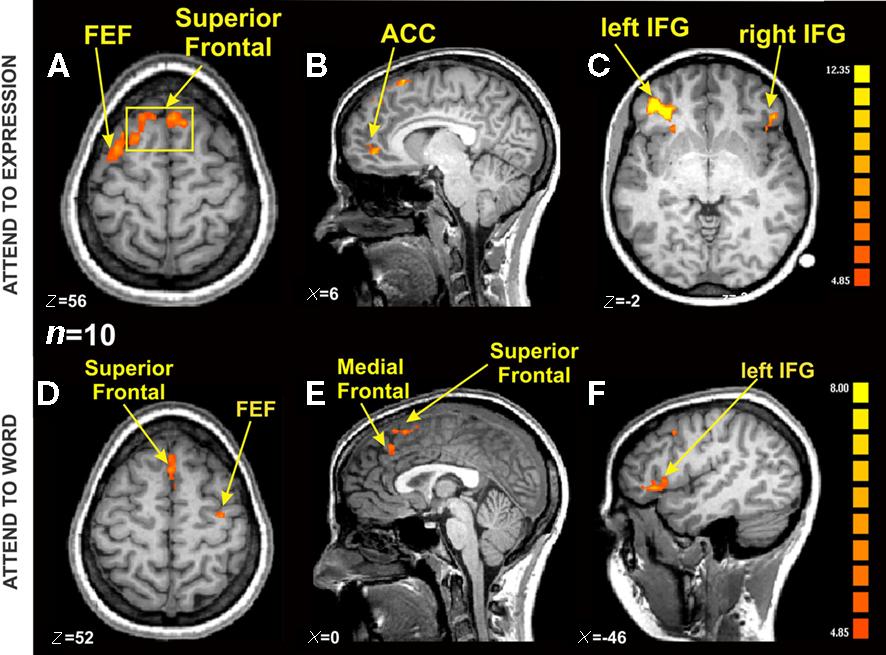
In recent years, however, a new field called neuropolitics has grown up alongside brain-imaging technology. An fMRI (functional magnetic resonance imaging) machine tracks blood flow in the brain as a stand-in for the activity of its neurons, while a structural MRI scan measures the volume of grey matter. Together they let researchers link particular regions of the brain to particular functions.
Neuropolitics challenges the view that politics is a primarily rational activity. It argues against what philosophers call the autonomy of the subject, the idea that each person is a self-governing agent who forms beliefs through their own reasoning, in favour of biological structures shaping political attitudes. The field has also drawn wide media attention, from a 2007 New York Times opinion piece to popular YouTube channels such as Big Think.
In this essay, I will argue that political ideology is not determined by biological and neurological structures, as neuropolitics suggests, but is instead shaped through personal experience and decisions. I will then extend this into a wider critique of the general claims made for neuroscience.
What the Scans Found
The field first made its name with a study by Ryota Kanai, Geraint Rees and colleagues at University College London, published in 2011 in the journal Current Biology; one of its co-authors was the actor Colin Firth. Scanning the brains of 90 young adults, they found that "greater liberalism was associated with increased grey matter volume in the anterior cingulate cortex, whereas greater conservatism was associated with increased volume of the right amygdala".
The anterior cingulate cortex (ACC) is a region towards the front of the brain associated with emotion and decision-making. It acts as a kind of conflict monitor, noticing when two competing responses clash so that the brain can adjust, which is why it has been linked with cognitive flexibility, the ability to adapt to change. The amygdala, by contrast, is a small, almond-shaped cluster of cells deep in the brain that is involved in processing emotion, especially fear and threat. It is best known for its part in the "fight or flight" response, although it does far more than that.
A tempting reading of Kanai's result, and one that neuropolitics invites, is that liberals are less emotional and therefore more logical, adapting easily to change, whereas conservatives respond to change and discomfort with a fight-or-flight instinct. On this reading, liberals want to change the current system because they think more logically, while change prompts an emotional response in conservatives, and all of it is the result of structures in their brains rather than their own rational conclusions.
A similar pattern appeared in a 2013 study of 82 American participants led by Darren Schreiber, which concluded that "liberals and conservatives engage different cognitive processes when they think about risk". In that study, Republicans showed more activity in the right amygdala and Democrats more in the left insula, a region involved in sensing the body's own state, while playing a gambling game, and activity in those two regions was enough to sort people by party with about 83 per cent accuracy.
Findings like these seemed to fit everyday observations that political ideology reflects personality. The result was to treat political subjects as objects, their beliefs moved by neural structures the way a hand moves a ball.
Correlation, Not Causation
It is worth being exact about what these studies show. Kanai's team scanned people at a single moment and compared the scans with how those people described their own politics on a five-point scale from very liberal to very conservative. That reveals a correlation, not a forecast of anyone's future vote, and certainly not a cause.
The authors say so themselves: their data "do not determine whether these regions play a causal role in the formation of political attitudes", and only a study following people over time could settle the direction. Even the headline accuracy was modest: from brain structure alone, a computer could tell self-described conservatives from the very liberal 71.6 per cent of the time.
In 2024, a preregistered replication, its method published before any results were seen, scanned 928 Dutch volunteers, roughly ten times as many. It found a small link between a larger amygdala and conservatism, but no consistent link between the ACC and liberalism. Like the original, it could not say which way the arrow points. Schreiber himself suggested that affiliating with a party and taking part in a partisan environment might alter the brain, rather than the brain simply producing the politics.
The Trouble with Reading Minds from Scans
In their book Brainwashed: The Seductive Appeal of Mindless Neuroscience, Sally Satel and Scott O. Lilienfeld describe "neurocentrism", a cultural tendency to treat neuroscience, without thinking, as the ultimate explanation of human behaviour. Against the oversimplification and commercial appeal of neuroscience, they argue that there are many ways to interpret an fMRI scan.
A particular problem is "reverse inference", which the Stanford University neuroscientist Russell Poldrack has examined: activity seen on a scan is reasoned backwards to one specific mental process, ignoring the many other functions the same region could be performing. The amygdala may light up when someone is afraid, but it also responds in many other situations, so seeing it active does not prove that fear is what they feel.
This ties back to the commercial appeal of neuroscience, because changes in the ACC and amygdala can be read backwards into emotional states to serve political motives or agendas. The 2007 New York Times piece mentioned earlier, which drew conclusions about voters from the scans of just 20 people, was publicly rebutted in a letter from a group of cognitive neuroscientists for exactly this kind of flawed reasoning.
Mind, Body and Free Will
A deeper understanding of neuroscience also reveals how much complexity lies behind its confident, commercialised claims to authority. It does not seem that our entire emotional and psychological life can be reduced to parts of the brain, nor that particular emotional tendencies force a particular political attitude upon us.
The philosophical problem of the difference between the "mental" (our personality and beliefs) and the "physical" (the brain) stretches back to René Descartes in the 17th century, who argued that mind and body are two separate kinds of thing. The question remains relevant to modern science, although the line between mind and body has been fading.
In 2013, the psychologists Martin Seligman, Peter Railton, Roy Baumeister and Chandra Sripada observed that "much of the history of psychology has been dominated by a framework in which people and animals are driven by the past", in much the way that the forces acting on a particle fix its path. The past forces seen to drive behaviour include neurological and biological structures within the brain. On this view, mind and body are one and the same, and structures in the body shape the thoughts in the mind. This is, at heart, the claim neuropolitics makes when it treats human minds as subject to fixed laws of brain activity.
Seligman and his colleagues argue instead for an approach they call "prospection", the mind's ability to represent possible futures, in which behaviour is guided by present evaluations of what might lie ahead. The past, they write, "is not a force that drives" people, but "a resource from which they selectively extract information about the prospects they face". I take from this the conclusion that people have the free will and rationality to choose their own beliefs and thoughts, rather than being driven by neurological features or external causes.
Perhaps the Brain Follows the Beliefs
A different interpretation, one that does not diminish our capacity for freedom, is that the differences between the brains of liberals and conservatives are not the cause of their beliefs but the neurological effects of thinking in different ways. Ways of thinking can alter neural structures because of neuroplasticity, the brain's ability to reorganise itself in response to experience.
A 2011 review in Trends in Cognitive Sciences by Arne May describes growing evidence that new experiences and learning new skills can change both grey matter and white matter, the bundles of nerve fibres that wire different regions together, even in adults. This cuts against the idea that brain structure is fixed in advance. A 2012 study in the journal Neuron found that just two hours of training on a spatial learning task produced measurable changes in the hippocampus, a region central to memory. Socioeconomic status (SES), a measure combining income, education and occupation, and the social networks around us have also been linked to differences in the structure of the brain.
This research suggests that grey matter and brain structures may largely reflect the "mental" side of a person. Being poor or wealthy, sociable or introverted, does not dictate the shape of your brain in any simple way: people from the same background do not all have the same brains.
Rather, I would suggest that new experiences, SES and social groups influence the beliefs a person holds (a particular social group might change how you interpret an event, for example), and that those beliefs in turn shape the brain. Drawing on the theory of prospection, the choice of a political ideology is then a free and rational decision drawn from personal beliefs rather than a fixed emotional reaction.
This would explain the grey matter correlations: both political ideology and the size of the ACC and amygdala would reflect a person's beliefs and interpretations, which can change through structural plasticity, rather than one directly causing the other. It remains a hypothesis rather than a proven account, since nobody has yet followed people over time to see whether changing political views change the brain, or the reverse.
Politics Is Not a Pathology
Politics and science must move away from the idea of a predetermined political identity. The claims neuropolitics makes oversimplify the experimental evidence, sit uneasily with what is known about neuroplasticity, and diminish human autonomy and rationality.
Such ideas could also be commercialised and turned into weapons for political agendas through what the scholars Niklas Altermark and Linda Nyberg call the "pathologisation of politics", in which political disagreement is treated as a neural fault to be corrected rather than a dispute to be argued out, dividing civil society further. Recentring attention on the autonomy of the subject would allow political debate to return to reason, personal belief and experience, rather than emotional reaction.