Can Philosophy Explain Politics?
Tests Bertrand Russell's claim that ties Hitler, Churchill and Roosevelt to Enlightenment philosophers, weighing how much of it is actually true.

From Cannae to Hiroshima, humanity’s capacity for barbaric war invariably elicited a desire for answers. In World War II, the search for causes extended beyond politics and into philosophy. In A History of Western Philosophy, published in 1945, Bertrand Russell made a striking claim: “Hitler is an outcome of Rousseau; Roosevelt and Churchill of Locke.” It is a seductive idea, implying that the catastrophes and triumphs of the Second World War can be traced back to the competing visions of Enlightenment philosophers. But how much does it actually hold up?
Russell’s assertion deserves reasonable interpretation. He likely did not intend to assert a causal relationship between the philosopher and the political leader; a literal claim of causation would be hard to justify. To take the quote charitably, the political leaders are symbols for their personal ideologies, which are embodiments, in some manner, of Rousseauian and Lockean theory.
Russell’s case against Rousseau is weaker than it first appears. The charge that Rousseau’s thought enabled totalitarianism rests on a misreading of his concept of the general will – the idea that citizens should act according to what is most beneficial for society as a whole, rather than in their own individual interests. Rousseau himself was explicit that this will could never be represented by any single person:
“Sovereignty can’t be represented, for the same reason that it can’t be alienated; what sovereignty essentially is is the general will, and a will can’t be represented.”
It is true that figures like Robespierre, who invoked the common good to justify the Terror, and Hitler both claimed to speak for a general will to garner popular support. But claiming to represent the general will is not the same as being shaped by it. Rousseau was himself acutely aware of this danger, warning against particular wills masquerading as the general will – imageprecisely the usurpation that Nazism represents.
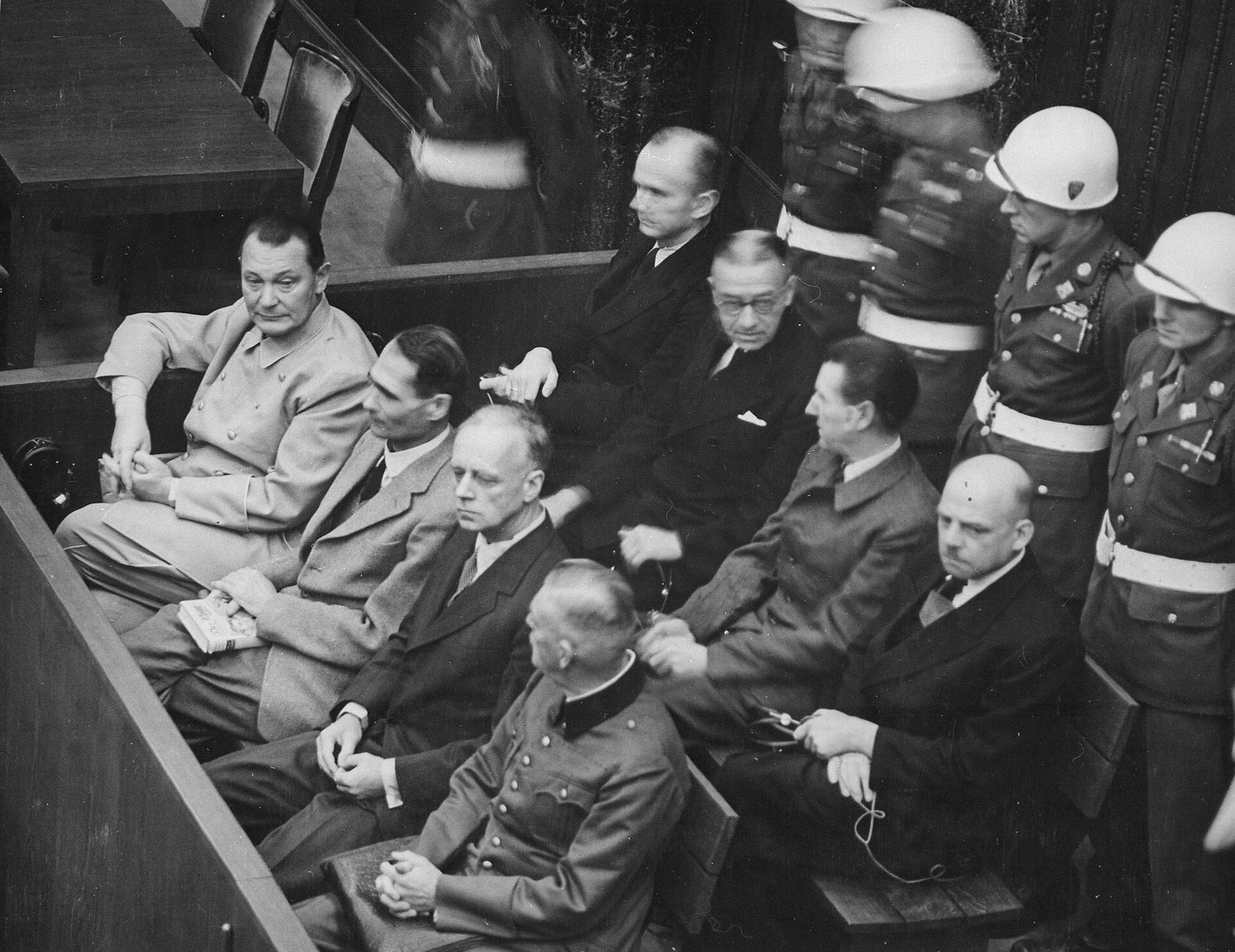
Unlike other political movements grounded firmly in ideology, Nazism relied heavily on the leadership itself. Historian Broszat argues that Nazism was more of a charismatic movement than an ideological and programmatic one; without Hitler as its figurehead, it would likely have collapsed. Hitler’s particular will supplanted the general will from the moment of the Führerprinzip – the principle that Hitler’s will was absolute law – and the Enabling Act, which granted him the power to pass laws without parliamentary approval.
That manifestly did not represent all Germans. The Jewish, Slavic, and Romani populations, among many others, were not among those whose interests Hitler claimed to serve, as the Nuremberg Laws and Kristallnacht make plain.
Nazi racial ideology reduced people to functionaries of the master race, in service of the Volksgemeinschaft, or “people’s community” – in stark contrast to the rights Rousseau believed inhere in every person. Rousseau, like Nietzsche whose Übermensch was similarly twisted by those who came after him, was critical of despotism; his writings were distorted posthumously. As Hanfstaengl, a close associate of Hitler, suggests: “Hitler took all the ingredients the German [tradition] offered him and mixed them through his private alchemy into a cocktail they wanted to drink.”
The concept of being “forced to be free” has drawn similarly sharp criticism. Russell raises an analogy of Galileo’s forced recantation to disparage the idea; but philosopher Hywel Lewis tells us the Rousseauian notion does not entail laws forcing an individual into a society that guarantees them more freedom, but rather the coexistence of freedom and rights through obedience to self-prescribed laws. Russell’s majoritarian concern has some basis, but the restriction of freedom is not as egregious as he postulates: it presupposes that people vote not according to the general will, but to their own interests, which Rousseau explicitly opposed.
Similarly, the restriction of freedom only occurs to prioritise more freedom. Your right to own property limits my ability to take it from you, with the idea that there is an inherent freedom in ownership. The people can intervene against individuals’ rights to prevent inequality. Enforcement, in Rousseau’s framework, exists to protect freedom rather than suppress it – and crucially, it is the people themselves who wield it. Is this consistent with Hitler? Evidently not.
The totalitarian state’s formation came through the majoritarian will of all from the Reichstag elections, which Rousseau would have considered illegitimate. Subsequently, the state held an absolute monopoly over violence, and enforcement was not held within the people but rather by a mixture of paramilitaries, police, and secret police, including the SS, founded in 1925, and the Gestapo in 1933. Such actions did not ensure further freedom: the execution of the White Rose’s leaders – a student resistance group put to death in 1943 for distributing anti-Nazi leaflets – was a silencing of dissent and political freedom. The alignment between Rousseau and Hitler simply isn’t there.
On Rousseau’s conception of the lawgiver and the state: in Hitler’s Germany, laws were imposed unilaterally, and individuals had no role in their creation. It is supposed to be within the people themselves to ratify the laws that the lawgiver proposes, and the lawgiver holds no legislative authority. The Enabling Act, stating that “laws enacted by the Reich government shall be issued by the Chancellor”, does not follow this. We can say with confidence that these were not reflective of the characteristics Rousseau’s lawgiver ought to take. The laws themselves were never self-legislated, nor did they take into account the general will.
On the state, Rousseau wants to abolish all partial societies, but given that this is almost impossible in any large state, he wishes for them to multiply as much as possible, such that the differences cancel out. In Nazi Germany, Hitler centralised workforce control through the dismantling of the 28 federations of the General German Trade Union Confederation, bringing them under direct Nazi authority. Hitler obliterated all intermediary structures between the individual and the state, which runs contrary to Rousseauian beliefs. Through ideology and practice, the links are few and weak.
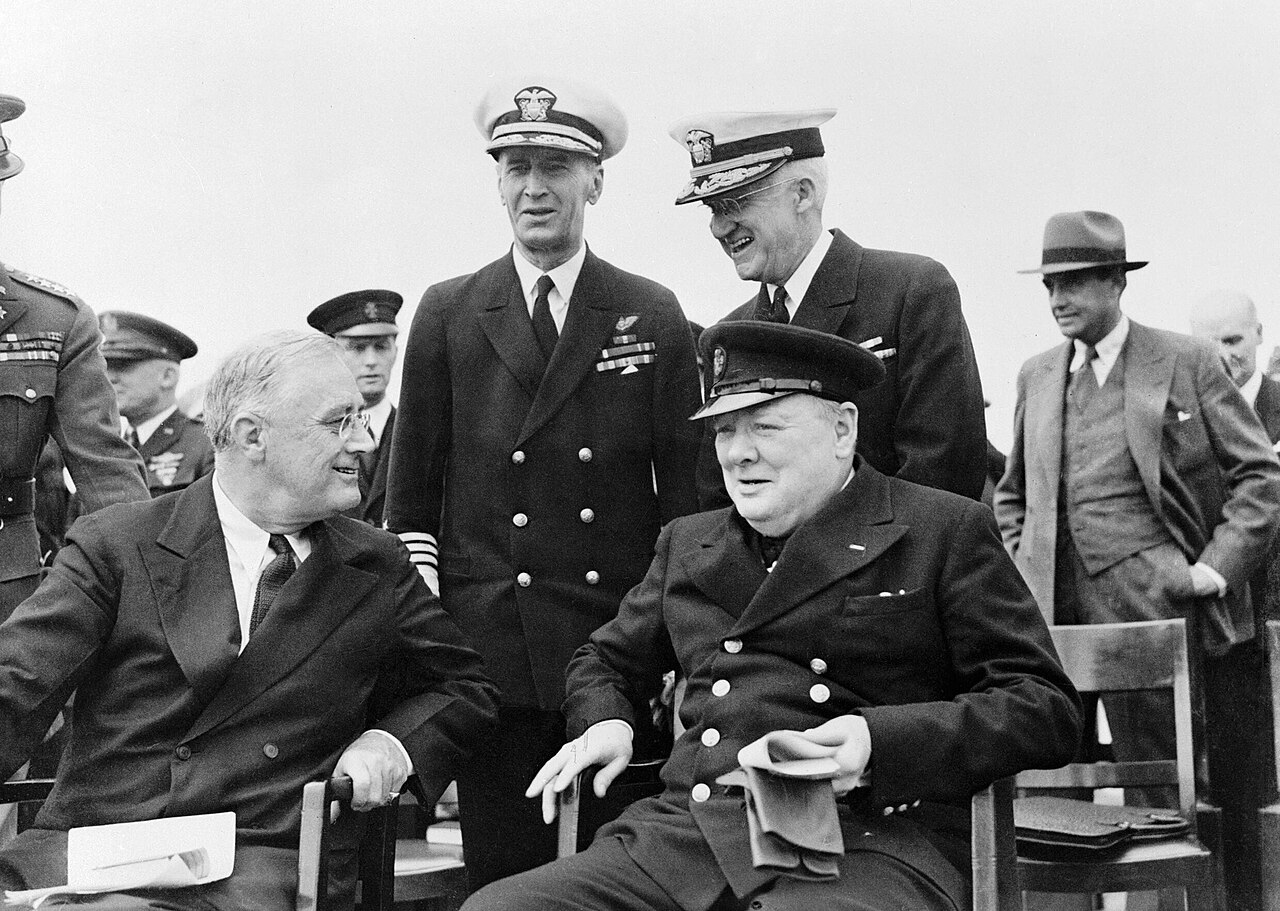
At first glance, the Locke claim is more convincing. Both Allied leaders publicly championed self-government, free trade, and human rights. Roosevelt and Churchill co authored the Atlantic Charter in 1941, a joint declaration of Allied war aims that pledged all nations have the right to “choose the form of government under which they will live” – consistent with Locke’s belief that the community wields real supreme power. Roosevelt’s Four Freedoms similarly echo Locke’s Letter Concerning Toleration in their defence of religious liberty. Yet the exigencies of global war and post-war power politics forced both leaders to moderate these ideals.
During the Depression, Roosevelt enacted New Deal reforms that went beyond the Lockean remit of protecting life, liberty, and property. Furthermore, Locke contends that individuals are only subject to laws made by representatives they have elected. Roosevelt’s attempt to pack the Supreme Court with sympathetic judges through the Judicial Procedures Reform Bill of 1937 runs counter to this, as he sought favourable rulings on New Deal measures previously struck down by the Court. In doing so, Roosevelt subordinated Lockean principle to political convenience.
The perceived threat of Japanese espionage became too great a danger to national security, to the point that the presence of Japanese Americans along the West Coast was deemed untenable, resulting in their forced internment under Executive Order 9066. This makes Russell’s claim difficult to support. The curtailment of individual rights conflicted directly with Lockean natural liberties – Locke would never condone arbitrary imprisonment without trial.
As historian William Leuchtenburg observes, Roosevelt was above all optimistic, pragmatic, and flexible, ready to experiment rather than cling to any dogma. His willingness to ally with Stalin to defeat Hitler sits uncomfortably with any straightforwardly Lockean reading of his leadership.
Churchill presents a similar problem. In the early 1900s he aligned himself with progressive liberal ideals, but several matters plagued this alignment. In 1926, he opposed the General Strike and supported the government’s use of emergency powers to break it. Locke would have been appalled: the citizen’s right to peacefully resist a government that harms the people’s interests is central to his thought, and the Trade Union Congress had done precisely that.
Likewise, Churchill’s resistance to the Government of India Bill and his prioritisation of imperialism placed him in direct opposition to Locke’s principles of consent and self-government. Churchill’s colleagues saw him as someone who aligned with groups largely when it served his own ambitions.
These contradictions make it difficult to fit the actions of Roosevelt and Churchill into a rigid Lockean framework. The postwar order they shaped built institutions like the UN and Bretton Woods – in many ways expressions of Lockean principles – but through a process that conceded to the realities of power politics, granting the Soviet Union control over the Eastern Bloc at Yalta for victory’s sake.
The greater question is probably not the extent to which Russell was correct, but whether, post-1945, such mapping of ideas can ever be valid. Figures like Roosevelt and Churchill may appear Lockean in rhetoric or policy, yet their actions were shaped as much by historical necessity as by philosophical inheritance. While Rousseau’s ideas can be interpreted as foreshadowing aspects of totalitarianism, drawing a direct line to Hitler requires ignoring the profound distortions in between. It is reductive to claim one ideology is simply derivative of another. So long as the difficulty of the ideal endures, so too must the effort to realise it.