The Battle Nobody Declares
A scholar in Estonia explains how Russia spreads disinformation in the Baltic states and what separates information war from hybrid and cognitive warfare.
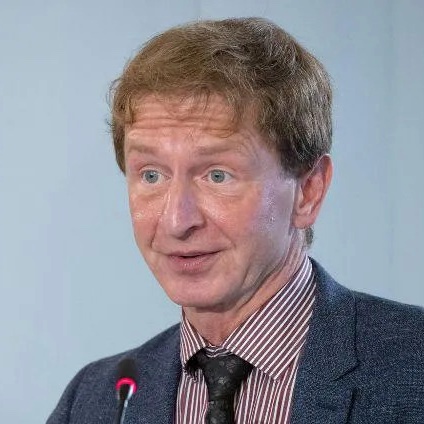
DR. Andrey Makarychev is based at the University of Tartu in Estonia, where his research focuses on geopolitics, media, and disinformation, with particular attention to Russia’s influence operations in the Baltic states. This interview draws on his ongoing NordForsk research project, “Authoritarianism Gone North: Transnational Repression in Unsafe Havens.”
The Confluence: Disinformation is one of the most talked-about threats in global politics today. Where does it actually come from, and why do these tactics work?
Dr. Makarychev: I would divide my reflections into three levels. The first is global: media technologies are an indispensable part of social and political relations, statuses, and hierarchies, and both reproduce and constitute the world we live in. The core of the debate on disinformation is the shrinking space of liberal discourses and the expanding room for their illiberal challengers, who often use post-truth strategies.
Online social media support the basics of free societies, an inherent part of the liberal international order, but as an agglomeration of self-publishing platforms, they also shake the legitimacy of institutions and rationality, creating much space for populist, post-facts counter-discourses. This is where disinformation comes from. Quality control mechanisms of information flows are inefficient, and postmodernist thinking has added to the spread of dis- and mal-information: once all discourses are dubbed semantic constructs, truth becomes relative, each voice is considered equally meaningful, and storytelling prevails over facts and analysis.
In practice, the toolkit of post-truth narratives includes biased coverage, multiple conflicting versions of events, incorrect references to sources, and the artificial elevation of marginal figures’ speaking positions. These tools work because, in democracies, public opinion matters and can be manipulatively distorted, because new multimedia formats pluralize the information space, and because the affective and emotional resources of soft power circulate globally, creating space for fabricated narratives that embellish political regimes through commercial ads and prepaid articles.
Non-democratic regimes are particularly effective at exploiting these trends, by capitalizing on the intrinsic pluralism of liberal societies, blocking independent voices, criminalizing digital activism, and using social media to track dissidents and as a propaganda platform.
Three concepts are useful here: information war, meaning intense information attacks, hate speech, and orchestrated trolling; hybrid warfare, meaning hacking, cyber-attacks, and paving the way for hard power; and cognitive warfare, or the “battle of ideas,” which provokes thought distortions and exploits ambiguities among target audiences to hinder undesirable action.
The Confluence: How does this play out specifically in Russia’s disinformation campaigns against Estonia and the other Baltic states?
Dr. Makarychev: A strong engagement of Putin’s regime with symbolic and performative politics blurs the boundaries between fiction and reality, coupled with post-Soviet cynicism, so that disinformation production in Russia becomes a convenient utopia of “Us” against “Them”.
Russia’s dis- and misinformation campaigns in the Baltic states foster feelings of alienation among local Russophones and national majorities, enhancing polarization along ethnic and linguistic lines. Geostrategic narratives claim that Baltic elites’ policies create preconditions for Russia’s interference and that the Baltic states are militarily undefendable; political narratives claim the Baltic states gave up their sovereignty to the EU and NATO, while pro-Russian regimes elsewhere supposedly preserve theirs properly.
Historical parallels are also deployed, for instance that Baltic governments wish to confiscate Russian property as fascists once confiscated Jewish property, alongside “legalistic” claims that the Baltic states’ withdrawal from the Soviet Union was itself illegal.
But disinformation is not only geopolitical; it is also biopolitical. In Ukrainian territories occupied by Russia since the full-scale invasion, propaganda focused on routine issues, food, water, energy, healthcare, functions as a manipulative tool aimed at creating a sense of care and “good life” among the Russophone population.
It not only denies the threat coming from Russia but normalizes violence, detaching its content from the geopolitical reality of the invasion and its casualties, and decoupling war from moral and ethical judgement. Biopolitical propaganda is therefore a depoliticizing instrument, distancing people from engaging with the political reality on the ground, and presenting war as an event that needs no rational explanation.