Good Rules, Weak Enforcement
A Peruvian economist describes how deforestation spreads malaria and privatisation got Peru flying, and adds that good policies fail without enforcement.
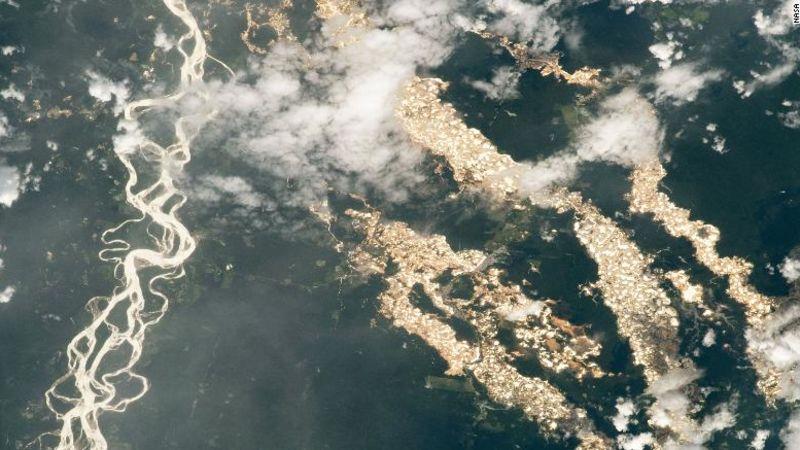

JULIO Aguirre is a full professor of economics at the Universidad del Pacífico in Lima, Peru, and Vice Dean of its new undergraduate degree in Politics, Philosophy and Economics (PPE), launched in 2024. He studies how markets for infrastructure and public utilities such as water, electricity and telephones are regulated, and has consulted for the Inter-American Development Bank, the Asian-Pacific Economic Cooperation, and the Economic Commission for Latin America and the Caribbean (ECLAC).
His work connects things most of us would never think to connect: cutting down trees and catching malaria, selling off state airports and the number of people who now fly. We asked him about both, and about what he sees as Peru's deepest problem: rules that exist on paper but not in practice.
The Confluence: Could you introduce yourself to our readers: your background, what you work on, and why you got into it?
Dr. Aguirre: My name is Julio Aguirre. I am a full professor at the Universidad del Pacífico in Peru, and an economist. I am also Vice Dean of the Politics, Philosophy and Economics undergraduate programme, a new programme since 2024, where I am in charge of the academic side.
My background is in industrial organisation [how firms compete], regulation economics, antitrust and a little environmental economics. My research is impact evaluation of infrastructure in public utilities, and topics related to forests and malaria, among others. I also teach industrial organisation and principles of microeconomics on the undergraduate programme.
The Confluence: One strand of your work found a connection between deforestation and the transmission of malaria in the Peruvian Amazon. For readers who would not naturally connect those two things, how does that link actually work?
Dr. Aguirre: A forest can be understood as an ecosystem, and as an ecosystem it provides many services to society. One of those is controlling vector-borne disease, and one of those diseases is malaria. People are infected when they are bitten by a mosquito, and the forest is the natural habitat of that mosquito.
So when humans go into the forest to cut or log trees and build something, such as a road, or to turn the land over to other uses like agriculture, silviculture [commercial tree plantations] or mining, they disturb that habitat, and the mosquito bites humans more. More people are infected, and when they are bitten they may have to stop working, or in severe cases they can die.
So the forest is the natural habitat, and when people enter it, the mosquito infects them: that is the natural relationship between forest and malaria. If you have a lower rate of deforestation, you can control this disease better, which is why controlling malaria is itself a natural, or ecosystem, service that forests provide. If you cut down trees, more people are infected with malaria, especially in rural areas.
The Confluence: A lot of infrastructure in Peru and across Latin America, such as airports, roads and energy, has been privatised. What makes the difference between privatisation that benefits the public in general and privatisation that just benefits the company that bought the asset?
Dr. Aguirre: At the end of the 1980s and the beginning of the 1990s in Peru, the main public utility services were provided by the government, which owned these facilities, but public management was very bad. People had to wait a long time even for something like a fixed telephone line, because we did not have mobile services yet.
When President Fujimori was elected in 1990, a privatisation policy was implemented, and it was very aggressive. Many public companies went through privatisation schemes, one of the main mechanisms being public-private partnerships in which private operators manage these facilities to enhance operational efficiency and improve the quality of public service delivery.
This mechanism was implemented by granting concession contracts [long-term deals to run a public asset], so operators had to guarantee more access for users to airports, roads, telephones and so on. After around 30 years of this experience, I would say it was a good policy, because nowadays we have good provision of these public services: more people fly, we have more and better seaports, and our exports and imports perform well.
We can say the growth of the Peruvian economy can be explained, among other factors, by the privatisation of some infrastructure, though of course that was complemented by good central bank policy as well.
The Confluence: You have also consulted for the Inter-American Development Bank, APEC, ECLAC and other international organisations. What is the biggest gap you have seen between what international development advice recommends on paper and what is actually workable in a country like Peru?
Dr. Aguirre: There are many things my country needs to improve. I think the main problem nowadays is crime and illegal economies, which are reinforced by the weak institutions we have here. On the other hand, we are seeing a deterioration in the quality of education. In recent PISA tests [international exams taken by 15-year-olds], we were told that our young students struggle to read and understand what they read, and we are near the bottom of the ranking, which is a big concern for us.
International organisations and multilateral institutions are supporting our country in developing better public policy, in education and in trying to tackle crime, but unfortunately we have a lot of work to do on that front.
The Confluence: What do you see as the possible solutions to these problems?
Dr. Aguirre: In my opinion, our national police need to be changed, removed or renewed, because the perception is that there is a lot of corruption inside that institution. You can see evidence of this in the fact that we now have an average of six murders a day, mainly linked to extortion. It is impossible to think the police are not failing in that respect. So the quality of our policing is unfortunately very low, and internal reform of the police is one of the main solutions I think we need in the short term.
Second, we need to stop, or roll back, the rules and norms that end up encouraging crime; our government should stop passing that kind of law. And then we need to improve the quality of our education and health systems, which are currently low.
The Confluence: Many of our readers are teenagers who may enjoy this interview but forget much of it by the end. If there is only one thing you would ask them to remember, a 30-second takeaway, what would it be?
Dr. Aguirre: Peru, as a developing country, needs above all to strengthen its institutions. We have good rules on paper, but enforcement is very difficult, and informality in the economy [work and trade outside the taxed system] is very high. We need to solve those problems.