An Eye for an Eye?
Defends capital punishment for the worst crimes, as long as it is carried out under strict legal limits.

THE question of whether the state should have the power to end a human life sits at the intersection of justice, morality, and practicality. In the most extreme cases – genocide, terrorism, crimes that deprive others of life on a mass scale – the case for proportional punishment is harder to dismiss than abolitionists often acknowledge. While some jurisdictions argue that the right to life should be upheld in all circumstances, as seen in the ECHR, the death penalty could also have a critical role in retributive justice and the protection of victims’ rights.
This piece will consider the moral and practical aspects of the death penalty in the international legal framework, referring to relevant cases, and argues that the death penalty remains a proportionate punishment for the most severe crimes when carried out under stringent regulations.
In the ECHR (European Convention on Human Rights), Protocol 13 holds that human life should be preserved in all circumstances. It is often argued that the death penalty deprives those condemned of human dignity, consequently not providing opportunities for rehabilitation. However, justice should be based on the principle that individuals receive punishment proportional to the severity of their crime, particularly in cases of terrorism or genocide.
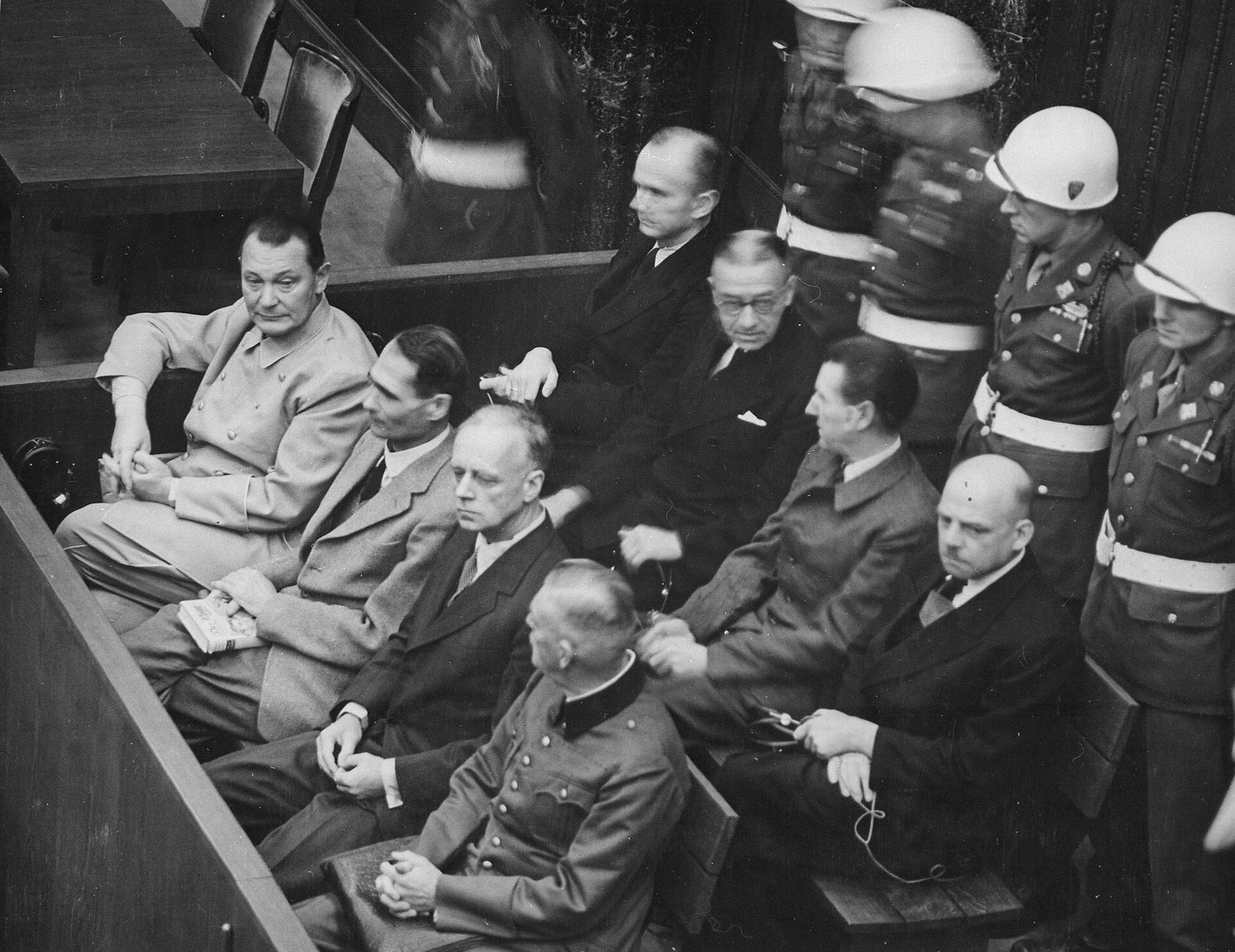
When the death penalties at the Nuremberg Trials were announced, few suggested that the executions were a violation of human rights, since death was viewed as a rightful punishment against the atrocities committed. The death penalty has been recognised as an appropriate penalty for major war crimes, due to the deprivation of other lives in the crimes.
In Gregg v. Georgia, the US Supreme Court amended the statute following Furman v. Georgia, retaining the death penalty for murder and five other crimes, as the murder in the case was described as “outrageously and wantonly vile, horrible and inhuman.” The court recognised that in such extreme cases, the death penalty serves as a proportional response to the offence.
The irreversibility of the death penalty is a common point made by those advocating for its abolition, especially when we take into account possible judicial errors. While modern DNA testing has dramatically reduced the risk of wrongful conviction, it has not eliminated it, and in a system where the sentence is irreversible, even a small margin of error carries profound moral weight. Thus, we must ask ourselves whether that risk, if properly managed, outweighs the case for proportional justice in the most extreme cases.
More countries are acknowledging that death penalties should be used “sparingly, judiciously, and with every safeguard necessary.” The Justice for All Act in the US serves as an example of this, focusing on improving DNA testing capacity in crime laboratories as well as providing post conviction testing to exonerate innocents. In addition, the Act offers states incentive grants for creating DNA programmes, thus ensuring fairness in the judicial system. Efforts such as these ensure that capital punishment is not carried out without adequate evidence, and in the light of these advancements, the death penalty stands as a fair response to severe crimes.
It is worth noting that the international trend toward abolition does not resolve the underlying moral question. Over two thirds of countries have abolished the death penalty in law or practice, and the ECHR framework reflects a broad consensus that state execution is incompatible with human dignity. Yet consensus is not the same as correctness. The abolition of the death penalty in Europe reflects a particular cultural and historical moment, shaped in large part by the atrocities of the twentieth century, rather than a universal moral conclusion. In jurisdictions where it is retained, the question should not be whether execution is pleasant, but whether it is just, and in cases of the most extreme criminal brutality, that case remains legitimate.
While abolitionists may argue that death penalty trials are prolonged and painful for the defendant, jury, and other members of the public involved, this weighs below the importance of offering finality to society and of affirming the value of the victims’ lives.
In Payne v. Tennessee, the US Supreme Court held that victim impact evidence can be presented in capital trials, acknowledging the significance of psychological impacts on victims in the consideration of the crime. The court recognised that since the defendant could present witnesses to testify as to his good character, similar evidence regarding the harm caused to the victim and their remaining family should also be considered, acknowledging that justice is not only related to the offender but should also address the profound loss faced by the victim’s loved ones.
Retaining the death penalty does not mean applying it liberally. The irreversibility of execution demands a standard of certainty that most criminal cases cannot meet. Where doubt exists, however small, the sentence cannot be justified; the consequence of error is not a miscarriage that can be remedied but one that cannot be undone.
This is not an argument for abolition but for extreme restraint. The death penalty should be reserved for cases in which the evidence is overwhelming, the crime is among the most severe imaginable, and every procedural safeguard has been rigorously observed. In practice, this means it will apply rarely, and it should. A justice system that reaches for capital punishment too readily undermines the very principle of proportionality that justifies its existence. Used sparingly, and with the confidence of very little error, it remains a legitimate instrument of justice. Used carelessly, it becomes an injustice of its own.
The death penalty should not be abolished, primarily because it remains a proportionate form of retributive justice in the most extreme cases. Concerns over wrongful convictions, while serious, are addressed by modern procedures and by the principle of restraint rather than by abolition.
Questions remain about how the death penalty should be implemented across cultures with varying moral values, and if retained, it must only be applied under the most extreme circumstances and with the highest possible confidence in the verdict. The challenge lies not in whether it should exist, but in ensuring it is applied with the rigour, consistency, and safeguards that so grave a punishment demands.